

On this page
Preparing for exams like JEE or NEET is demanding, and doing it alongside friends in a coaching batch can be a double-edged sword. On one hand, you have a support system that understands exactly what you are going through. On the other hand, constant score comparisons can turn a good friendship into a source of anxiety.
If you find yourself searching for why competition with friends in coaching is affecting me, you are not alone. The pressure to outperform your peers can derail both your well-being and your academic progress.
How do coaching environments amplify peer pressure?
Coaching centres are inherently designed to be competitive spaces. With regular mock tests, batch reshuffling based on marks, and public ranking boards, the environment constantly measures you against everyone else. This setup normalises the idea that your worth is tied to your rank.
This creates a high-pressure atmosphere that takes a measurable toll. A 2023 comparative study of students in Kota found that 44.45% of coaching students suffer from high levels of academic stress, compared to just 3.33% of non-coaching students Shekhawat et al., 2023. The study also noted that the majority of these students use a high level of avoidance coping strategies and a low level of active coping.
When your closest friends are in the same batch, this systemic pressure enters your personal life. A bad test score does not just mean a drop in rank; it can feel like a loss of status within your friend group.
How does peer competition impact academic performance?
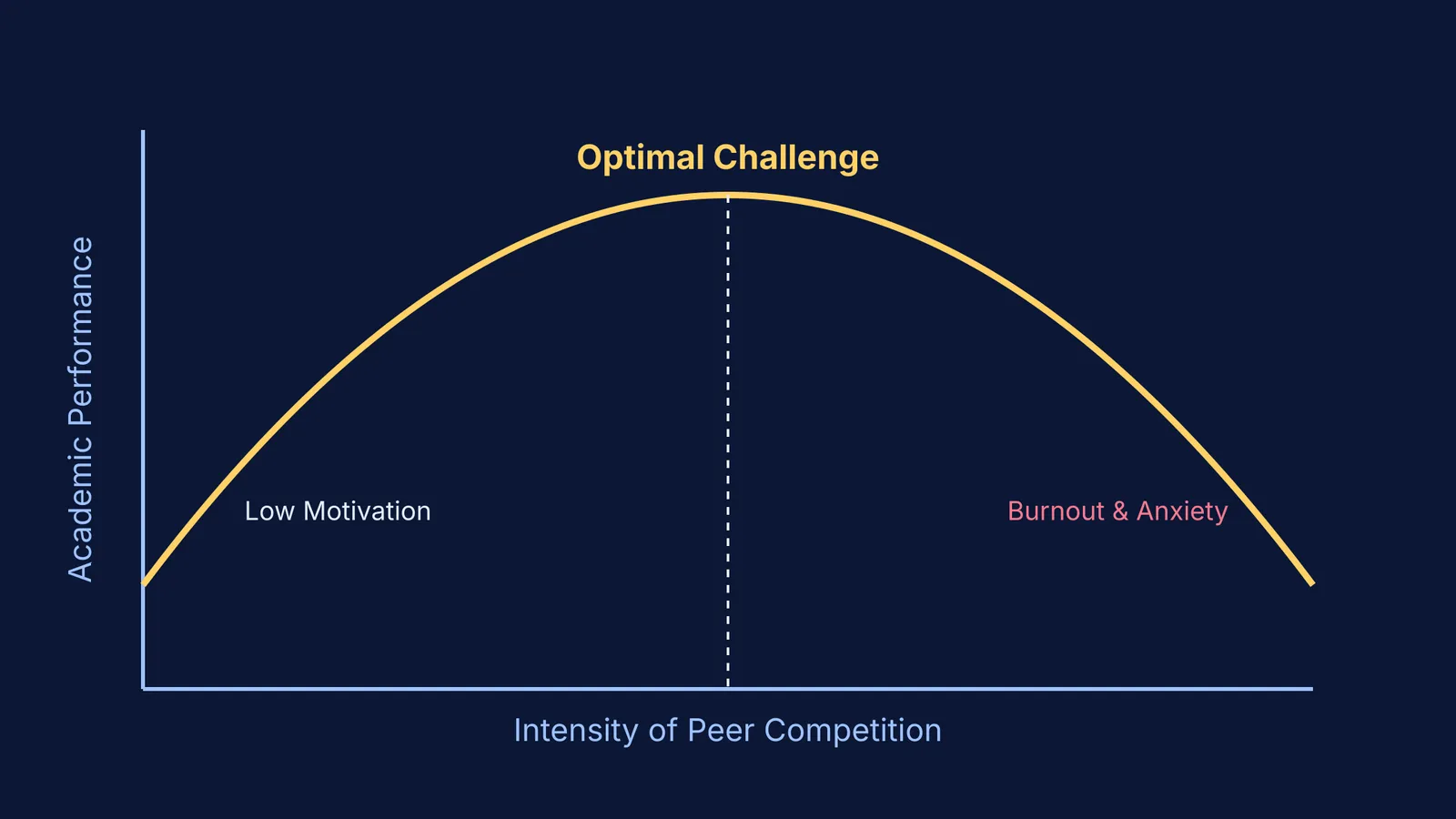
Competition is not inherently bad. Research on secondary school students shows that peer competition can have both positive and negative effects on academic performance Wang, 2026.
When competition is healthy, it acts as a motivator. It encourages you to set achievement goals, improves your self-efficacy, and pushes you to understand concepts more deeply. This is the optimal zone of challenge, where friends push each other to study harder and celebrate mutual progress.
However, when competition becomes about social status or competing for a teacher's limited attention, it turns toxic. Unhealthy rivalry shifts your focus from mastering the subject to simply beating the person sitting next to you. This can lead to academic jealousy, hiding resources from friends, and eventual burnout.
Why is competition with friends in coaching affecting me?
If peer competition is causing you distress, it is likely because the lines between your academic identity and your social identity have blurred. This happens for several reasons:
You are making social comparisons. Instead of tracking your own progress against your previous scores, you evaluate your worth based on whether you scored higher or lower than your friend.
The environment demands it. If your coaching centre segregates students into "topper batches," the fear of being left behind by a friend who moves to a higher batch can be intense and distracting.
Loss of a safe space. Friends are supposed to be a refuge from exam stress. When your friends become your primary rivals, you lose that emotional support system.
How do I deal with competition among friends?
You can maintain your friendships and your grades by changing how you interact with your peers. Here is a framework to help you navigate this.
1. Share strategies, not scores Make it a rule with your friends not to discuss exact marks after a test. If you must discuss the paper, focus on the methods used to solve difficult questions. If you need a structured way to handle post-exam time, read Should you discuss answers after an exam? A 20-minute routine to set better boundaries.
2. Shift to collaborative learning Turn your competitors into collaborators. Designing study sessions that balance collaboration and competition yields the best academic and psychological results Wang, 2026. Quiz each other on concepts, divide a large chapter to teach to one another, or work together to debug mistakes.
3. Use objective feedback over peer comparison It is easy to feel inadequate if your friend grasps a physics concept faster than you do. Instead of comparing yourself to them, seek objective, patient feedback. For example, if you are struggling with a specific topic, Fermi's AI tutor works out what you already know and builds a plan for the session, so you sit down to a clear next step without the pressure of human judgement. For more on this, see our guide on AI Tutors vs Coaching Doubt Sessions: Which Works Best?.
4. Expand your identity Your rank in a coaching batch does not define you. Make time for conversations with your friends that have nothing to do with JEE or NEET. Keeping the friendship grounded in shared interests outside of studying will protect the relationship when exam pressure peaks. Check out our guide on How to stay motivated through two years of JEE preparation for more ways to maintain a healthy perspective.
By setting clear boundaries and choosing collaboration over comparison, you can navigate the coaching system without sacrificing your friendships or your peace of mind.


