

On this page
Being called a "nerd" or mocked for scoring well is an experience many students share. If you are constantly asking yourself, "why do classmates tease me for studying hard?", you are dealing with a documented psychological dynamic known as academic teasing. It can make you want to hide your abilities and skip studying altogether. However, understanding why it happens and how to manage it will help you protect your long-term goals and preserve your mental health.
What does the data say about academic teasing?
Academic teasing is a specific form of peer victimization that targets students for their intelligence, grades, or visible effort in class. According to a 2006 study by researchers Jean Sunde Peterson and Kevin E. Ray, 67% of gifted eighth graders have experienced bullying during their school years. Because high-achieving students often stand out, they become easy targets for peers seeking to establish a social hierarchy.
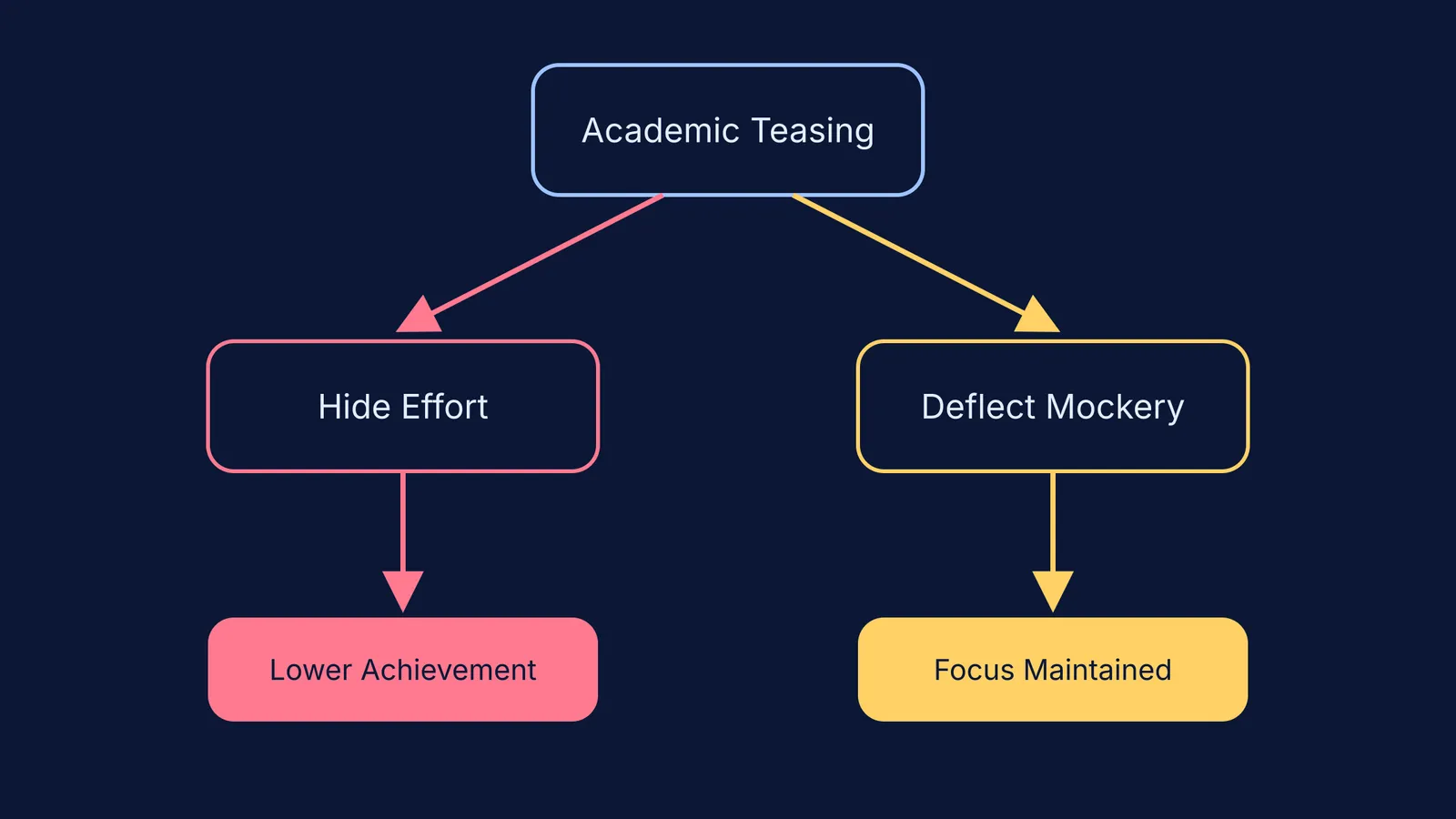
This type of bullying has measurable, immediate effects on how well you learn. Research based on classroom surveys from Tripod Education Partners found that academic teasing is a strong predictor of students deliberately "hiding" or holding back their effort in order to blend in. The consequences of this self-sabotage can be severe. When students fear being mocked for making mistakes or showing effort, they stop asking questions and avoid attempting difficult tasks that are essential for their growth. In classrooms where teachers score high in cultivating an emotionally safe environment and maintaining respect, Tripod found significantly lower rates of academic teasing.
Why do classmates tease me for studying hard?
Peer pressure often peaks in middle and early high school, a time when blending in feels significantly safer than standing out. Classmates who mock you for being studious are usually projecting their own insecurities onto you. When a student sees someone else working hard, asking questions, and succeeding, it can painfully highlight their own lack of effort or their personal academic struggles.
These students may also be seeking social status. In some peer groups, rebelling against schoolwork and teachers is seen as a fast way to gain popularity. By targeting a studious classmate, they signal to their friends that they do not care about academic rules. Understanding that the teasing is fundamentally about their insecurities, not your actual abilities, is the first critical step in handling it. It takes the personal sting out of the insult and helps you recognize the behavior as a defense mechanism.
How do I handle classmates who make fun of studying?
You cannot control how other students act, but you can control your response. Here is a practical framework for dealing with academic teasing without sacrificing your grades or your focus:
Deflect without defending: You do not need to apologise for your work ethic. Use a neutral, emotionless response (often called the "grey rock" method) when mocked. A simple "I just want to keep my options open for college" or "I am just doing what works for me" gives the teaser nothing to argue against. When you remove the emotional reaction, teasing becomes less fun for the bully.
Find a supportive peer group: You do not need the approval of the entire class, just one or two friends who share your ambition. Research consistently shows that peer support buffers the negative effects of teasing. As our guide on how rewards and peer support affect study motivation explains, positive reinforcement from the right peers can keep you on track during difficult weeks.
Separate your study space: If your classroom or regular study area is filled with unsupportive peers, find a different environment to do your deep work. Physical distance from the teasing helps you regain your focus. If you prefer to work through hard problems quietly, Fermi's AI tutor can work out what you already know and build a plan for the session, so you sit down to a clear next step without an audience judging your mistakes.
When is it time to talk to a teacher?
There is a distinct difference between occasional academic teasing and persistent bullying. If the teasing becomes a daily occurrence, involves physical threats, spreads to cyberbullying, or makes you dread going to school every morning, it is time to involve an adult.
Tell a trusted teacher or school counsellor exactly what is happening. Use specific examples rather than general complaints (for example, "Rahul has mocked my answers in physics class every day this week, and it is making it hard for me to concentrate"). Teachers can often intervene subtly without making you the center of attention.
If you are a parent watching your child struggle with these peer dynamics, validate their feelings. Our research summary on separating high expectations from pressure offers guidance on how to support them emotionally at home without adding to their stress.


