

On this page
Moving into a hostel or PG for JEE, NEET or college changes how you talk to your family. Calls land in the middle of a physics block, or not at all for a week. Here is a routine that keeps you close to home without breaking study time, plus a script for what to say.
How often should you call home from a hostel?
Research does not give a magic number, but it does say what kind of contact helps. In a survey of 211 college students by Gentzler and colleagues, students who reported more frequent phone conversations with a parent also reported more satisfying, intimate and supportive relationships with that parent. Students who used a social-networking site to talk to parents reported more loneliness and conflict. It was a one-time survey, so it shows a link, not proof that calls cause closeness.
The kind of call matters too. In experiments by Amit Kumar and Nicholas Epley, conversations that included voice (phone, video or voice chat) created stronger social bonds than text-based ones, without feeling any more awkward. People tended to underestimate this benefit of voice.
So the practical answer is: short voice calls on a regular schedule, most days of the week, rather than a long stream of messages through the day or one guilty marathon call on Sunday.
Why do calls in the middle of a study block hurt?
An interruption costs more than the minutes it takes. In an experiment on interrupted work by Gloria Mark, Daniela Gudith and Ulrich Klocke, people made up for interruptions by working faster, but reported more stress, frustration, time pressure and effort. It used office-style tasks, not exam study, but a 4:10 pm call in the middle of a rotational motion problem may cost you more than the call itself.
The fix is not fewer calls. It is putting calls at the edges of study blocks, where they interrupt nothing. If switching between your phone and your books is the problem, our post on what task-switching research says about multitasking while studying explains why.
A weekly calling plan that fits around study blocks
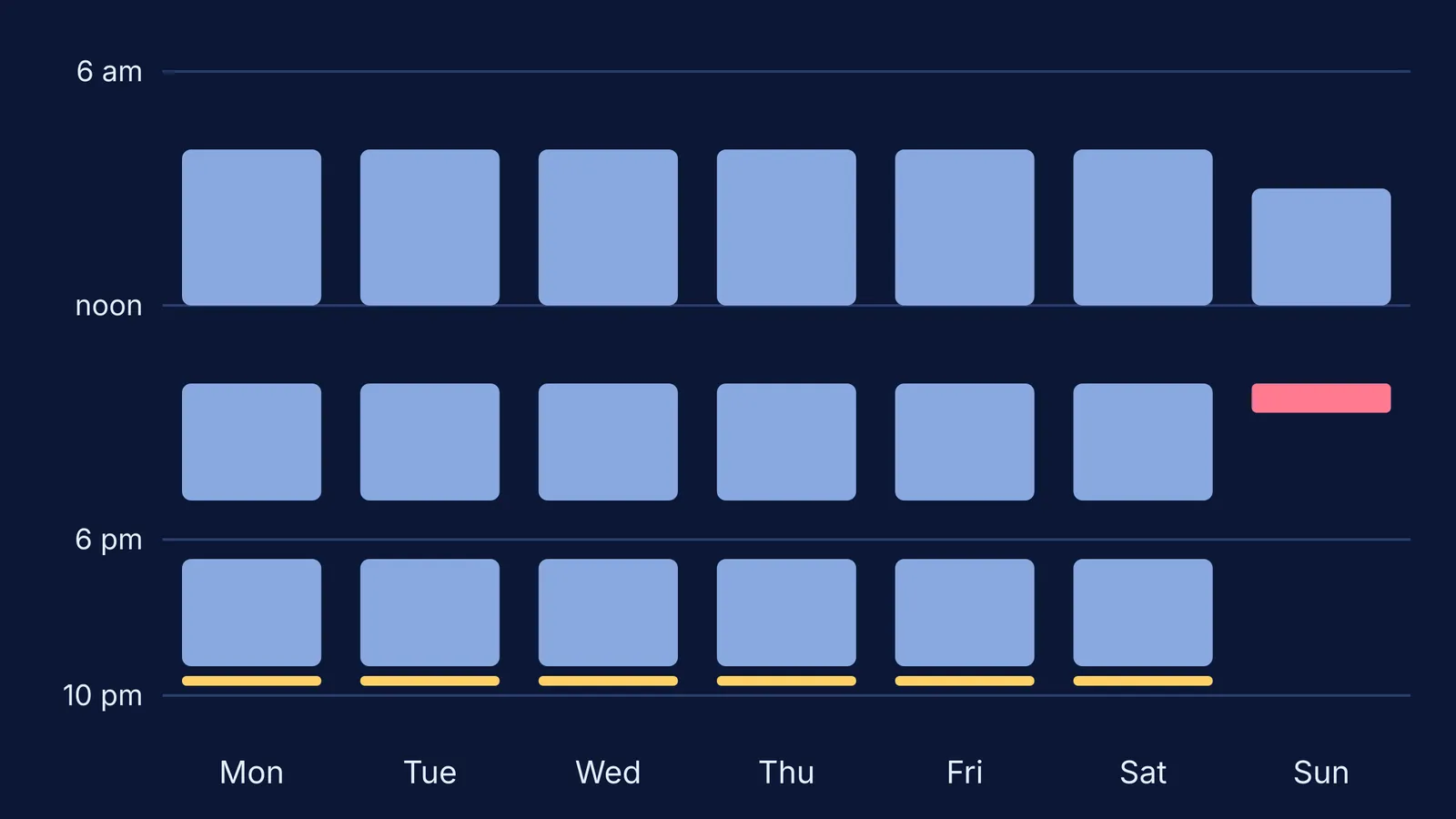
Here is a worked example for a student with classes from 8 am to noon, self-study from 2 to 5 pm and again from 6:30 to 9:15 pm, and a weekly test from 9 am to noon on Sunday.
Monday to Saturday, 9:30 pm: one 10-15 minute voice call, after the last study block and before winding down for sleep.
Lunch break, optional: one short text such as "Ate, classes done, all fine". This stops the worried 3 pm call from home.
Sunday afternoon, after the weekly test: one longer call of 30-45 minutes, with video if you like. This is the call for news, siblings and grandparents.
Test days and the night before a big exam: a text only, and a proper call the next day.
Agree on one signal for real emergencies, such as two calls in a row. Everything else waits for 9:30.
What should you say on a short call home?
Try a three-line update:
Health: how you slept and ate. "Slept seven hours, mess food was fine."
Study: one thing done and one thing hard. "Finished the electrostatics sheet. Capacitors are still confusing."
Next: what is coming up. "Weekly test on Sunday, so I'll call after it."
Then ask about them. A call that only reports marks feels like an inspection.
For parents, a few questions get more than "fine": What was the best part of today? What is one thing that felt hard? Do you need anything from home this week? Try not to open with test scores; let your child bring them up.
If the hard thing is a chapter, not a feeling, that is a job for study time, not the call. When you sit back down, Fermi's AI tutor can work out what you already know and build a plan for the session, so you start with a clear next step.
What if you feel homesick or a call goes badly?
Homesickness is defined as "the distress or impairment caused by an actual or anticipated separation from home", according to a review by Christopher Thurber and Edward Walton. The same review says homesick students typically report difficulty focusing on topics unrelated to home. Giving home a fixed place in the day may make those thoughts easier to set aside during study time.
If a call goes badly after a low score, end it kindly and pick it up tomorrow at the usual time.
If low mood, worry or homesickness lasts for weeks, or you find it hard to cope, talk to a counsellor or doctor. Tele MANAS, the free 24x7 national mental-health helpline from the Ministry of Health and Family Welfare, is on 14416 or 1800-891-4416. Our guide to exam stress and when to get help has more for parents.
For the rest of hostel life, see our study setup for a hostel or PG. Then pick your call time tonight and send it home.


