On this page
If you are studying for a competitive exam or tackling a demanding subject, your focus is likely on practice tests and revision notes. Starting a blog might sound like a distraction, but keeping a record of your learning can be a surprisingly effective way to study. It transforms a solitary activity into a structured, visible record of your progress.
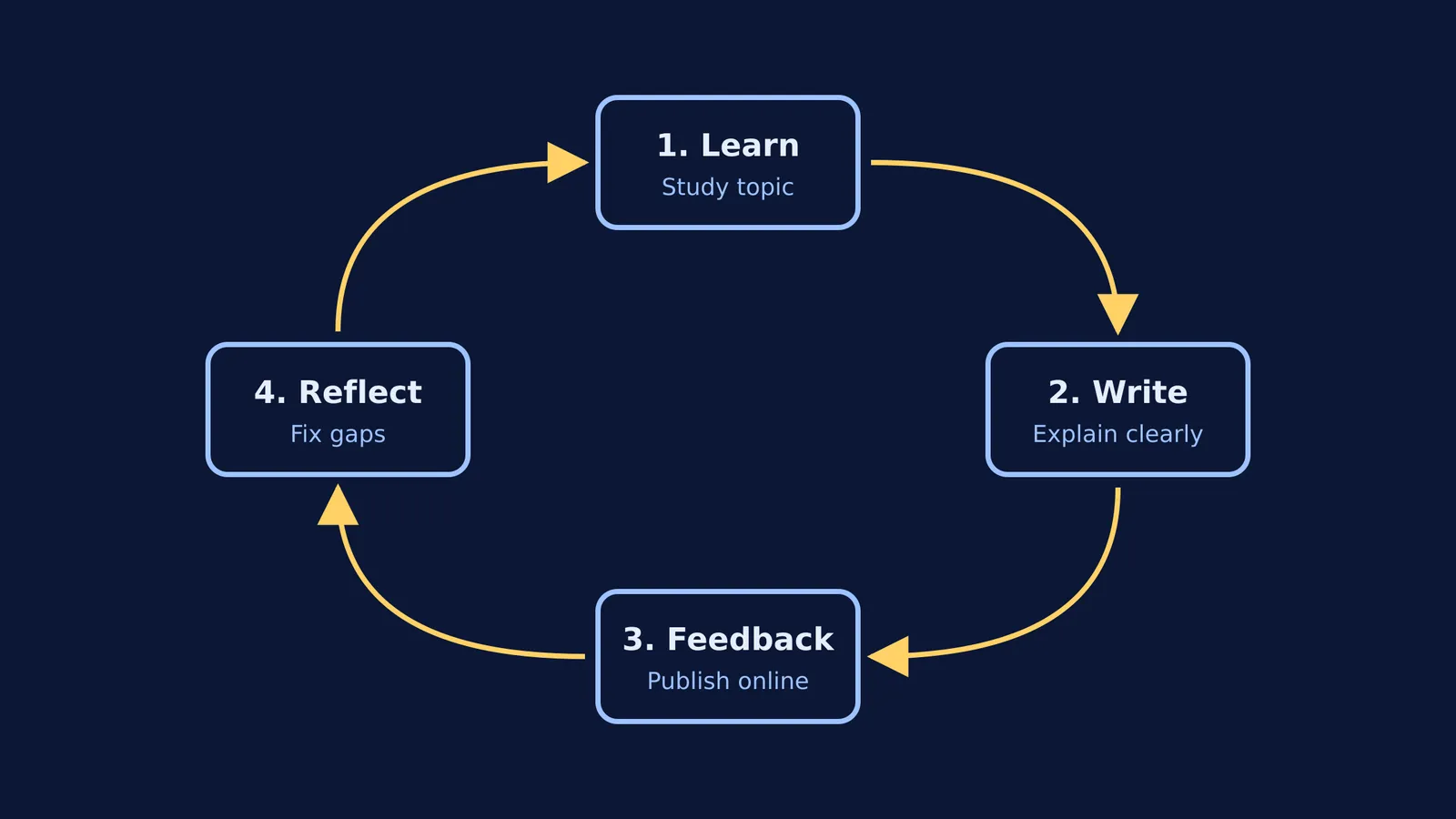
The process of explaining a concept for an audience—even if that audience is just a handful of people—forces you to confront the gaps in your understanding. You cannot gloss over the details when you are writing them down for someone else to read.
Why should you start a blog?
When you study passively, it is easy to trick yourself into thinking you understand a topic. You might read a textbook chapter and feel confident, only to draw a blank when tested. But when you sit down to write about it, you have to organize your thoughts logically and explain the connections between different ideas.
This process closely mirrors the self-explanation technique, where you explain each step of a problem to yourself. Educational research supports this active approach to learning. A 2023 study of 30 students using interactive blogging found it increased their writing performance in complexity, accuracy, and fluency (Sulistyo et al., 2023). The researchers noted that while writing online feedback was challenging, it fostered deeper engagement. A separate study on educational blogging found that reflection through blogging acted as an effective intervention, leading to a statistically significant improvement between pre-test and post-test scores (Mohamad et al., 2023).
What should you write about?
You do not need to be an expert to start a blog; you just need to be a learner. Write about the things you are currently studying, focusing on your own journey rather than trying to write a textbook. Here are some specific ideas to get you started:
Mistakes and corrections: Write a post breaking down a problem you initially got wrong. Explain exactly why you failed, what the misconception was, and how to solve it correctly.
Concept summaries: Take a dense chapter from your textbook and rewrite it in plain, simple language. Use your own examples. If you can explain it clearly without looking at the source material, you truly understand it.
Weekly reflections: Document your study journey. What strategies worked this week? What did not go according to plan? This kind of regular reflection helps in building a study routine that actually sticks over the long term.
How can you stay safe online?
Sharing your work publicly requires some basic precautions. If you decide to blog, remember that your primary goal is your own learning, not becoming a digital influencer or gaining a massive following. Keep these safety principles in mind:
Use a pseudonym or just your first name to protect your identity.
Never share your exact location, your school name, or any personal contact details.
Turn off comments if you find them distracting, or moderate them to keep the space positive and free from spam.
How should you structure your first post?
If you are unsure how to start writing, staring at a blank screen can be intimidating. You can use this consistent structure to make the writing process much easier:
The Problem: State the question or concept you are tackling clearly at the beginning.
The Confusion: Explain what makes this topic tricky or why it is easy to make a mistake when learning it.
The Solution: Walk through the correct approach step-by-step. Remember to ask 'why is this true' while studying, and write down the answers you find.
The Takeaway: Summarize the core rule or principle to remember for the future.
If you are stuck on the "Solution" step because a concept still feels fuzzy, that is exactly where the Fermi Concept Library can help you build a solid foundation before you write.
The evidence suggests that writing online does more than just build a digital portfolio; it actively improves how you learn and process complex information.