

On this page
Earning a spot at the International Biology Olympiad (IBO) requires more than just textbook knowledge. In India, after clearing the theoretical National Standard Examination in Biology (NSEB) and the Indian National Biology Olympiad (INBO), the top students are invited to the Orientation-cum-Selection Camp (OCSC) at the Homi Bhabha Centre for Science Education (HBCSE). Here, practical experiments make up 40% of the final score, while theoretical tests account for the remaining 60%.
To succeed, you need hands-on laboratory experience and the ability to interpret raw biological data quickly.
What is tested in the Biology Olympiad practical exam?
The practicals simulate the intensity of a real research lab. Students rotate through several laboratory stations to complete experimental tasks.
These stations typically cover:
Cell Biology and Biochemistry: You may need to use micropipettes, run gel electrophoresis, or use a spectrophotometer to calculate enzyme kinetics.
Plant Anatomy and Physiology: This involves observing physiological rates—such as measuring transpiration or exploring limiting factors in photosynthesis—and examining tissue anatomy.
Animal Biology: Practicals often require performing dissections on invertebrates to identify specific organ systems.
Bioinformatics and Data: You must use online databases to translate DNA sequences or build phylogenetic trees.
How do you prepare for microscopy and dissection?
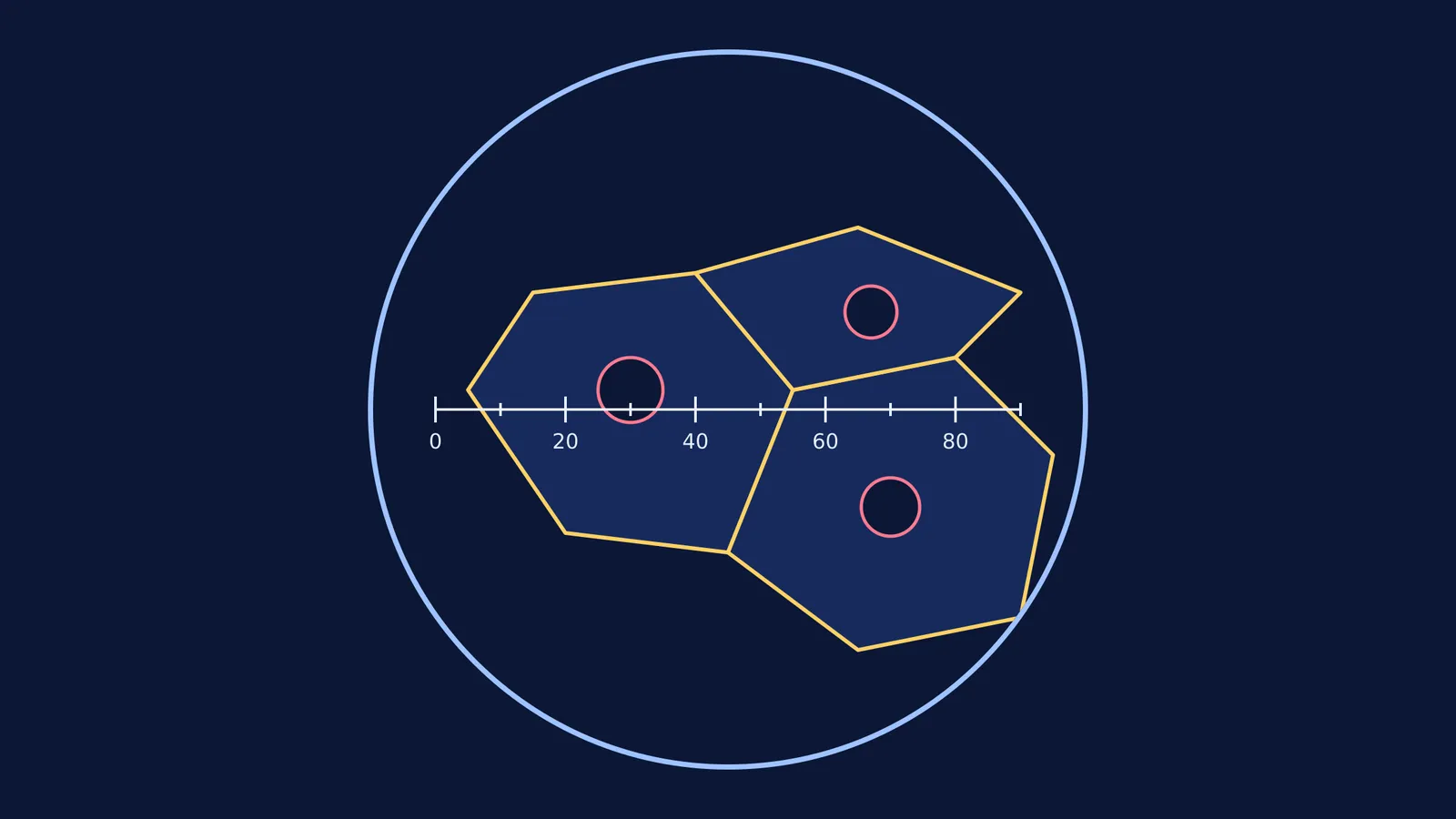
The light microscope is your primary tool in the biology olympiad. A frequent task involves calibrating an eyepiece graticule using a stage micrometer to measure the actual size of a specimen, such as identifying the fine structures of cilia and flagella.
For plant anatomy, camp selections require making ultra-thin transverse sections using just a razor blade. You must practice slicing materials like hibiscus stems or roots until you get a one-cell-thick layer. After sectioning, you will apply stains like Safranin to highlight lignin in the xylem.
Because the OCSC heavily tests invertebrate anatomy, practicing dissections on specimens like earthworms or cockroaches is a standard part of preparation. You must be able to carefully pin the specimen, use fine scissors, and identify structures without damaging the surrounding tissues. If you do not have access to a school lab, studying high-quality dissection videos and anatomical diagrams is essential before the camp.
How to solve data interpretation questions?
Both INBO Type B questions and the OCSC practicals place a heavy emphasis on quantitative biology. You will often be given raw data, graphs, or contingency tables and asked to evaluate scientific claims.
When interpreting graphs, remember that if the error bars (representing Standard Error or 95% Confidence Intervals) of two data points overlap, the difference between them is typically not statistically significant.
You must also be ready to test genetic outcomes, such as interpreting a test cross to identify an unknown genotype, or evaluating ecological quadrat data. The Chi-square test is the standard tool for this. You use it to determine if your observed results match the expected Mendelian ratio.
The Chi-square formula measures the difference between observed (O) and expected (E) data: χ² = Σ (O − E)² / E.
To use it properly, you must also calculate the degrees of freedom, which is the number of phenotypic categories minus one.
If you are stuck on a past paper's complex data interpretation question, the Fermi Problem Library has worked problems with a step-by-step solver that explains the reasoning rather than printing an answer.
A checklist for your Olympiad lab skills
To bridge the gap between theory and practicals, use this preparation plan:
Master the microscope: Know how to set up Koehler illumination for the best contrast. Ensure you can confidently calculate actual cell sizes from magnification formulas under time pressure.
Practice your statistics: Ensure you can calculate standard deviation, standard error, and percentage change quickly. When you need to review biostatistics, the Fermi Concept Library contains every concept in physics, chemistry, biology, mathematics and computing, each with its own lesson and its place in the map.
Use the official resources: Work through the "Handbook of Experimental Tasks in the Biological Sciences" published by HBCSE. It contains authentic past experimental problems used in Indian selection camps.
Try dry lab practice: Use past IBO papers to interpret raw gel electrophoresis images, DNA sequences, and enzyme kinetic graphs even when you cannot perform the experiment yourself.
Rehearse data presentation: Practice drawing biological specimens accurately from observation, avoiding sketchy lines, and organizing raw numerical data into clear, titled tables.


