

On this page
In short
Yes, BDS is a solid option if you want a surgical career with a better work-life balance than MBBS. While India produces over 33,500 dental graduates annually leading to urban competition, dentistry offers diverse paths in private practice, administration, and public health.
Many students who do not secure a top rank for MBBS in NEET wonder if a Bachelor of Dental Surgery (BDS) is worth pursuing. The answer depends heavily on what you want out of your life and career. Dentistry is not just a backup option; it is a highly specialised surgical field that offers distinct advantages, especially in lifestyle and entrepreneurship.
India has 310 dental colleges offering an annual intake of 33,500 graduates (Wikipedia). Because most established practices are concentrated in cities, urban areas face intense competition for new dentists, while rural areas remain largely underserved. Choosing dentistry today requires a genuine interest in the field and a clear plan for your future.
Is BDS a good career option after NEET?
BDS is an excellent choice if you have a steady hand, an interest in aesthetics, and the ambition to eventually run your own practice. Unlike many medical specialities, dentistry allows for early financial independence. You can start your own clinic immediately after your undergraduate degree.
If you are struggling to master biology—whether you are memorising the formed elements of blood: RBCs, WBC types and platelets or trying to understand complex cycles—you might be stuck on foundational concepts. This is where Fermi's AI tutor helps: it works out what you already know, builds a plan for the session, and teaches through it, checking understanding as it goes.
What are the career options after BDS?
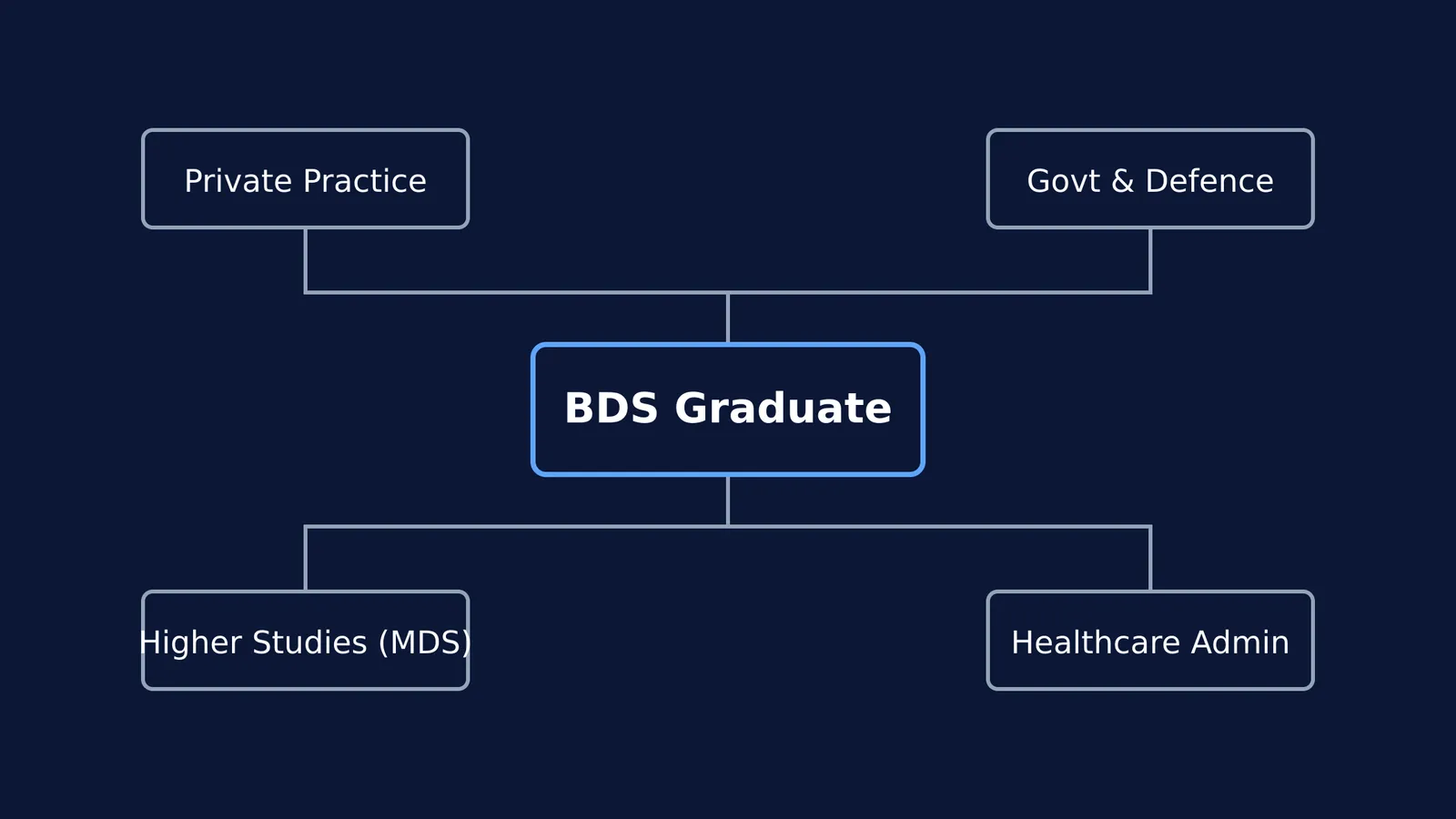
The career path for a modern dentist goes well beyond fixing cavities in a local clinic. Some of the most common routes include:
Private Practice: Most graduates begin as associate dentists in established clinics to gain experience and build clinical speed before investing in their own setup.
Government and Defence: The Army Dental Corps and state public service commissions offer prestigious, stable roles as Dental Officers, though vacancies are highly competitive.
Higher Studies (MDS): Specialising with a Master of Dental Surgery in fields like orthodontics, endodontics, or oral surgery significantly boosts your earning potential.
Healthcare Administration: Many graduates pursue hospital management, stepping into corporate roles running healthcare facilities.
Public Health and Research: A Master of Public Health opens doors to work with government health initiatives and clinical research organisations.
What salary can a dentist expect?
In the initial years, the financial reality of dentistry can be challenging. A fresher working as an associate in a private city clinic typically earns a modest starting salary as they build their speed and patient handling skills.
However, this is only the starting point. Government dental officers begin at a much higher pay scale. Dentists who complete their MDS or establish a successful private practice in a good location can see their incomes rise significantly, with established clinic owners earning even more depending on their patient flow.
How does BDS compare to MBBS?
The most significant difference is the timeline to stability. An MBBS graduate often spends years preparing for PG entrance exams, followed by years of residency and further super-specialisation before settling down. A BDS graduate can enter the workforce and begin building a patient base much earlier.
However, dentistry demands physical stamina. Long hours bent over patients can lead to neck and back strain, making ergonomics a crucial part of your training. The scope of practice is also narrower, focused entirely on the head, neck, and oral cavity.
If you are still deciding, mastering your current syllabus is the first step. For visualising tricky biology systems or mastering topics like opioids, cannabinoids and coca alkaloids, the Fermi Concept Library contains every concept in physics, chemistry, biology, mathematics and computing, each with its own lesson and its place in the map.
Are you ready for BDS?
Before committing to a dental college, sit down with your parents and ask these questions:
Do I enjoy hands-on, precise work? Dentistry is micro-surgery. It requires manual dexterity, patience, and attention to visual detail.
Am I willing to be an entrepreneur? The highest clinical earnings come from running your own clinic, which means managing staff, marketing, and finances.
Can I handle the initial struggle? Are you prepared for modest pay during your apprenticeship while you build your clinical speed?
Does the lifestyle appeal to me? If you value a predictable schedule over the adrenaline of a hospital emergency room, dentistry is a strong fit.


