

On this page
When you need to pay for coaching fees, buy a second-hand laptop or cover an out-of-town exam trip, downloading an app that promises "instant cash, no CIBIL score required" can feel like a quick fix. But these unregulated digital lending apps often hide extreme interest rates and predatory recovery tactics behind their sleek interfaces.
What starts as a small stopgap for pocket money often turns into severe financial and mental distress for a student.
Are instant loan apps safe for students?
Instant loan apps are rarely safe, especially those that offer money with zero paperwork. A 2024 survey by LocalCircles found that 61% of instant loan app users faced extortion or data misuse during the collection process.
Because students typically lack a credit history or steady income, they are a primary target for illegal lenders. The same survey revealed that 20% of users were charged between 100% and 200% in annual interest. To enforce these illegal terms, rogue apps bypass standard financial contracts and instead rely on digital blackmail. The Reserve Bank of India (RBI) frequently warns about these dangers, noting that its Sachet portal receives thousands of complaints about unregulated entities.
How does the 7-day debt trap work?
Understanding the maths behind these loans shows why they are so dangerous. This is similar to comparing quantities in Class 8, where you learn how fees and high interest rates compound quickly.
Here is a common scenario:
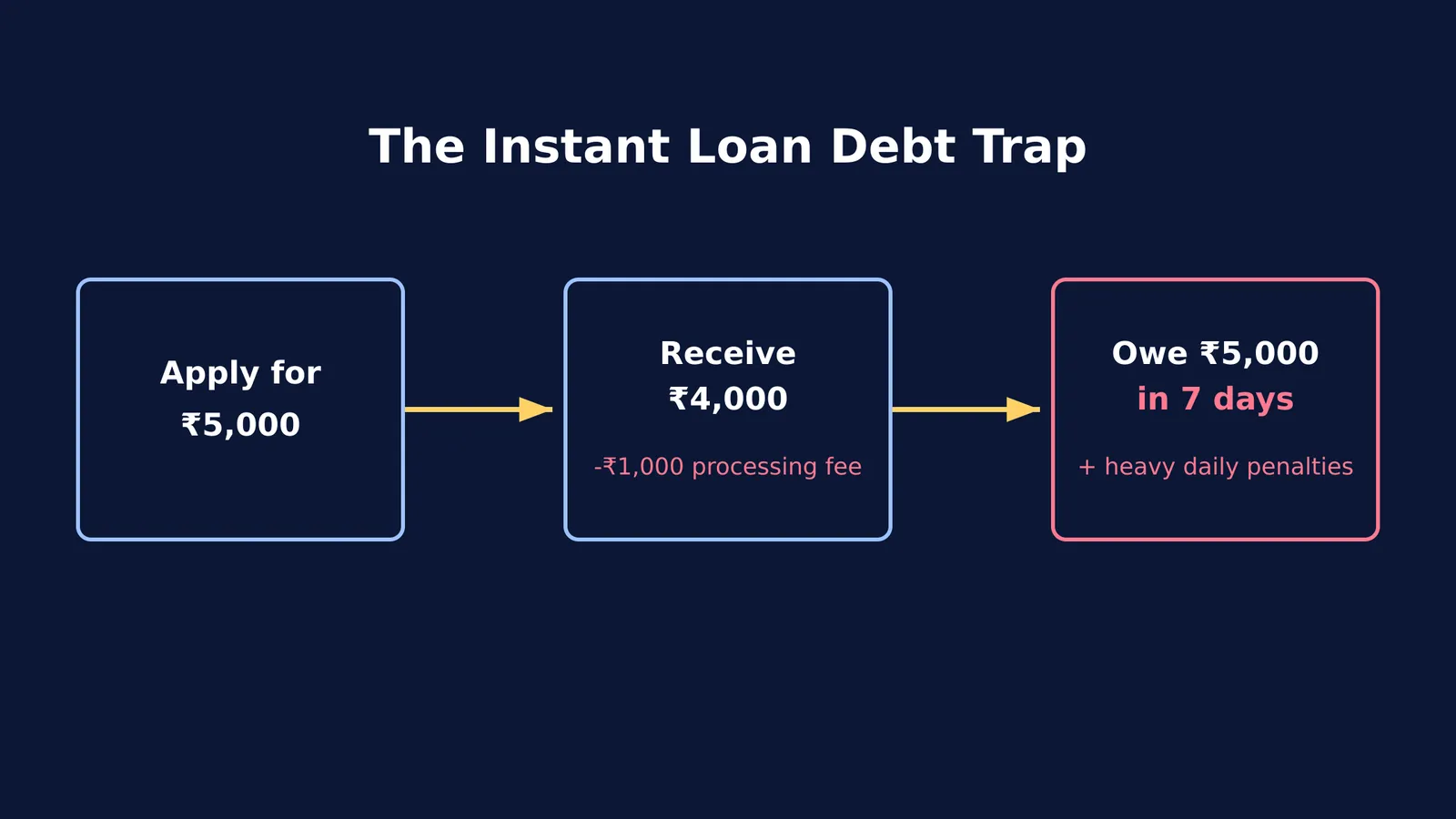
The hook: You apply for a ₹5,000 loan.
The upfront cut: The app deducts a 20% "processing fee" (₹1,000) immediately. You receive only ₹4,000 in your bank account.
The short window: The entire ₹5,000 is due in just seven days.
The trap: When you cannot pay ₹5,000 a week later, the app adds heavy daily penalties. To stop the harassment, many students borrow from a second app to pay off the first, entering a rapid cycle of debt.
Financial stress ruins your ability to focus on academics. If you have fallen behind because of stress and are staring at a blank page, Fermi's AI tutor works out what you already know and builds a plan for the session, so you sit down to a clear next step.
What are the warning signs of an illegal loan app?
Before you or someone you know installs a financial app, look for these major red flags:
No RBI-registered partner: Legitimate apps must act on behalf of a bank or an RBI-registered Non-Banking Financial Company (NBFC). If the app does not clearly state its NBFC partner, it is likely illegal.
Overreaching permissions: RBI rules strictly prohibit lending apps from accessing your contacts, photo gallery and media files. An app demanding these permissions is planning to use them for extortion.
No Key Fact Statement (KFS): Regulated lenders are legally required to provide a one-page KFS. This document clearly lists the actual annual percentage rate (APR), all processing fees, and the exact total you will repay.
Extremely short tenures: Genuine personal loans are rarely structured for 7-to-14 day repayment windows.
How can students safely handle a cash shortage?
If you are short on funds and need money quickly, avoid digital lenders entirely. Try these safer routes:
Talk to your parents or guardians: It is a difficult conversation, but having it before borrowing is infinitely safer than dealing with a loan shark.
Ask your institution: Many colleges have student aid funds, fee-installment plans or hardship extensions if you explain your situation clearly.
Use established banks: If you are buying a laptop or paying for a course, look into formal education loans from a recognized bank, usually taken with a parent as a co-borrower.
Building a study routine that lasts requires consistency and peace of mind. Keeping your finances safe from predatory apps is a crucial part of protecting your academic focus.
What should you do if an app extorts you?
If you have already borrowed from an abusive app, you are dealing with cybercrime, not a standard loan default. The Reserve Bank of India states that you are only legally required to repay the principal and agreed interest to regulated entities, not extortion money to illegal apps.
Take screenshots of the threatening messages as evidence. You can report unauthorized lending apps directly to the RBI via the official Sachet portal. For police assistance, file a complaint at cybercrime.gov.in or call the national cybercrime helpline at 1930. If the harassment is causing severe mental distress, reach out to family, or call the free Tele MANAS mental health helpline at 14416 for support.


