

On this page
It is a familiar scene at family gatherings, weddings, or casual evening visits: an uncle, aunt, or distant cousin corners you and asks about your mock test scores, your board exam percentage, or your expected rank. For many students, this well-meaning curiosity feels like an interrogation.
The stress you feel in these moments is not just in your head. According to the NCERT Mental Health and Well-being of School Students Survey (2022) of 3.8 lakh students, 81% of students identify studies, examinations, and results as the primary causes of their anxiety. This makes academics the largest single stressor for Indian teenagers. When relatives add their own expectations and endless questions to this mix, the pressure can quickly become overwhelming, draining your energy and motivation to study.
Why do relatives ask about marks?
In Indian society, academic success is often treated as a community event rather than a personal journey. Relatives might compare your progress with a cousin's recent admission to an engineering college, or they might ask pointed questions simply because they do not know how else to connect with a teenager. For them, asking about your board exams is a standard conversation starter, much like asking about the weather.
However, this dynamic often triggers intense stress for the student. A constant focus on results shifts your attention away from actual learning and toward the fear of judgment. You might start worrying about what to tell them on results day, instead of focusing on grasping the underlying concepts you need to succeed.
You cannot control what people ask you, but you can control how you respond. The goal is to set a polite boundary without starting an argument or revealing information that you would prefer to keep private.
What to say when relatives ask about marks or rank?
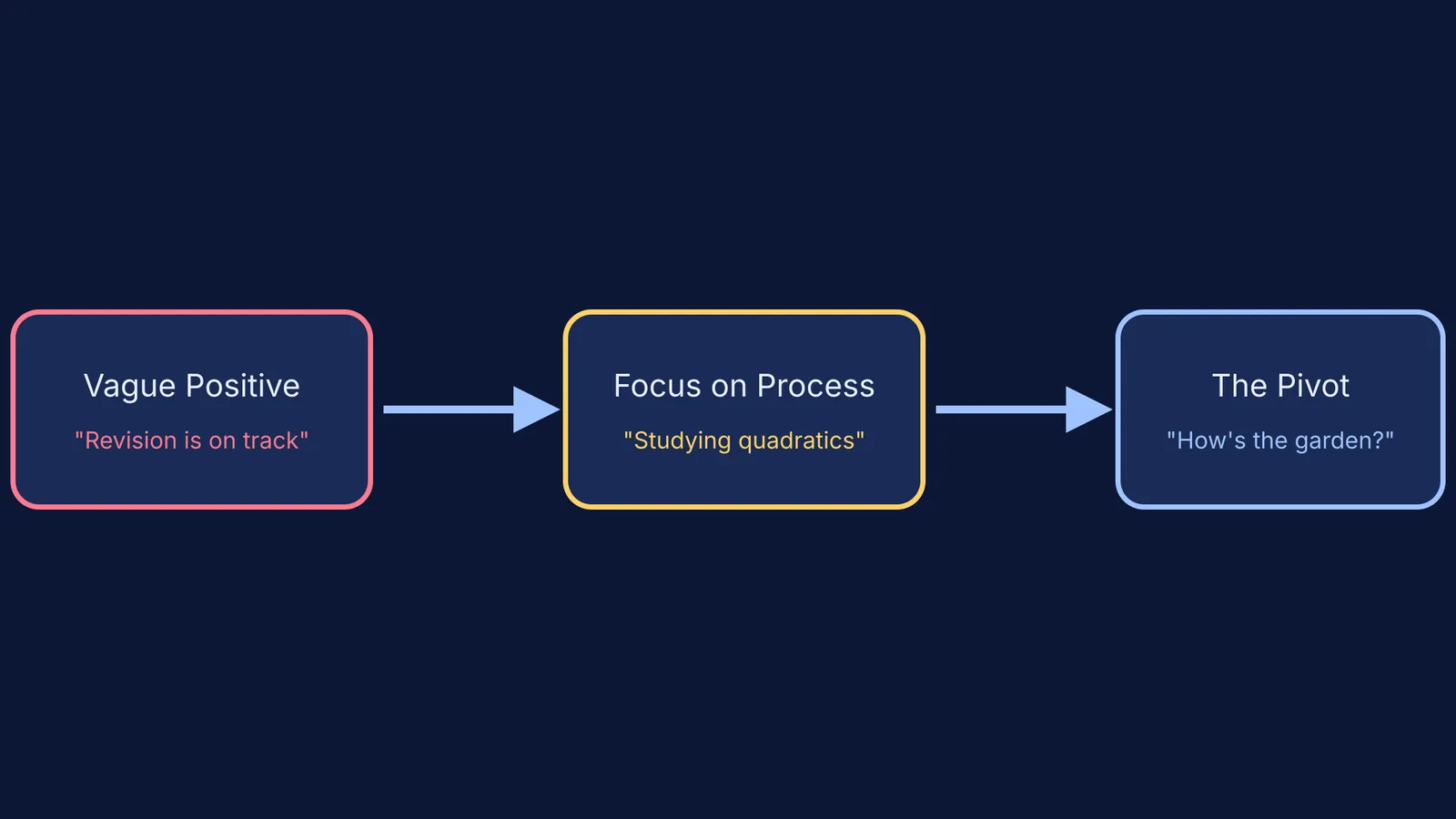
It helps to have a plan in place before you walk into a family gathering. Here is a simple three-step script you can use to answer questions politely and steer the conversation to safer ground.
The Vague Positive: Acknowledge the question with a brief, upbeat answer that does not offer any concrete numbers. You want to signal that you are doing fine without opening the door for a detailed cross-examination. You might say, "I am happy with how my revision is going, thanks for asking!" or "My preparation is well on track right now."
Focus on the Process: If they press for details, talk about what you are studying rather than the outcome. For instance, you could say you are currently figuring out quadratic word problems in Class 10 or reviewing the dispersion of white light by a glass prism. People rarely have follow-up questions about specific syllabus details, and they usually drop the subject when faced with technical terms.
The Pivot: Immediately ask a question about their life. People enjoy talking about themselves, and this shifts the spotlight away from your academics. Ask, "How is your new garden coming along?" or "Have you traveled anywhere interesting lately?"
How can you shift your focus back to learning?
Dealing with questions about marks is significantly easier when you feel confident in your daily study habits. When you stop worrying about the final score and start focusing on understanding the material, the external pressure naturally drops. Building a structured routine can insulate you from the anxiety of family expectations.
If you find yourself making wrong-method mistakes and feeling anxious about your progress, the Fermi Problem Library has worked problems with a step-by-step solver that explains the reasoning rather than just printing an answer. This helps you understand why a method works, rather than just memorizing it. When you get stuck and do not know where to start, Fermi's AI tutor can work out what you already know and build a plan for the session, so you sit down to a clear next step instead of worrying about a future exam score.
By focusing on the work in front of you, you can leave the worry about marks behind. You can protect your peace of mind, keep your family conversations brief and pleasant, and take full control of your own learning journey.


