On this page
An affidavit is a written statement you swear is true in front of someone allowed to take oaths. Colleges ask for one when your papers cannot answer a question on their own.
When is an affidavit needed for college admission?
Each college sets its own list, so check the admission brochure first. Four situations come up often:
A gap in your studies. You passed Class 12 in one year and are joining college in a later one, often after a drop year for JEE or NEET-UG.
A name that does not match. Your Class 10 marksheet, Aadhaar and entrance scorecard spell your name differently, or you have changed your name or surname.
Anti-ragging. Every student and parent submits an undertaking under UGC rules.
Other declarations a college chooses to ask for, such as not having taken a scholarship for the same course before.
If your gap is a drop year, our decision worksheet on taking a drop year for JEE or NEET covers the study side. Once you have decided, Fermi's AI tutor can work out what you already know and build a plan for the session, so each study day starts with a clear next step.
What does a gap year affidavit say?
A gap affidavit is the student's sworn account of the time between exams. JIIT Noida's gap affidavit format for 2026 admissions is typical. The student states the class they passed and the year, the reason they did not join any institution, and the exact dates of the gap. They also swear that no criminal case is pending against them and that they have not taken a post-matric scholarship for the same course. The verification line accepts that the admission can be cancelled if any fact is wrong, so state the reason plainly and truthfully, such as preparing for JEE Main and JEE Advanced. The format also asks you to attach copies of any exam passed after your qualifying exam.
How do you get an affidavit made and notarised?
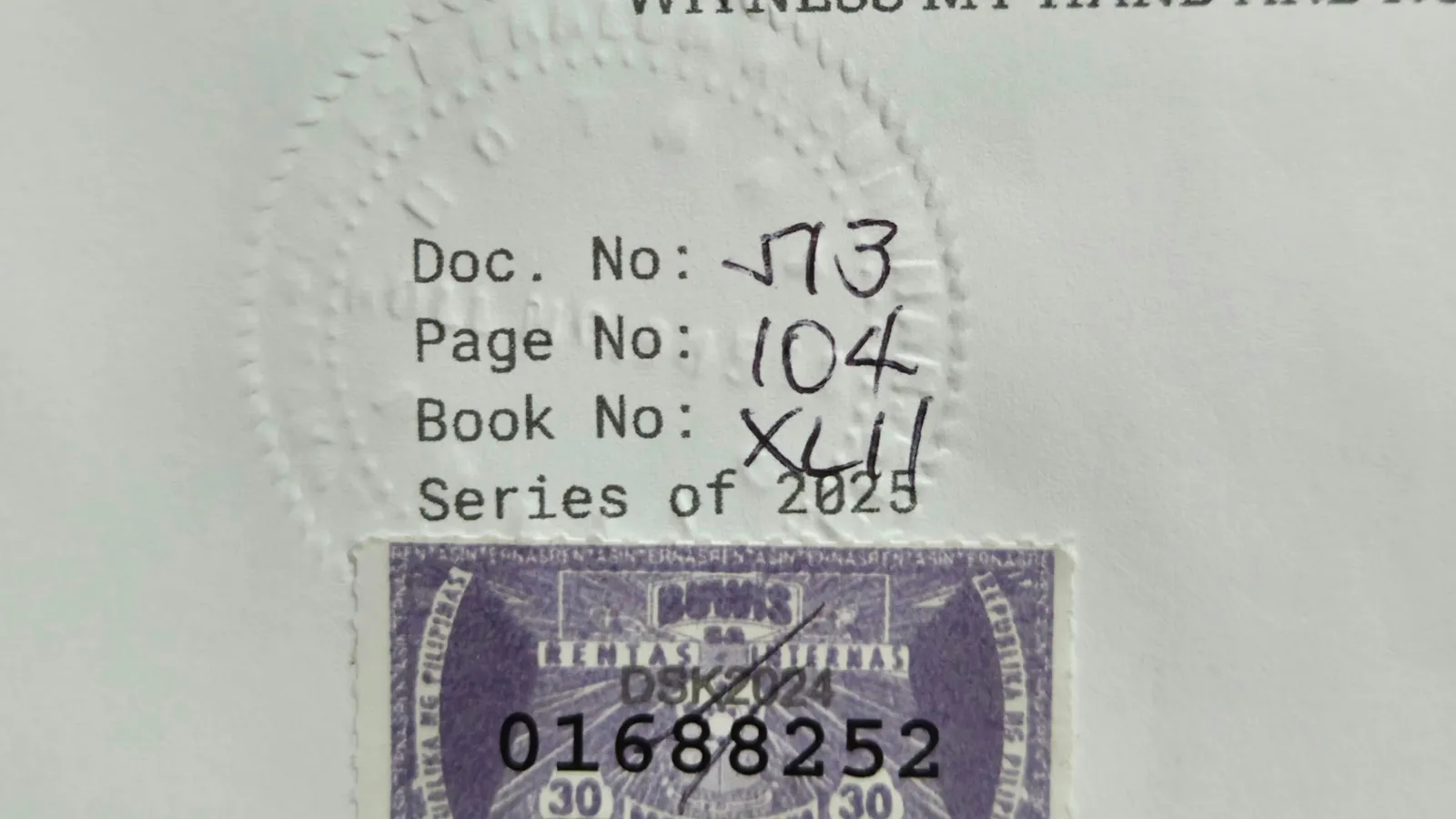
Under section 8(1)(e) of the Notaries Act, 1952, a notary may "administer oath to, or take affidavit from, any person". The steps:
Download the college's own format from its admission page. If it has none, ask the college whether a notary's standard format will do.
Buy non-judicial stamp paper of the value the college or notary tells you; the value depends on your state's stamp rules. Many states also sell e-stamp certificates instead: StockHolding's e-stamping system ran in 26 states and union territories as of 20 March 2025.
Get the text printed on the stamp paper.
Go to the notary in person with your original documents and photo ID, and sign there.
Keep two photocopies and a phone scan before you hand over the original.
What if your name differs across documents?
For a small mismatch, such as a missing middle name, ask the college what it accepts before you buy stamp paper.
A real change of name goes further. Odisha's list of documents for a change of name shows the usual shape: an affidavit saying you have changed your name from the old one to the new one, the newspaper page carrying your name-change notice, KYC proof such as Aadhaar or voter ID, and an application for publication in the state gazette. For a minor, a parent applies, with the child's birth certificate or Aadhaar. Other states have their own lists, so check yours well before admission season.
Does the anti-ragging affidavit need a notary?
No. The UGC's second amendment to its anti-ragging regulations, notified on 25 December 2013, deleted the oath commissioner's line from the student and parent undertakings. A UGC letter to universities dated 24 May 2023 says each student and every parent submits an online undertaking in every academic year.
You fill the undertaking at antiragging.in. The same UGC letter says the student receives an email with a registration number and forwards that email to the college's nodal officer; there is no PDF to print and sign. Keep that email, because colleges are asked to add an "Anti Ragging Undertaking Reference no" column to their admission form. The letter also lists the 24x7 National Anti-Ragging Helpline, 1800-180-5522.
Can you self-declare instead of an affidavit?
Sometimes. In July 2013 Delhi's Directorate of Audit adopted self-attestation in an order citing a May 2013 memorandum from the central Department of Administrative Reforms and Public Grievances. Under it, people could submit self-attested copies of documents such as marksheets instead of affidavits or gazetted-officer attestation, with originals shown at the final stage. That order covers the department's own staff matters; colleges set their own rules. Our guide on how to get marksheets attested for college applications explains self-attestation.
Your document-day checklist:
The college's affidavit format, proofread and notarised
Two photocopies of each affidavit
Your anti-ragging undertaking reference number
Original marksheets, plus proof for any gap (scorecards, medical records)
Migration and transfer certificates; here is how to get migration and transfer certificates after Class 12
Download your college's formats this week, so document day is only the queue.