

On this page
Getting an interview call for a BSc or Integrated PhD programme at institutes like CMI, ISI, or top universities means you have already proven your academic strength. Yet, the interview remains a major source of worry. A 2024 survey by The Princeton Review found that 73% of students and parents experience high or very high stress regarding the college application process. Much of this comes from treating the interview as an oral exam where every question has a single right answer. In reality, science faculties use the interview to test your mathematical maturity, your ability to handle unseen problems, and the depth of your curiosity.
What do colleges ask in science admission interviews?
Interviews for science programmes look for how you think, not just what you have memorised. If you use a shortcut formula, the panel will likely ask you to prove it from first principles.
Estimation problems: You might be asked to estimate the diameter of the Sun or the number of piano tuners in a city, given almost no data. These questions test whether you can make sensible assumptions and perform order-of-magnitude calculations.
Graph sketching: Being able to draw functions without a calculator is a core skill. The panel might ask you to sketch the graph of y = x^x or a complex modulus function to see if you can identify intercepts, limits and turning points. Mastering these basics is crucial; our guides on reading physics graphs and graph transformations for JEE show how to tackle them systematically.
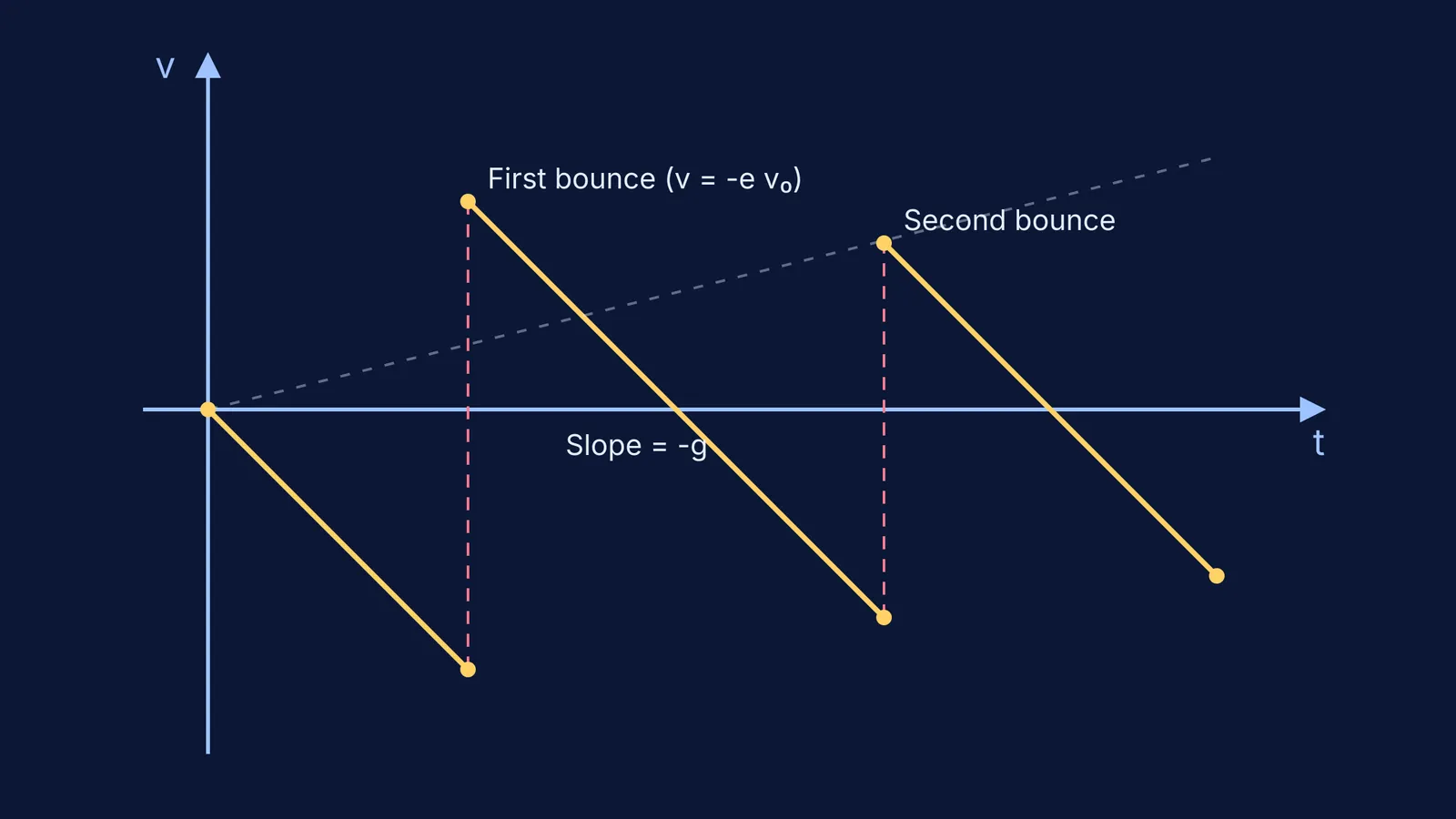
Conceptual extensions: A question might start with a familiar idea and add a twist. For example, you could be asked to sketch the velocity-time graph for a bouncing ball that loses a fraction of its energy with every impact. They want to see you apply basic kinematics to a messy, real-world system.
This is exactly where relying on rote learning falls short. Fermi's AI tutor teaches — it holds a line of reasoning across a whole session, notices where a student is stuck, and decides whether to explain, ask, or show. When you practise with the Fermi Problem Library, you get worked problems with a step-by-step solver that explains the reasoning rather than printing an answer, which trains you to think aloud just as an interviewer expects.
How do you talk about your interests honestly?
When the panel asks why you want to study physics or biology, they are looking for intellectual engagement rather than a list of hobbies. Many students make the mistake of dropping heavy jargon to sound impressive, which backfires if the interviewer asks a probing follow-up question.
Instead, use the Interest-Action-Impact framework to structure your answer. This keeps your response grounded and specific.
Interest: Lead with the specific question or problem that fascinates you. Do not just say you like genetics. Say, "I am fascinated by how a single base pair change can alter a whole protein's shape."
Action: Show how you have explored this curiosity outside the classroom. Did you read a specific book, enter a science competition, or follow a research website?
Impact: Reflect on what you learned or the new questions it raised. "Reading about that made me realise how complex gene therapy will be, which is why I want to study molecular biology."
What should you do when you get stuck in an interview?
You will inevitably be asked a question you do not know the answer to. That is by design. The panel wants to see how you react at the boundary of your knowledge.
Think aloud: The professors cannot reward your thinking if they cannot hear it. Explain your starting steps and your reasoning. If you feel stuck, explain exactly why you are stuck.
Draw a diagram: Almost every physics or geometry problem becomes easier once you have sketched the forces, fields or coordinates involved.
Admit ignorance gracefully: If you do not know a definition, say so. The panel will often define it for you and then ask you to solve a problem using that new definition. This is a direct test of how fast you learn new concepts.
Listen to hints: If an interviewer gives you a nudge or asks, "What if you looked at the energy instead?", they are trying to help. Change your approach based on their new information.
By preparing to think aloud and admitting what you do not know, you can turn a stressful interrogation into a collaborative scientific discussion.


