On this page
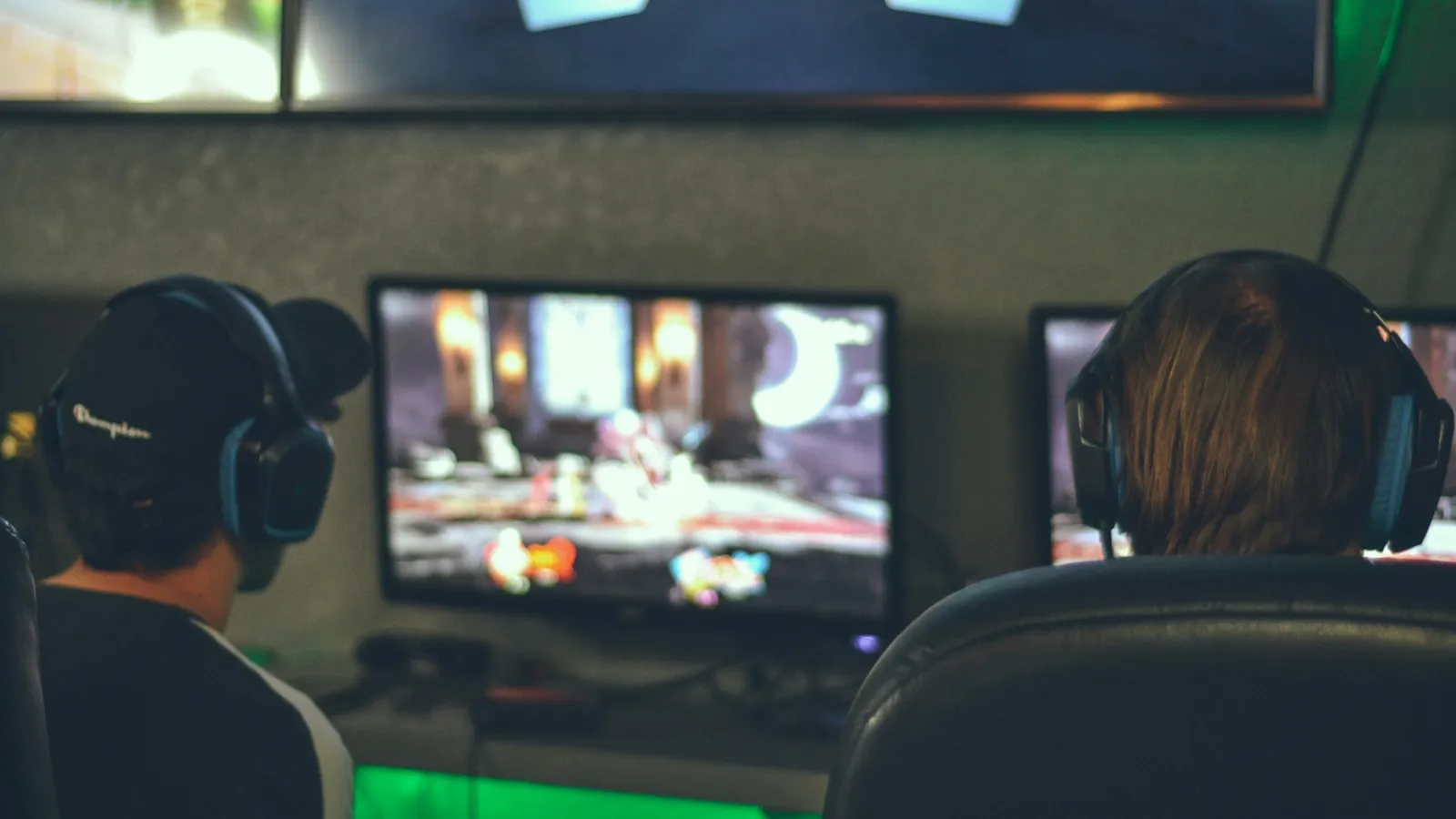
Few topics cause more arguments at home than video games. Parents worry about addiction, marks and sleep. Teenagers point out that games are how they meet friends. Research over the last decade has moved away from simple answers, and that is useful for families. This post sets out what large studies found, which warning signs matter, and how to agree limits that a teenager can accept.
Does time spent gaming harm teenagers' wellbeing?
On average, the links are small. In a large, representative sample of 10 to 15 year olds, Przybylski (2014) compared children by how long they played each day. Those who played for less than an hour a day had slightly higher life satisfaction and fewer problems than non-players, while those who played for more than three hours a day showed the opposite pattern. Moderate players did not differ from non-players. All of these links were small, explaining less than 1.6% of the differences between children.
A newer study used real play data rather than self-reports. Vuorre, Johannes, Magnusson and Przybylski (2022) linked six weeks of game-behaviour data from seven game publishers, covering 38,935 players, with surveys of their wellbeing. They found little to no evidence that time spent playing affected wellbeing. They did find that players' motivations played a role. Playing because you enjoy it and playing because you feel you have to are different experiences.
These studies cannot rule out harm for some individuals. But they suggest that hours alone are a weak guide.
Can video games teach anything useful?
Some, within limits. A review in American Psychologist by Granic, Lobel and Engels (2014) argued for a balanced view and summarised research on possible cognitive, motivational, emotional and social benefits, while calling for more intervention studies. A meta-analysis by Bediou and colleagues (2018) found that action video games improved top-down attention and spatial cognition in training studies, with a smaller effect than the differences seen between habitual players and non-players. The authors also warned that published studies may overstate the effects.
None of this means games replace study. Better attention in a game does not automatically become better marks in physics. If you are interested in games designed for learning, our post on what the evidence says about educational games covers that separate question.
When is gaming a real problem?
The World Health Organization lists gaming disorder in its disease classification. Its gaming disorder Q&A describes three features: impaired control over gaming, gaming taking priority over other interests and daily activities, and carrying on or increasing gaming despite negative consequences. The pattern must be severe enough to significantly impair personal, family, social or educational life, and would normally be evident for at least 12 months. WHO also says studies suggest it affects only a small proportion of people who play.
If your teenager seems unable to stop despite clear harm, or seems withdrawn, anxious or low, talk to a doctor or counsellor. In India, Tele MANAS, the national mental health helpline of the Ministry of Health and Family Welfare, is free on 14416 or 1-800-891-4416, as listed on the Tele MANAS website.
How do you set limits a teenager will accept?
Start with curiosity, not rules. Ask what they play, who with and what they like about it. Watch or play a round. You will set better rules if you understand the game.
Protect sleep first. Agree a time when screens leave the bedroom. Our post on teen sleep explains why this matters so much for learning.
Homework before play on school days. A clear order is easier to keep than a fixed number of minutes. Our guide to screen time and homework rules has a template family agreement.
Agree ending rules for online matches. Many games cannot be paused. "Finish this match, then stop" works better than "Stop now".
Watch the mood, not just the clock. Anger when asked to stop, lying about play, or dropping old interests are better warning signs than a long Sunday session.
Review together every few weeks. If marks, sleep and mood are fine, the rules are probably working.
What can replace some of the screen time?
Teenagers often game because it gives them challenge, control and visible progress. Activities with the same qualities compete better than lectures: sport, music, building things, coding or puzzle-like problems. For a science-minded teen, the Fermi Simulation Lab has interactive simulations for ideas that are easier to see than to read, which offer some of the same "change it and see what happens" feeling while building school knowledge.
This week, ask your teenager to show you their favourite game for fifteen minutes before you discuss any rules.