

On this page
It is a conversation playing out in living rooms everywhere: your teenager announces they want to be a YouTuber, a TikTok creator, or a social media influencer. It is easy to dismiss this as a passing phase or a distraction from school, but the desire is both common and serious. Instead of an outright ban, parents can use this as an opportunity to teach time management, digital safety, and the real skills behind content creation. Approaching the subject with curiosity rather than immediate judgment keeps the lines of communication open, which is essential as they navigate this new space.
Why do so many teenagers want to be influencers?
For today's teenagers, social media is the default environment for entertainment and socialising. The Pew Research Center's 2024 report on teens and technology found that 46% of U.S. teens say they are online "almost constantly". Because they spend so much time watching creators, the career seems accessible, highly creative, and financially rewarding.
Behind the polished videos, however, is a demanding reality of algorithmic pressure and constant audience engagement. Your role is not to crush their ambition, but to help them understand the mechanics of the job. Treating it like a real project means putting rules and structures in place, just as they would for sports training or music lessons. It requires planning, consistency, and a clear separation between work time and rest.
How to balance content creation with study habits?
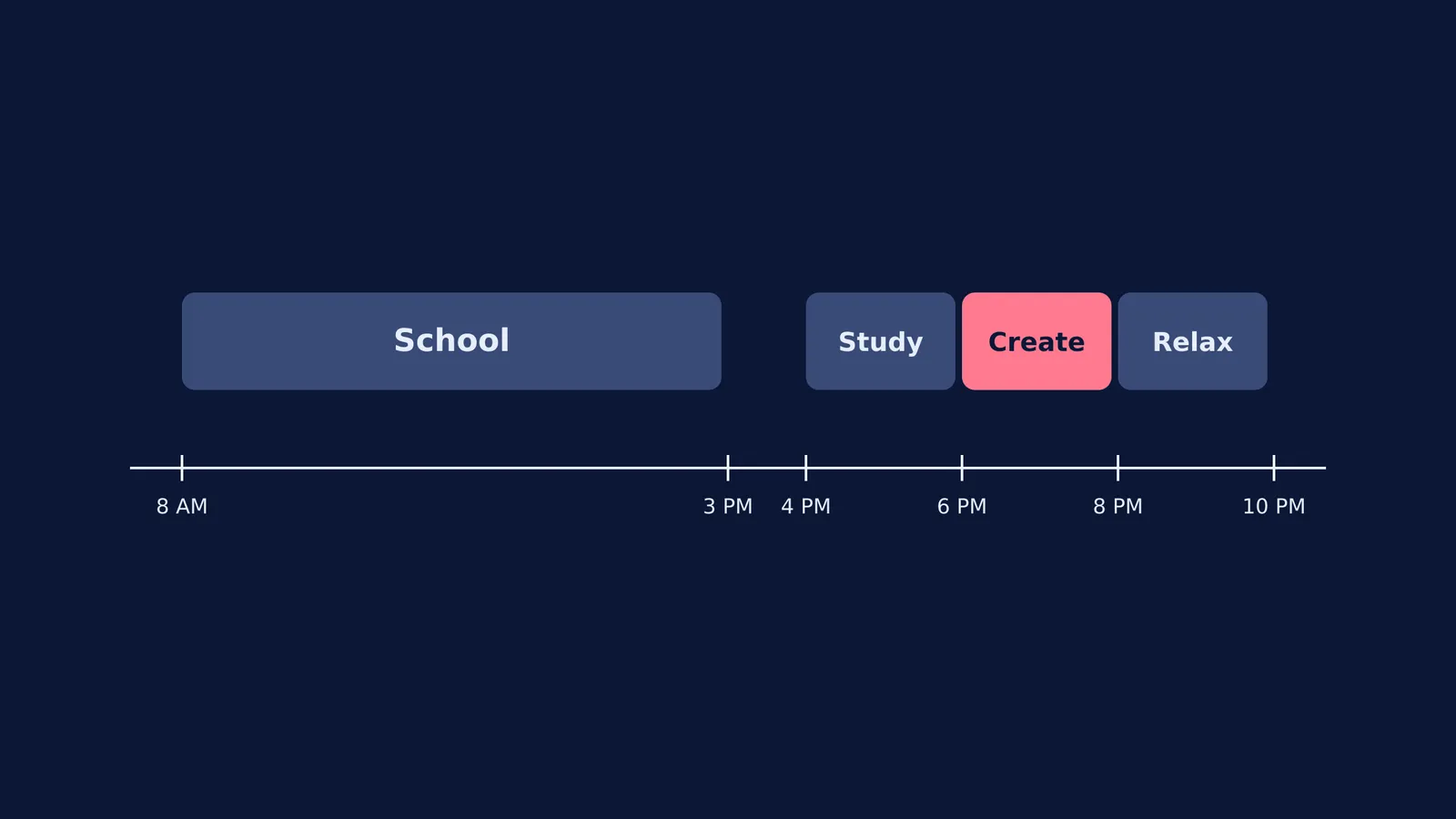
The biggest fear for parents is that filming and editing videos will take over their child's life and ruin their academic progress. The solution is to put content creation on a fixed schedule. If it is a serious pursuit, it belongs on the weekly calendar alongside homework, not bleeding into every free moment of the day.
A clear boundary protects their schoolwork. By restricting their editing and recording to specific weekend hours or a brief evening slot, you teach them that creativity requires discipline. If you notice their marks slipping, it is time to reassess the schedule. If they are struggling to keep up with specific subjects because they missed study time, Fermi's AI tutor can work out what they already know and build a plan for the session, helping them study more efficiently to catch up.
Establishing family guidelines, like keeping phones and cameras out of bedrooms at night, is also critical for maintaining focus. This ensures that their scheduled resting hours remain completely disconnected from the pressures of online performance and audience engagement. Consistent sleep is a foundational element for learning and emotional regulation.
What should parents do about social media safety?
Safety and mental well-being are non-negotiable when a teenager starts posting publicly. The American Psychological Association's health advisory warned that adolescent brain development makes teens uniquely vulnerable to social media's feedback loops, and recommended limiting features like endless scrolling.
You must talk openly about the permanence of the internet and the harsh reality of online comments. Agree on strict privacy rules before they upload their first public video: no school uniforms, no identifying locations or street signs in the background, and no real names of their local friends. Let them know that while you support their creative expression, your primary job is to protect them. It helps to approach these boundaries calmly.
What if your teenager's career choice differs from yours?
It can be jarring when your child aspires to a career that barely existed when you were their age. However, the skills required to run a successful channel—video editing, scriptwriting, public speaking, graphic design, and data analytics—are highly transferable to a wide range of modern professions. Even traditional corporate roles increasingly value employees who can communicate effectively across digital platforms.
Focus your encouragement on those underlying skills. Challenge them to learn how to edit properly, write a compelling script, or analyse their audience data to see what works. Supporting the work ethic behind the dream is much more productive than fighting the dream itself. If they eventually decide against being a full-time influencer, they will still walk away with practical digital skills, a better understanding of how media is made, and a disciplined approach to independent projects.


