

On this page
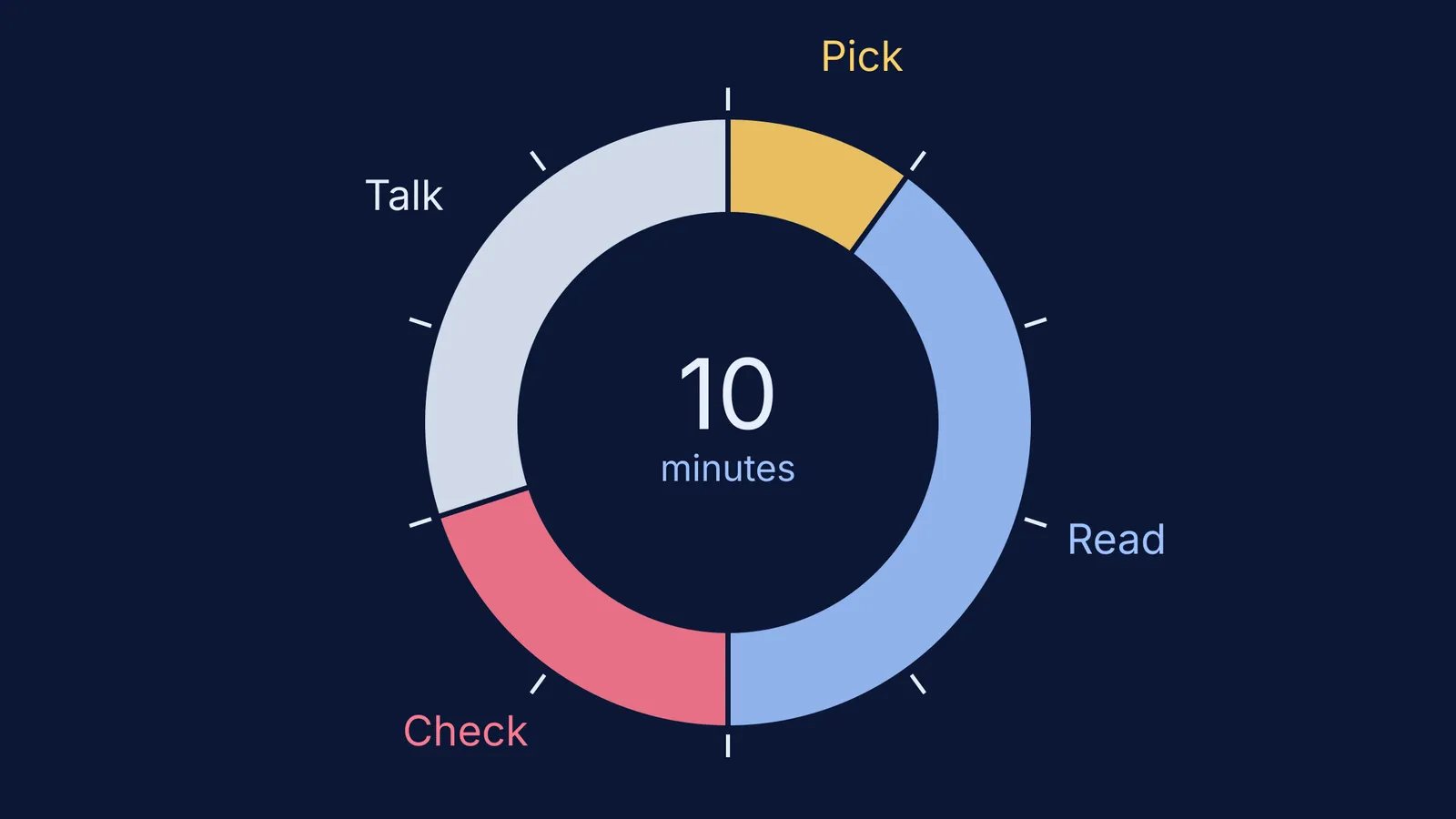
If you want your teenager to read the news, do not hand them a whole newspaper and hope. Give them a small, fixed routine: ten minutes, one story, one quick check and one question to talk about. Over months it can build background knowledge and the habit of asking "how do we know?"
Why should teenagers read the news at all?
The first reason is knowledge: what you already know shapes what you understand. In a classic study, Recht and Leslie (1988) split 64 junior high students by reading ability and by how much they knew about baseball, then had them read an account of half an inning. Prior knowledge had a significant effect on every measure of what they remembered, and the authors called its effect "powerful". A daily story about the economy, a court ruling or a monsoon forecast slowly adds to that store.
The second reason is that news reaches your teen anyway, often not from news outlets. The Reuters Institute Digital News Report 2025 for India, a survey of adults, found that 55% of its respondents used YouTube for news each week and 46% used WhatsApp. Overall trust in news stood at 43%. The survey covers mainly English-speaking online users, not all of India, but the pattern is familiar: clips and forwards arrive whether or not anyone chose them.
How do you choose news sources for a teenager?
Agree on a short list together so the ten minutes don't start with scrolling. Aim for three kinds of source:
One general news outlet, print or e-paper, in the language your family reads best.
One primary source for checking claims, such as the Press Information Bureau for official Government of India releases, or the website of whichever body the story is about.
One explainer or science source your teen enjoys, for stories that need background.
Forwards and clips can start a conversation, but they never settle a fact.
Teach one checking habit from research. When Wineburg and McGrew watched 10 historians, 10 professional fact checkers and 25 Stanford undergraduates judge websites, the fact checkers did best. They read "laterally": after a quick scan they left the site and opened new tabs to see what others said about it. They reached sounder conclusions in a fraction of the time, and the habit is teachable. In a district-wide field study, high school students who had six 1-hour lessons over three months (271 students) improved significantly at judging the credibility of online content compared with 228 students in control classrooms.
What does a ten-minute news routine look like?
Minute 0 to 1, pick. Your teen chooses one story from the agreed source. Their choice, not yours.
Minutes 1 to 5, read. Read the whole story, not just the headline. Note one fact and one number.
Minutes 5 to 7, check. Use the two-tab rule. Who is quoted? Is there an original document or data source?
Minutes 7 to 10, talk. One question from the list below.
A worked example: your teen picks a story saying a state's reservoirs are lower than usual. The number is the percentage of capacity. The check: does the figure come from an official body, and is it compared with last year or a long-term average? The question: "What would the city do if the monsoon is late?"
What questions should you ask your teenager about the news?
Rotate through these so it never feels like a quiz:
What happened, and who says so? (sources)
How do they know? (evidence: a survey, a document, an eyewitness)
What does that number actually mean? (a percentage of what, compared with when)
Who gains and who loses? (seeing more than one side)
What would change your mind? (reasoning, not just opinion)
Where have you met this in school? (linking news to physics, chemistry, biology or economics)
When a story turns on a science idea your teen half knows, such as why a heatwave strains the power grid, the Fermi Concept Library has a lesson for each concept in physics, chemistry, biology, mathematics and computing, so a two-minute look-up can replace a guess.
Try this instead of "Did you read the news?": "What did your story say? I'm not sure where that number came from." Admitting you don't know invites them to explain.
How do you keep the habit going without a fight?
Read your own story at the same time; a family quiet hour works the same way. Let your teen skip a day without comment, and once a week have them pick a story for you to explain. Teens who like checking can try how to read a scientific paper.
Some news is upsetting. It is fine to pick a lighter story or skip a day. If worry about the news, or anything else, starts to affect your teen's sleep, eating or schoolwork, read our guide on when to get help for teenage stress, talk to a doctor or school counsellor, or call Tele MANAS on 14416.
Start tomorrow with one source, one story and one question.


