

On this page
When teenagers snap, argue, or retreat to their rooms during exam season, it is easy to see it as defiance. In reality, irritability is often the loudest signal of academic distress. Understanding the weight of this pressure allows you to step back, give them space, and keep communication open without taking their mood swings personally.
Why is my teenager so moody during exam preparation?
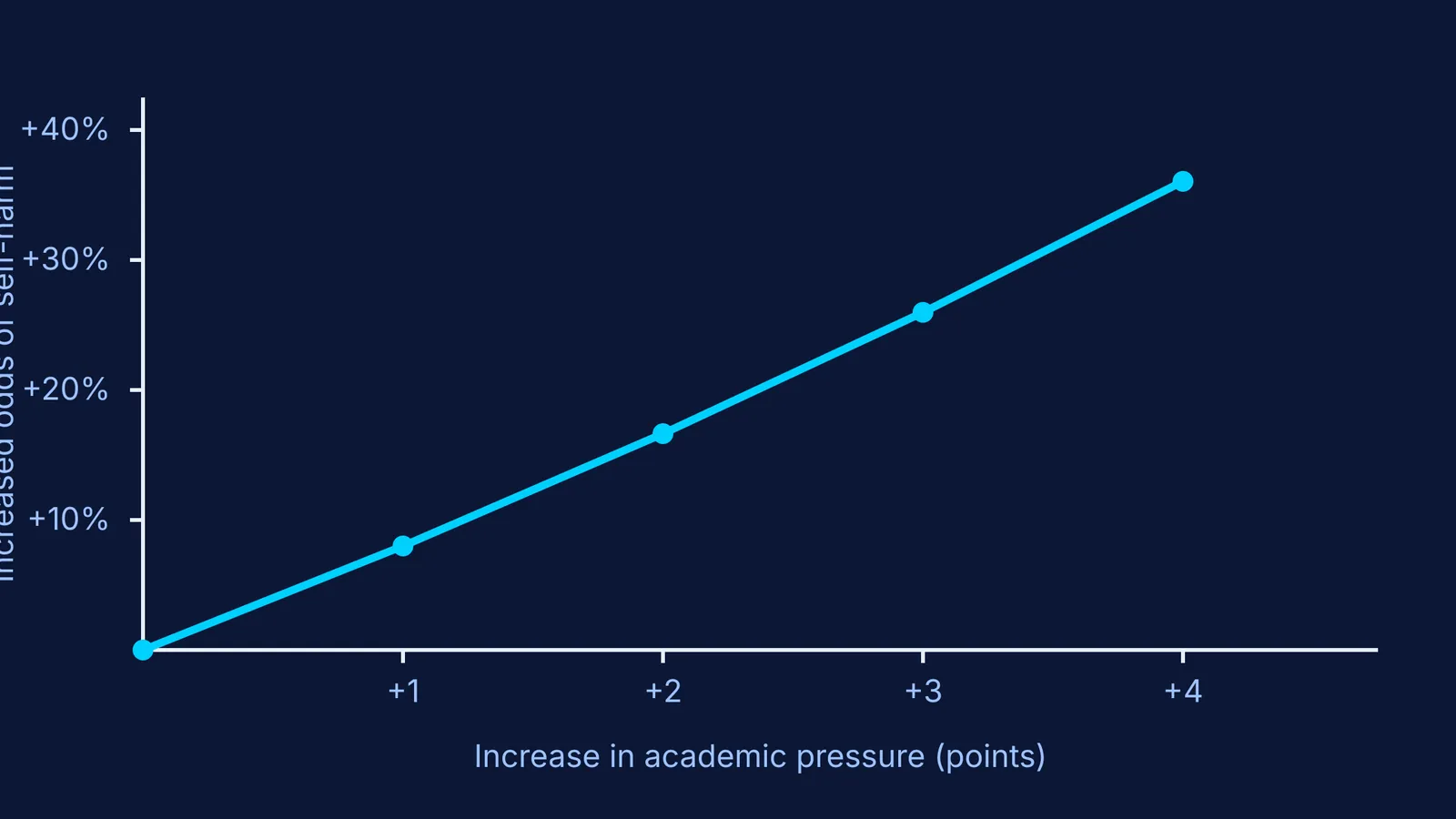
The pressure to perform in board exams or entrance tests like JEE Main and NEET-UG does not just cause temporary anxiety; it carries a measurable psychological weight. A 2026 longitudinal study published in *The Lancet Child & Adolescent Health*, led by researchers Xuchen Guo and Gemma Lewis from University College London, examined the toll of schoolwork worry and expectations. They found that for every one-point increase in a teenager's reported academic pressure at age 15, the odds of self-harm through adolescence and early adulthood increased by 8%00342-6). The study highlights how intensely academic stress impacts adolescent mental health.
This level of stress floods a student's system with cortisol and adrenaline. When a teenager is exhausted from studying late and constantly worrying about their future, they have very little emotional bandwidth left for polite conversation. The mood swings—whether they look like sudden anger, crying spells, or complete withdrawal—are a natural response to feeling overwhelmed. They are not directed at you, even if you happen to be the one asking if they have finished their revision.
How can I handle exam stress without taking it personally?
The hardest part of supporting a moody teenager is not reacting to their tone. When they are irritable, your instinct might be to correct their behaviour or enforce respect. However, starting an argument over tone during a high-stress period only escalates the tension.
Instead, separate the stress from the teenager. If they snap at a simple question, remind yourself that the exam is talking, not your child. Keep your own voice steady and low. If you feel yourself getting angry, it is perfectly fine to walk away and return when you are both calm. Your goal is to be a stable anchor; if you match their chaotic energy, the entire household becomes stressful. For more on managing your own reactions, see how Parents' maths anxiety: what research found and what to do explores the transfer of stress.
What can parents do to support teenagers through exam anxiety?
Teenagers often feel they have lost control over their time, schedule, and choices during exam season. You can help restore that balance by giving them a sense of autonomy at home. Provide a quiet, distraction-free environment and ensure they are eating well and resting. Sleep is critical for memory consolidation and emotional regulation, as explained in Do naps help you learn? What sleep research says about daytime naps. Avoid hovering over their desk or micromanaging their timetable, which can easily trigger a defensive outburst.
When they get stuck on difficult topics, they may become especially irritable, directing their frustration at anyone nearby. This is where the right tools help them regain control without feeling judged. Fermi's AI tutor can work out what they already know and build a plan for the session, which helps when a teenager is too overwhelmed to know where to start. If they are repeatedly failing at a specific calculation and losing their temper, the Fermi Problem Library provides worked problems with a step-by-step solver that explains the reasoning rather than just printing an answer. This clear, patient guidance prevents the escalating frustration that often leads to emotional outbursts.
The Acknowledge, Space, Offer Framework
When a sudden mood swing happens, you need a reliable way to de-escalate the situation. Use this three-step script to navigate the moment without lecturing or reacting in anger.
Acknowledge the feeling, not the attitude: Name the stress without judging the behavior. Validating their struggle immediately lowers their defenses.
*What to say:* I can see you are feeling really overwhelmed with this chapter right now. It looks incredibly frustrating.
Give them space: Allow them to step away from the desk or the conversation. Do not force them to talk about it immediately.
*What to say:* I am going to leave you to it for a bit so you can catch your breath and take a break if you need it.
Offer low-pressure support: Make your help available without forcing it on them. Let them choose when to accept it.
*What to say:* I will leave some snacks on the table outside. Let me know if you want to talk later or if there is anything I can do.
By acknowledging the pressure, giving them room to regulate their emotions, and leaving the door open for support, you show your teenager that you are on their side.


