On this page
It is painful to watch your teenager lose interest in a subject they once loved, especially if the cause is not the material, but the classroom environment. When a student feels that a teacher has clear favourites, the classroom stops feeling like a safe place to learn and starts feeling like an exclusive club they cannot join.
Sixteen-year-olds are highly attuned to fairness. While a teacher's connection with a highly engaged student is natural, consistent bias can damage the confidence of the rest of the class. If you suspect favouritism is holding your child back, you need a plan that supports your teenager while keeping the door open for a constructive relationship with the school.
How does teacher favouritism affect students?
The impact of favouritism is real and measurable. When students perceive unfairness, their drive to excel drops. Quantitative research published in the *Psychology and Education* journal found a direct negative correlation (a correlation coefficient of -0.342) between teacher favouritism and academic learning according to the study. As favouritism increases, student performance decreases.
Bias is also more common than we might think. Research shows that around 77% of teachers demonstrate implicit bias, a rate similar to the general population. This can show up as higher expectations for certain students or calling on the same few hands every day. The students left out often feel discouraged, which can turn into a lasting loss of confidence in that subject. Furthermore, favouritism can create a hostile classroom climate. The overlooked students often internalize a negative self-image, believing they are not good enough academically, which creates a cycle where they stop participating entirely.
How to check if the favouritism is real?
Before you ask for a meeting, you need to separate actual unfairness from a teacher simply giving extra help where it is needed. Sometimes, what looks like favouritism is a teacher rewarding specific grit or helping a struggling student. This is the difference between equality and equity: equity means giving every student what they need to succeed, which might look unequal from the outside.
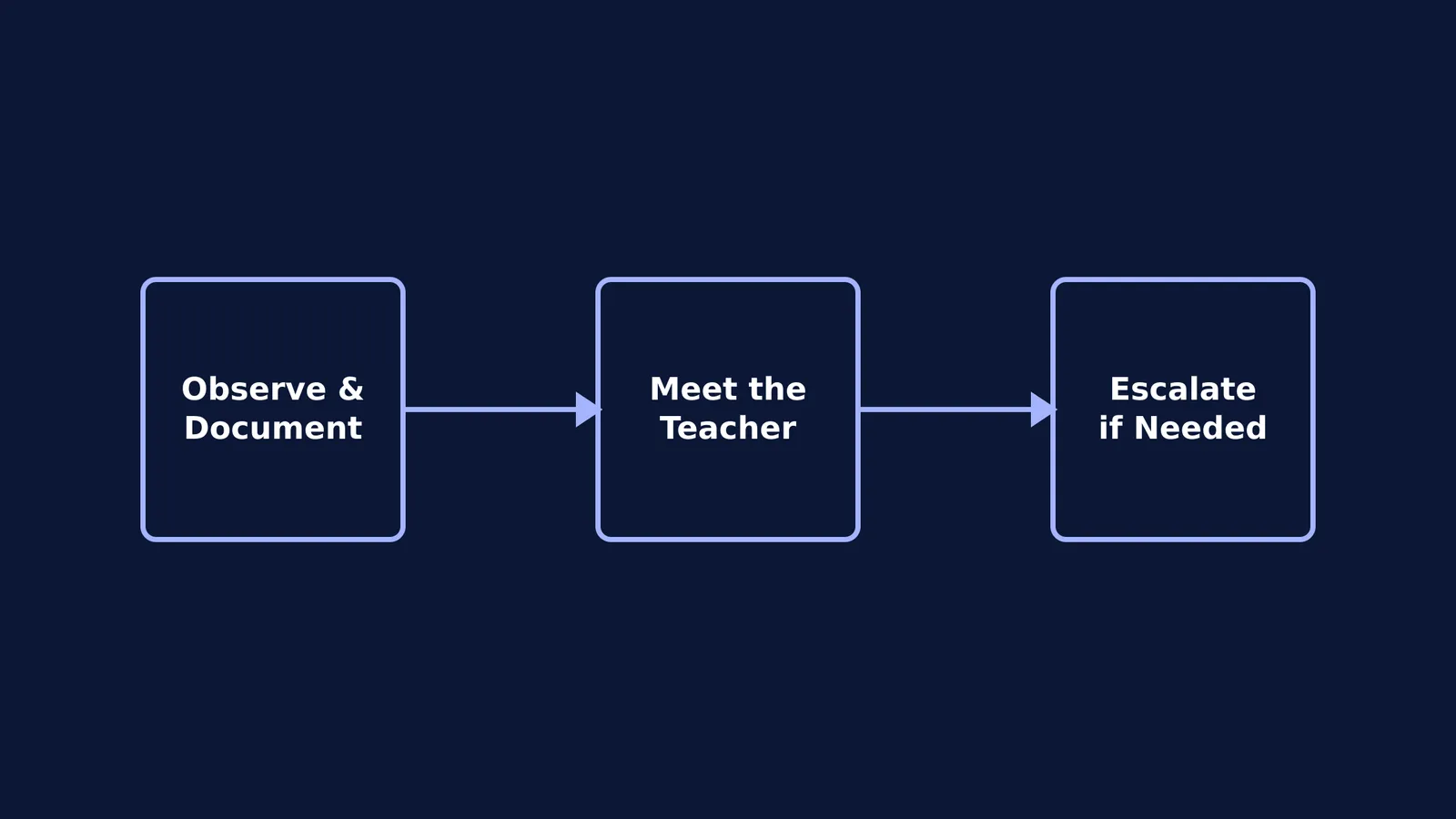
To build a clear picture, document the patterns. Is your child consistently overlooked when they raise their hand? Are late-work rules applied differently to different students without a clear reason? Who receives praise for the same quality of work? Having a written record gives you a factual basis for discussion, rather than just feelings of frustration.
How to talk to a teacher about favouritism?
The first step is a polite, direct conversation. Teachers are often completely unaware of their implicit biases and may have pedagogical reasons for their choices that have not been clearly communicated. Timing matters here: do not bring this up at the end of a busy school day or in front of other parents. Request a private meeting.
When you sit down, focus on your child's experience instead of accusing the teacher of playing favourites. Assume positive intent. You might say, "My child has mentioned feeling a bit discouraged lately and feels they aren't being called on as much. I wanted to see how we can help them feel more engaged." This approach invites the teacher to solve the problem with you. If you need help preparing, our guide on parent-teacher meeting questions covers how to keep these conversations constructive.
What to do if the school does not help?
If the conversation does not change anything, or if the bias is actively harming your child's wellbeing, you may need to escalate the issue. Share your documented examples and the result of your first meeting with the school administration, such as the principal or a school counsellor.
At home, focus on resilience. Remind your teenager that one teacher's opinion does not define their ability. If they are losing motivation in a key subject, you might find ideas in our guide on when your child loses interest in studies.
If your child is missing concepts because they are tuning out in class, they need a safe place to catch up. Fermi's AI tutor works out what a student already knows and builds a plan for the session, so they sit down to a clear next step. If they need to review ideas they missed, the Fermi Concept Library holds every concept in physics, chemistry, biology, mathematics and computing, each with its own lesson and its place in the map. Giving them back control of their learning is the best way to protect their confidence.