

On this page
Most parents want their teenagers to learn the value of money, but handing over cash or a debit card without a system often leads to a familiar result: the money disappears, and the teenager cannot remember where it went.
According to the OECD's PISA 2022 Financial Literacy report, 77% of 15-year-olds had bought something that cost more than they intended to spend in the previous year. The same report found that students who regularly discuss money matters with their parents tend to perform better in financial literacy tests.
Teaching a teenager to track their spending moves financial responsibility from an abstract idea to a daily habit. It shifts the conversation from a parent saying "no" to the teenager managing their own resources.
Why should a teenager track their spending?
When teenagers tap a phone or hand over a card, the transaction is physically effortless and often invisible. Writing down a purchase—whether on paper or typing it into a tracking app—forces them to pause and acknowledge the cost.
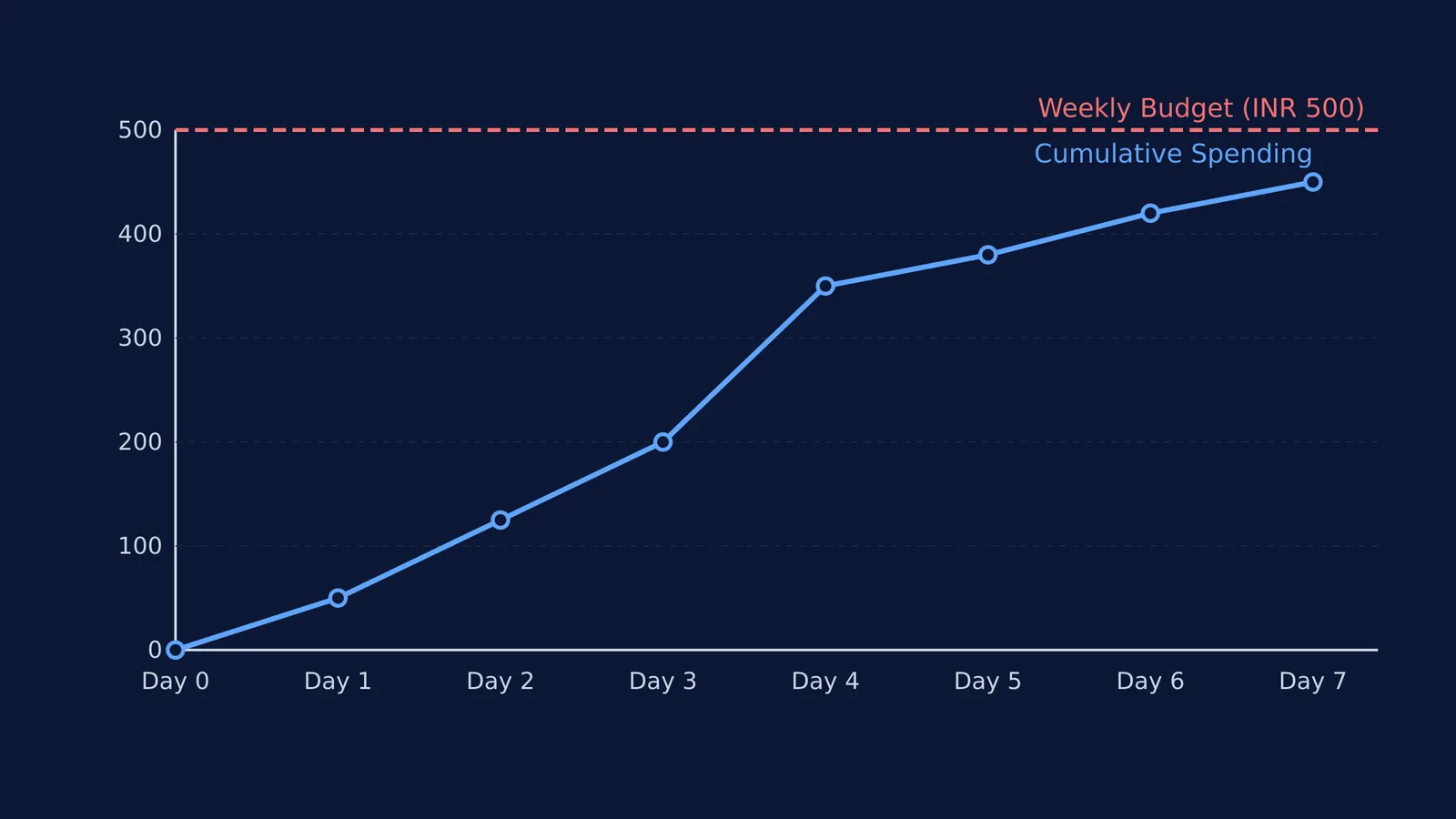
This visibility changes behaviour. When a teenager sees a bar chart of their monthly spending, just as William Playfair invented the bar chart to make numbers visible to the eye, they often realise that small, frequent purchases drain their budget faster than large, planned ones. Tracking provides the raw data needed to make informed choices. Without a record, it is impossible to know if they are spending their allowance on things they actually value.
How can a teenager set up a spending tracker?
The specific tool matters less than the habit itself. Some families use a physical notebook, while others prefer a shared spreadsheet or a dedicated phone app. The goal is to reduce the friction of recording an expense.
Keep it simple: Start with just three columns: the date, the item, and the amount. Avoid complex categorisation systems early on.
Choose the right medium: If your teenager always has their phone in hand, a simple notes app or a budgeting app might work best. If they respond better to tangible objects, a small pocket notebook is ideal.
Log immediately: Encourage them to record the expense the moment they make a purchase, before they forget the details. Waiting until the end of the month makes the task overwhelming.
Separate work from spending: If they have a part-time job, help them track their earnings separately from their daily allowance to see the difference between gross income and disposable cash.
How do you separate needs from wants?
One of the hardest lessons for a teenager is distinguishing between a genuine need and a sudden want. An expense tracker naturally brings this conflict to the surface.
When reviewing their weekly spending, ask them to label each purchase with an "N" for need or a "W" for want. A school lunch might be a need, while an expensive coffee on the way home is a want. This exercise helps them see that while wants are perfectly fine, they must fit within the budget remaining after the needs are met.
This categorisation also helps when a teenager inevitably overspends. If they run out of money before the end of the month, the tracker provides the explanation. Instead of bailing them out, a parent can point to the log and help them identify which "wants" they could delay next time. Experiencing these small, safe financial failures while still living at home is crucial for long-term learning.
How do you conduct a weekly money review?
Tracking only works if the data is regularly reviewed. Set a weekly time, such as Sunday evening, to sit down and look at the numbers together. This should be a brief conversation.
This is not a time to scold them for buying too many snacks or spending their allowance on a video game. Instead, use the numbers to ask neutral, curious questions: "Did that purchase feel worth it?" or "Are you on track to save enough for that new jacket?"
When a student makes a mistake in physics, they need to trace their steps to see where the logic broke down. The Fermi Problem Library has worked problems with a step-by-step solver that explains the reasoning rather than printing an answer, so a student can find exactly where they went wrong. A spending review works the same way: it lets a teenager look at their choices step-by-step and see exactly where their money went, rather than just discovering their account is empty.
By looking at their own data, much like a statistician might look at data before testing it, teenagers learn to adjust their own behaviour. They begin to see the trade-offs: spending more on entertainment this week means spending less on clothes next week. Over time, these weekly reviews build the financial literacy and confidence they will rely on as independent adults.
For more on guiding your child's education, read our guide on how parents can help children learn without adding pressure.


