

On this page
In an emergency, a mobile phone can be lost, broken or simply out of battery. Despite this, a survey by Panda Security found that 82% of parents would be unable to recall their child's phone number without looking at their contacts. This reliance on smartphones, known as "digital amnesia", extends to children too. If they get separated from you in a crowd or a busy shop, they need to know exactly who to call and where they live to get back to you safely.
If you are not sure where to start teaching these details, remember that Fermi's AI tutor starts a session by working out what a student knows and building a plan. You can do the same: start with their own name and age before moving on to a short chunk of the phone number. Children are usually ready to start learning these contact details between the ages of four and six, when their language and memory skills are rapidly developing.
The science of chunking a phone number
A string of 10 digits is too long for a young child's working memory to hold onto. Just as students use the bundle method to group items in permutations, you can 'bundle' or chunk a phone number so it is easier to remember. In his 1956 paper *The Magical Number Seven, Plus or Minus Two*, psychologist George A. Miller showed that our short-term memory struggles to hold more than seven items at once (Miller, 1956).
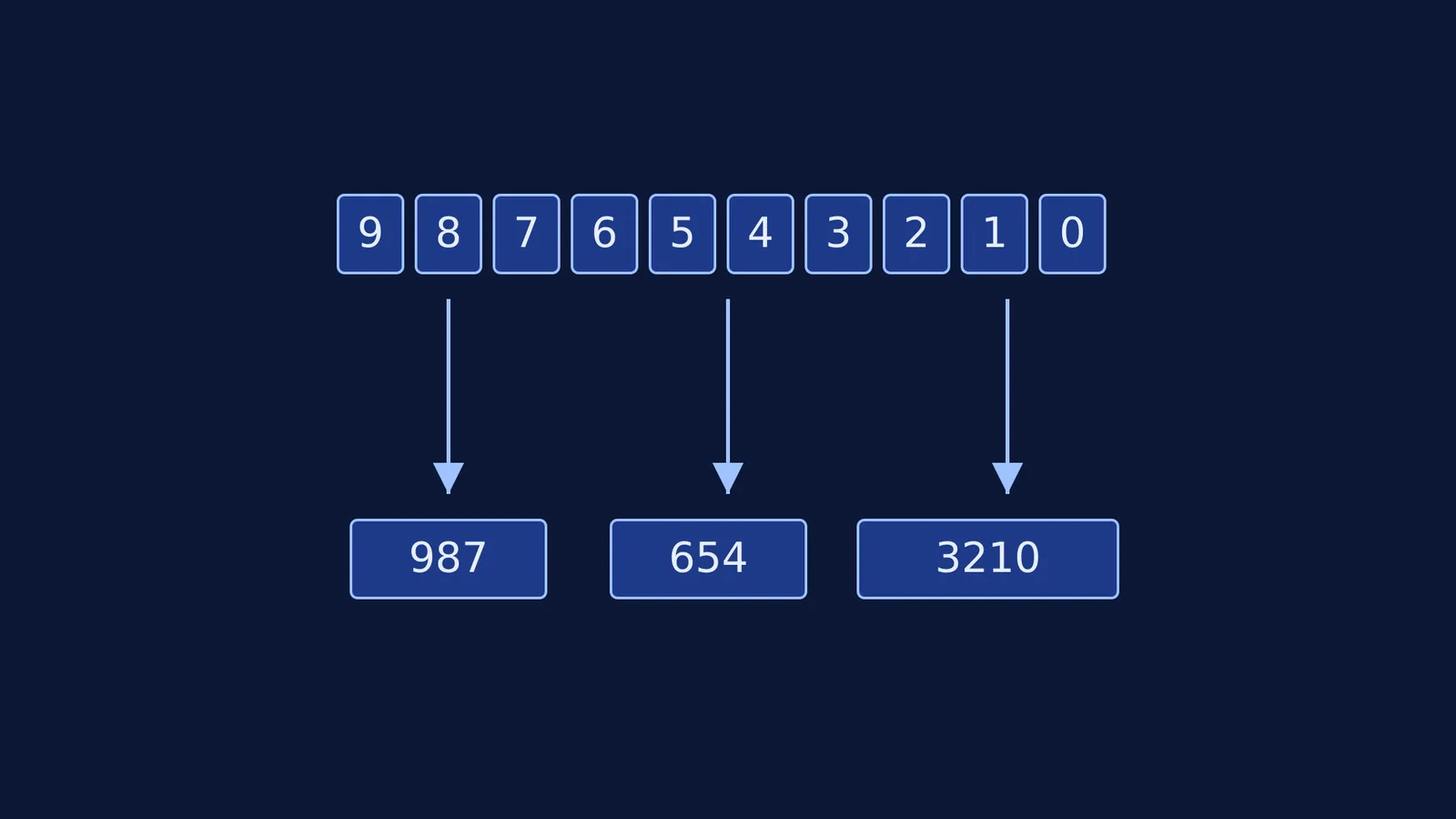
By breaking the number into three small chunks (for example, 987 - 654 - 3210), each chunk acts as a single item in the mind. This reduces the mental load from ten items down to three. You can use the same technique for the home address, breaking it down into the house number, the street name, and finally the town or city. Teaching one chunk at a time ensures they master the first part before feeling overwhelmed by the next.
How to teach a phone number using songs and games?
Children memorise melodies much faster than plain text. Understanding the parts of the human brain tells us that rhythm and music engage different cognitive pathways than rote learning. By making the process fun, you remove the anxiety of memorisation.
Set it to a song: Use a familiar tune like *Twinkle, Twinkle, Little Star* or *The Muffin Man*. Sing the three chunks of your phone number to the rhythm. Record yourself singing it on your phone and play it back during car rides or bath time.
Practise dialling: Print a large picture of a phone keypad or use an old, disconnected mobile phone. Ask your child to "dial" the number while saying each digit out loud. This builds physical muscle memory, which is often stronger than verbal memory alone.
Number swat: Write the digits 0 to 9 on separate pieces of paper and spread them on the floor. Call out your phone number one digit at a time and ask them to jump on or swat the correct piece of paper.
How to teach a home address visually?
An address is a mix of words and numbers, so visual cues work best here. It helps to ground the abstract words in the physical place they live, giving the address a concrete meaning.
The mailbox hunt: Point out the numbers on your front door and read the street sign together every time you walk home. Show them that the words they are memorising are the same ones written on the signpost.
Address art: Ask your child to draw a picture of your house. Help them write the house number on the door and the street name on the path underneath it. You can even draw nearby landmarks to give them spatial context.
The safety poster: Write their full name, your phone number and the home address in large, bright letters. Stick it on the fridge or the back of their bedroom door at their eye level, and read it together every morning.
When and how to practise saying them?
Make the practice part of your daily routine rather than a stressful, sit-down test. Repetition is key to moving these details from short-term memory into long-term recall. You can ask for the phone number as a "password" before giving them a snack or starting their favourite cartoon.
Most importantly, role-play what to do if they get lost. Discuss who counts as a "safe adult" to approach. A police officer is a good choice, but they might not always be around. Teach them to look for a shop worker wearing a uniform and a name badge, or another parent with young children. Practise walking up to this safe adult and saying: *"I am lost. My name is Maya, and my parent's phone number is..."* This ensures they do not just know the number, but also know exactly when and how to use it safely in a real situation.


