

On this page
The results are out, the ranks are known, but the journey is not over. The weeks between exam results and college admission are often the most stressful part of the entire preparation cycle.
Students who have spent years focused on a single goal suddenly find themselves waiting for an algorithm to decide their fate. As a parent, managing this anxiety and keeping your child grounded is critical. During this phase, you transition from being a study supervisor to being an anchor of stability.
How long does counselling take for JEE and NEET-UG?
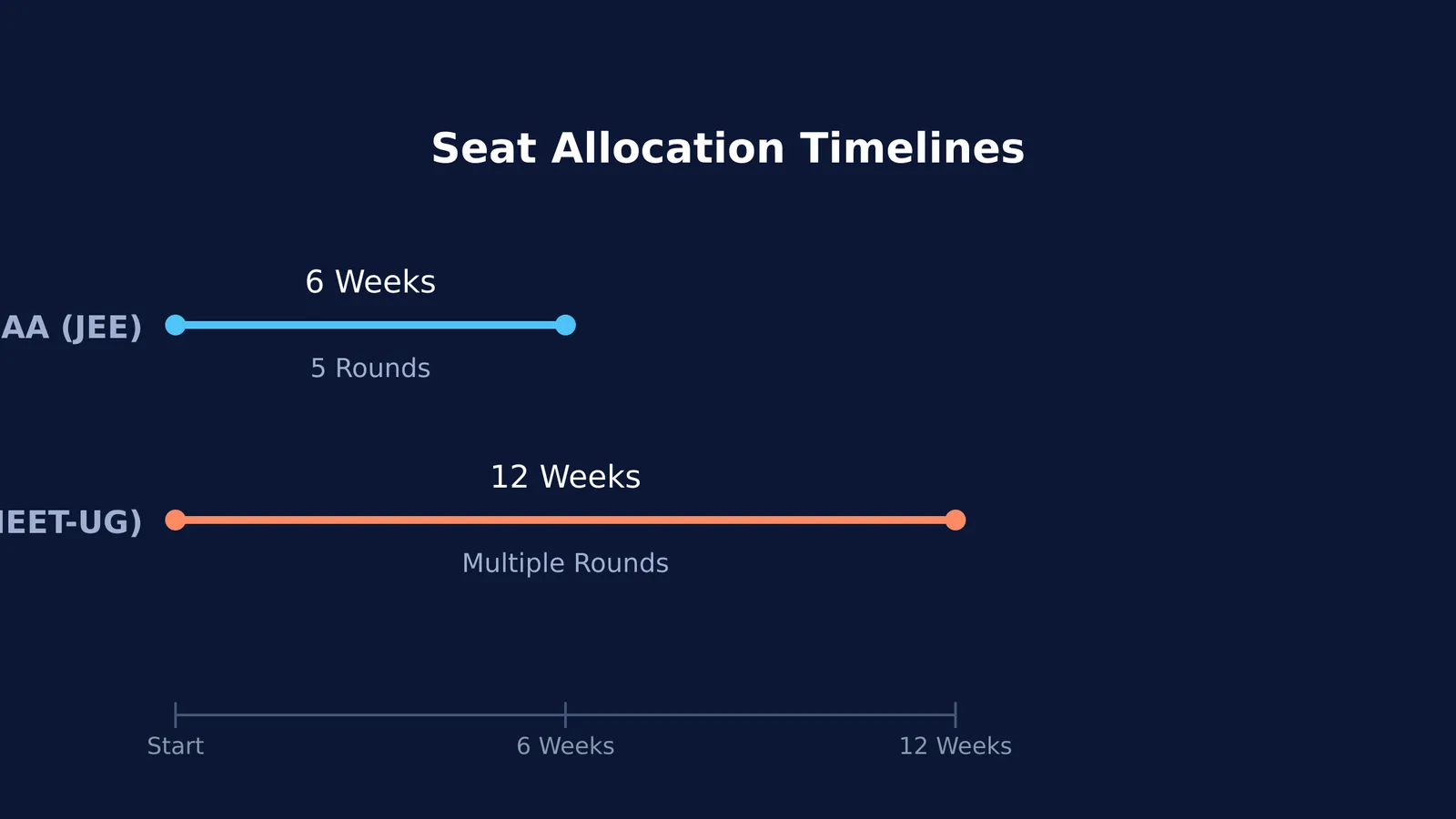
Understanding the timeline is the first step in managing expectations. JoSAA counselling for JEE spans about 6 weeks across five rounds 1. For medical aspirants, the process is even longer. MCC counselling for NEET-UG lasts roughly 10 to 12 weeks 2, covering multiple rounds including all-India quota and stray vacancy rounds.
This means your child might be in a state of limbo for over a month, constantly checking portals, comparing mock allotments, and worrying about cut-offs moving by a fraction of a percent. The duration alone is enough to wear down even the most resilient students, especially when their peers might already be celebrating their admissions or making college preparations.
Why is the waiting period so stressful?
Unlike exam preparation, where working harder directly impacts the outcome, counselling is entirely out of a student's control. They have already done the work; now they must simply wait. This lack of agency often leads to rumination and endless "what if" scenarios.
If your child is debating whether to take a partial drop, wait for a spot round, or pivot to another stream, the anxiety compounds. You can read more about the specifics of these processes in our guides on JoSAA counselling for parents and NEET UG counselling for parents.
Additionally, the constant questions from well-meaning relatives and neighbors about "which college they got into" can make the waiting period feel like a public spectacle. Teenagers are highly sensitive to peer comparisons, and seeing friends secure seats in early rounds while they wait for later allocations can trigger feelings of inadequacy.
How can parents help maintain calm?
The best way to support your child is to shift their focus from the outcome to the present moment.
Here is a practical "3-Step Waiting Plan" you can implement together:
Set a "Portal Schedule": Agree that you will only check the official websites once a day, preferably in the evening. Refreshing the page every hour only fuels anxiety. Outside of this designated time, encourage them to disconnect from admission-related forums and chat groups.
Engage in Low-Stakes Learning: Keep their mind active without the pressure of an impending exam. If they are considering a backup attempt or just want to keep their concepts fresh, they can explore the Fermi Simulation Lab for interactive simulations for the ideas that are easier to see than to read.
Map Out Scenarios A, B, and C: Sit down with a piece of paper and write out the plan for the best-case, realistic-case, and worst-case scenarios. Having a structured decision tree prevents panic when a round's result is not as expected. Once a plan is on paper, the unknown becomes less terrifying.
What should you do during the final rounds?
As counselling progresses to the final or spot rounds, the tension usually peaks. Remind your child that their worth is not tied to a specific college brand. If the final allocation requires a tough decision—like moving to a different city, compromising on the preferred branch, or opting for a private institution—give them space to process the disappointment before jumping into problem-solving mode.
Avoid showing your own anxiety. Children often mirror their parents' emotional states. If you remain pragmatic and optimistic, they are more likely to adopt the same attitude.
If they decide to take a drop year to try again, structure their restart carefully so they don't burn out by October. They can use the Fermi Problem Library for worked problems with a step-by-step solver that explains the reasoning rather than printing an answer, helping them rebuild their confidence at their own pace without feeling overwhelmed.
Keeping your child calm across multiple counselling rounds is ultimately about being a steady presence. When they see that you are not panicking over the fluctuating cut-offs, they will find it easier to breathe, wait, and confidently accept the final outcome.


