

On this page
If your child spends exam evenings scrolling, you are probably wondering whether the apps should go until the last paper. The research gives a mixed answer: cutting down helped in one well-known experiment, and quitting outright helps some people and not others. So it makes sense to start with a plan your teen helps write, not the strictest rule you can think of.
Should my child delete social media before board exams?
Not necessarily. In a University of Pennsylvania experiment published in the Journal of Social and Clinical Psychology, 143 undergraduates were randomly assigned either to limit Facebook, Instagram and Snapchat to 10 minutes per platform per day, or to use them as usual, for three weeks. The limited group reported significantly less loneliness and depression than the group that carried on as usual. That was a limit, not a deletion.
Stopping completely has trade-offs. In a study by Eric Vanman and colleagues, 138 active Facebook users either gave it up for 5 days or used it normally; those who quit had lower levels of the stress hormone cortisol, but also lower life satisfaction. In a larger randomised experiment in the American Economic Review, deactivating Facebook for four weeks increased offline activities, including socialising with family and friends, raised subjective well-being, and caused a large, persistent drop in Facebook use after the experiment ended.
A 2022 systematic review of digital detox studies covered 21 studies with 3,625 participants and found mixed results: some showed benefits, others none, and some found well-being got worse. The experiments above were on university students and adults, not Indian board students, so treat them as a guide rather than a rule.
What are the options, from deleting apps to time windows?
Pick the lightest option that will actually work for your teen:
Delete the apps until the last paper. Suits a teen who knows they cannot stop at "five minutes". Keep the account, so nothing is lost.
Log out and move the apps off the home screen. Small friction, which may be enough for teens who open apps out of habit.
A daily time window. For example, 30 minutes after dinner, roughly the total in the Pennsylvania study. Use a timer, not willpower.
Weekend or after-paper windows only. Works well once the datesheet is out and gaps between papers are known.
Whatever you choose, keep the school or class group that carries notices, and turn its notifications to silent. Our guide to setting up focus mode on your teen's phone walks through the settings.
If the phone is also a study tool, give it a clear job. The Fermi Problem Library has worked problems with a step-by-step solver that explains the reasoning rather than printing an answer, so a quick doubt does not need a trip through the feed.
How do you agree on a plan with your teen?
A rule imposed in February is easy to break by March. A plan your teen helped write is harder to break. Try this conversation:
You: "Boards are about eight weeks away. How do you feel the phone is affecting your study right now?"
Let them answer fully. Your teen may already know which app costs them the most time.
You: "What would you try? Pick something you think you can keep for a month."
Agree the details: which apps, which times, where the phone sleeps, and what happens after a slip (a reset, not a punishment).
Set a review date two weeks in, and change what is not working.
Write it on one page and both sign it. Our post on writing a phone agreement with your teenager has a template.
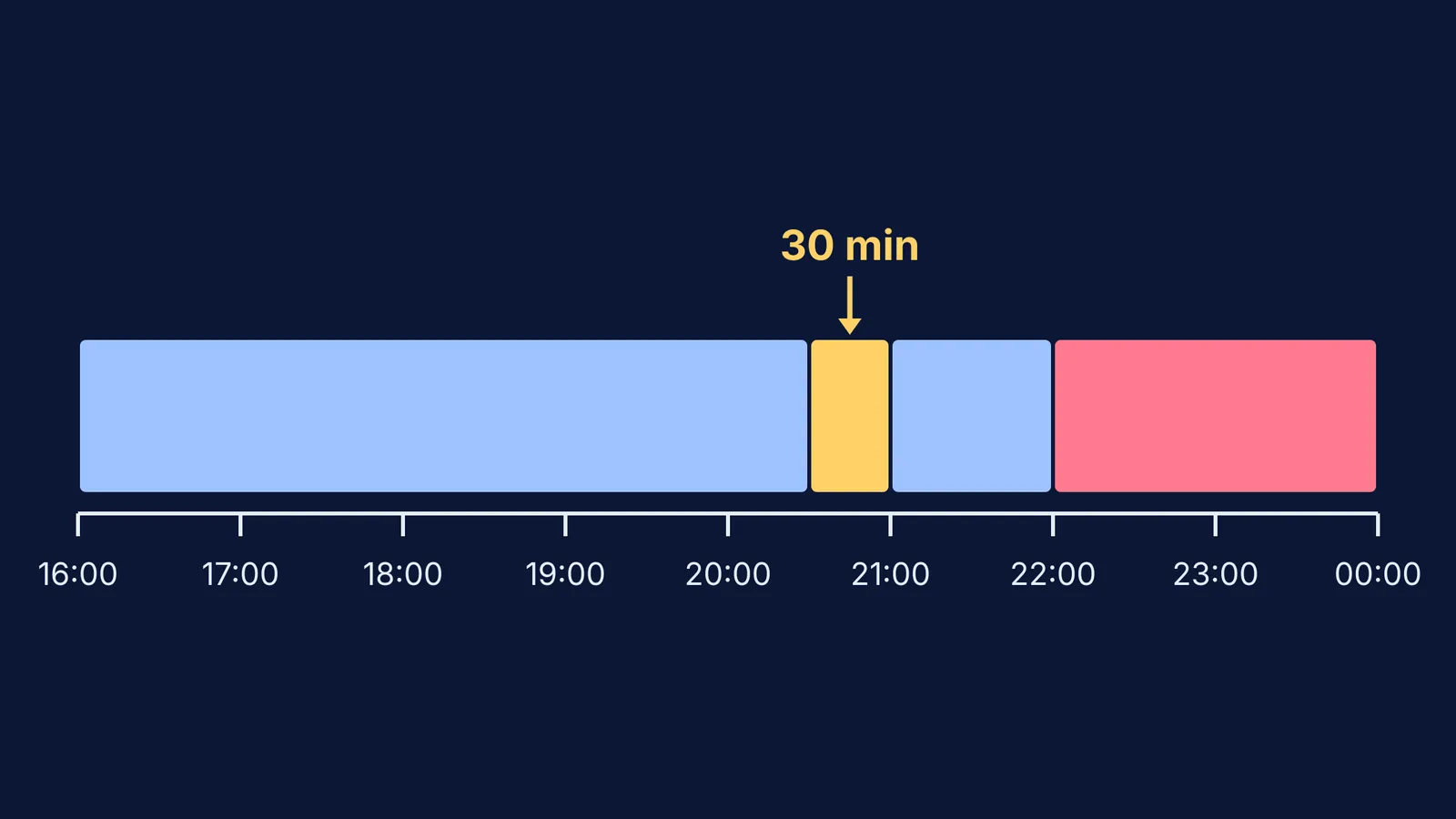
Here is an illustrative example. Rohan, a Class 12 student, finds that Instagram eats about two hours a night. He chooses option 3: one 30-minute window at 8:30 pm, phone charging in the hall from 10 pm, and the apps fully deleted from the day before each paper until it is over. At the two-week review he admits Sunday is the hardest day, so they add a 30-minute Sunday afternoon window.
What should happen when the break ends after exams?
Plan the ending before you start, because "after boards" can turn into a binge. Agree on a restart day, such as the evening of the last paper. Then:
Reinstall one app at a time and notice which ones you did not miss.
Meet friends in person in the first week, not just online.
Keep one rule that worked, such as no phone in the bedroom at night.
Remember the AER experiment: people used Facebook less after their break ended. A break can change habits after it ends, not just during it. For the weeks after results, see our guide to planning the break after Class 10 boards.
When is it more than a phone problem?
If your teen seems low, withdrawn or anxious most days, or panics without the phone, talk to your family doctor or school counsellor. Tele MANAS, the Health Ministry's free 24x7 mental-health helpline, is on 14416 or 1800-891-4416.


