On this page
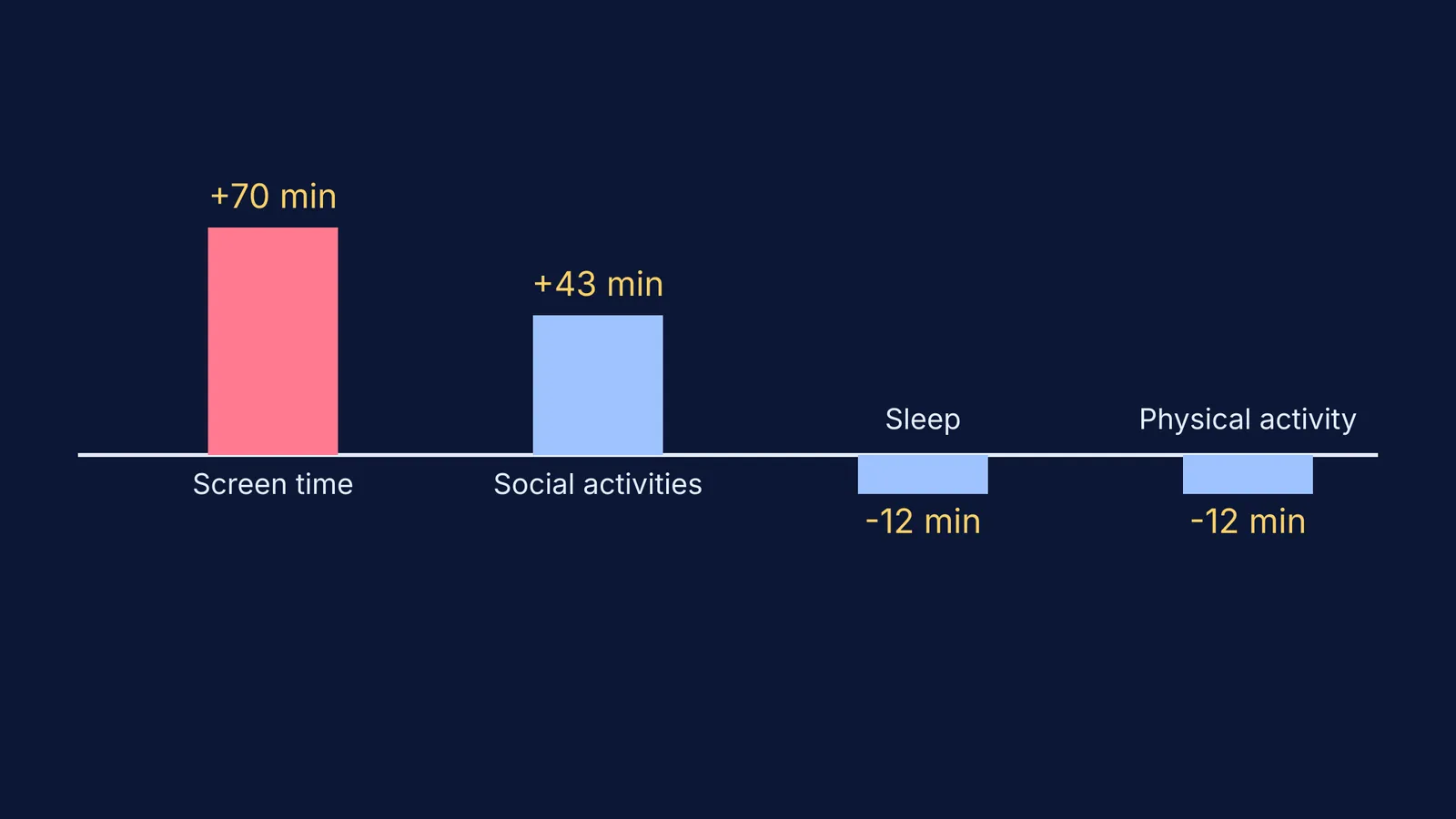
The bell rings on the last day of school, and the strict structure of the academic year vanishes. While students need the rest, the sudden abundance of free time often leads to one default activity: looking at a device. A 2023 study published in *Pediatric Obesity* tracked children across the transition from term time to the holidays and found that screen time increased by 70 minutes per day on average (DOI: 10.1111/ijpo.13029).
This spike is perfectly natural. Without lessons, commute times, and extracurriculars, the "structured days hypothesis" suggests that teenagers will inevitably fill the void with sedentary, screen-based activities. But instead of fighting an unwinnable battle for a zero-screen summer, families can negotiate a system that allows for relaxation while protecting time for reading and the outdoors.
Why do unstructured days increase screen time?
During the academic year, the school timetable acts as an automatic limit on technology use. When that structure disappears, students often default to digital entertainment because it requires the least activation energy.
The 2021 Common Sense Census reported that, even during the school year, teenagers between the ages of 13 and 18 average 8 hours and 39 minutes of entertainment screen media per day (Source). During extended periods at home, such as summer vacations or pandemic lockdowns, this number can climb even higher. A 2022 study by Dr. Jason Nagata in *JAMA Pediatrics* found that during the unstructured days of the COVID-19 pandemic, adolescent recreational screen time doubled to 7.7 hours a day (DOI: 10.1001/jamapediatrics.2021.4334).
While a typical summer is not a lockdown, the lack of a mandated routine produces a similar effect. Simply telling a teenager to "get off their phone" rarely works without replacing that time with something else.
What are the best screen time rules for summer vacation?
The most effective strategy for the holidays is not a strict ban, but a framework of "earned time" and non-negotiable device-free zones.
Establish a "first things first" routine: Before screens turn on for the day, agree on a checklist of completed tasks. This might include making the bed, eating breakfast, and completing one household chore. By front-loading the day with physical actions, you prevent the common trap of waking up and immediately scrolling.
Mandate a daily reading or outdoor block: The 2023 *Pediatric Obesity* study by Watson et al. (DOI: 10.1111/ijpo.13029) found that children engaged in 12 fewer minutes of moderate-to-vigorous physical activity during the summer compared to the school year. Counteract this by scheduling a non-negotiable hour of outdoor time or physical play. Similarly, a dedicated reading hour helps combat the "summer slide" in literacy. Setting up A family quiet hour: setting up shared study and reading time can make this a shared habit rather than an isolated chore.
Use technology for active learning: Not all screen time is equal. An hour spent passively watching videos affects the brain differently than an hour spent coding, writing, or solving a complex problem. If your child is using their holiday to prepare for upcoming science classes, they might spend time in the Fermi Simulation Lab running interactive simulations of physics concepts. This form of active engagement is a constructive use of a device.
Protect sleep with device-free nights: The same *Pediatric Obesity* study noted that children lost an average of 12 minutes of sleep per night during the holidays. Keep screens out of the bedroom after a set hour—such as 9:30 PM—to ensure their circadian rhythms are not disrupted by blue light. If you need more guidance on setting evening routines, see our guide on How much sleep teenagers need, and how parents can help.
How do you negotiate rules with teenagers?
Younger children might accept a rigid timetable, but teenagers require negotiation. Instead of handing down a list of rules, sit down together in the first week of the holidays to draft a summer media plan.
Ask them how much time they think is reasonable for gaming or social media, and what non-screen goals they want to achieve—like learning a new guitar chord or meeting friends at the park. When they have a hand in designing the rules, they are more likely to follow them. This approach also aligns with Choice and autonomy: parenting that builds real motivation, which helps develop their internal drive rather than relying on your constant policing.
Summer is fundamentally a time for rest. By creating a loose but bounded structure, you can ensure that their screen time remains a form of relaxation, rather than an all-consuming habit.