

On this page
When devices follow family members to the dinner table and the bedside, digital notifications constantly fragment conversations and rest. Setting screen-free zones at home gives families a clear, physical way to protect connection and sleep without arguing over daily minute-by-minute screen time. The Indian Academy of Pediatrics guidelines on digital wellness recommend establishing strict device-free boundaries during family meals and in children's bedrooms, along with switching off all screens at least one hour before bedtime.
Why should bedrooms and dining tables be screen-free?
Meal times and bedtime are the two daily windows where device use causes the steepest psychological and physiological disruption. Screen light suppresses melatonin secretion, while incoming notifications keep the nervous system alert right when the body needs to unwind.
At the dining table, the presence of digital screens interrupts the natural rhythm of family conversation and social cues. In a randomized field experiment published in the Journal of Experimental Social Psychology, researchers Ryan Dwyer, Kostadin Kushlev, and Elizabeth Dunn observed 304 diners eating in a café. Participants who kept their smartphones on the table reported significantly lower enjoyment—about 0.5 points lower on a 7-point scale—and felt more bored and distracted than those who placed their phones away in a basket. A related investigation in BMC Obesity led by Lisa Tang found that parental mealtime screen use is directly associated with higher weekday screen time in children, showing that children mirror the exact digital habits they see modeled.
How does the mere presence of a phone affect attention and sleep?
Many parents and teenagers assume that keeping a phone face down or on silent mode in the bedroom or near a study desk prevents distraction. The cognitive and sleep data show otherwise.
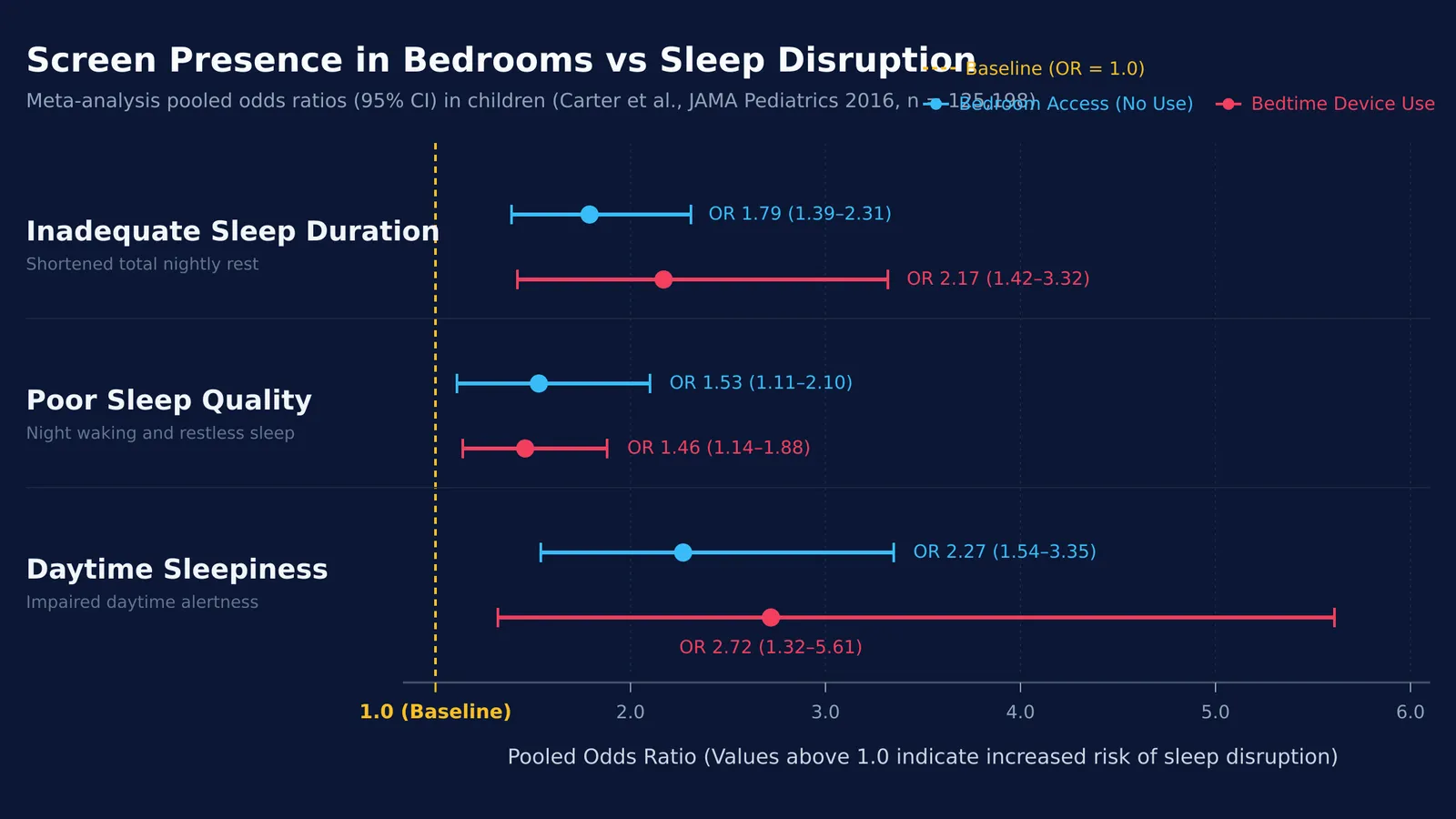
In a systematic review and meta-analysis published in JAMA Pediatrics, Dr. Ben Carter and colleagues synthesized 20 studies covering 125,198 children with a mean age of 14.5 years. Bedtime device use more than doubled the odds of inadequate sleep duration (odds ratio 2.17) and increased the odds of excessive daytime sleepiness (odds ratio 2.72). Even when children did not actively use their devices at night, simply having bedside device access increased the odds of inadequate sleep duration by 79% (odds ratio 1.79) and daytime sleepiness by 127% (odds ratio 2.27).
A parallel cognitive mechanism operates during study sessions. A study in the Journal of the Association for Consumer Research by Adrian Ward and colleagues tested 520 participants and revealed a clear brain drain effect: having a smartphone physically present on the desk, even turned completely off and facedown, significantly reduced working memory capacity and fluid cognitive performance compared to leaving the phone in another room. When devices are nearby, our brains actively consume cognitive bandwidth just to resist checking them, exacerbating the risks of multitasking while studying.
How do you get the whole family to follow device-free zones?
Device boundaries collapse when rules are treated as a unilateral restriction imposed on teenagers. If parents check work emails or messaging apps during dinner while demanding that their children hand over their phones, children view the rule as arbitrary surveillance.
To make screen-free zones work across the whole household, apply three practical rules:
Model the boundary universally. The rule applies to every adult and child alike, with no parental exceptions for work notifications.
Set up a central charging dock. In line with the IAP digital wellness guidelines, charge all family devices in a shared hallway or kitchen at least 60 minutes before bedtime.
Replace before removing. Provide an analog alarm clock or standalone audio player so no one relies on a smartphone beside the pillow.
When school assignments require digital research or practice, maintaining a clear separation between study tools and casual entertainment is crucial for staying focused during online classes. When schoolwork requires screens, Fermi's AI tutor works out what you already know and builds a plan for the session, ensuring academic screen time remains structured rather than wandering into passive browsing.
How should families divide the home into screen zones?
Instead of policing individual minutes across different devices, divide the physical home into three clear zones:
Red Zone (Zero screens): The dining table, all bedrooms, and bathrooms. Devices never cross these thresholds under any circumstances.
Amber Zone (Bounded academic screens): The study desk. Screens are permitted only for active coursework, homework, or structured revision, ideally during an established family quiet hour routine.
Green Zone (Shared recreational screens): The living room. Leisure viewing, family movies, or shared gaming occur here out in the open during agreed weekend or evening windows.
What to say: the team experiment script
When proposing these zones to teenagers, frame the change as a mutual family experiment to improve sleep and lower stress:
"We have noticed all of us feel drained in the evening, and phones at dinner keep interrupting our conversations. Let's run a two-week family experiment. None of us will bring phones to the dining table or keep them in our bedrooms overnight. We will set up a shared charging station in the hallway at 9:00 PM and get real alarm clocks for our bedside tables. We will try it together for 14 days and decide as a family how it felt."
Framing the zones as a collective trial builds genuine buy-in, transforming screen boundaries from a source of conflict into an automatic household habit.


