

On this page
A phone call from the principal about your child’s online behaviour can turn a normal day upside down. You might be told they forwarded an unkind message, used inappropriate language in a class group chat, or cyberbullied a classmate. When a school says your child misbehaved online, the immediate rush of anger, embarrassment, and protectiveness you feel is completely normal.
However, your reaction sets the tone for how effectively the problem is resolved. Parents need a clear, level-headed plan to handle the school's report, discipline their child fairly, and correct the digital behaviour before it becomes a permanent habit.
Why do good kids misbehave online?
It can be baffling when a polite, responsible teenager gets involved in digital drama. The reality is that the internet creates distance, which often reduces empathy and lowers a young person's inhibitions. A 2024 report by the World Health Organization found that 12% of adolescents admit to cyberbullying others.
Furthermore, continuous access to devices increases the likelihood of poor choices. According to a 2023 Pew Research Center report, 46% of teens report being online almost constantly. With so much of their social life happening behind a screen, mistakes are bound to happen. Online aggression is a widespread issue globally; on average across OECD countries, 20% of students reported being bullied at school at least a few times a month, according to the PISA 2022 results.
It is important to separate your child's core character from their bad digital choices. Often, students escape into online group chats when they feel overwhelmed by their workload. Understanding why some JEE aspirants plateau despite studying every day can help you spot if academic avoidance is driving their excessive screen time.
School says child misbehaved online: what should you do?
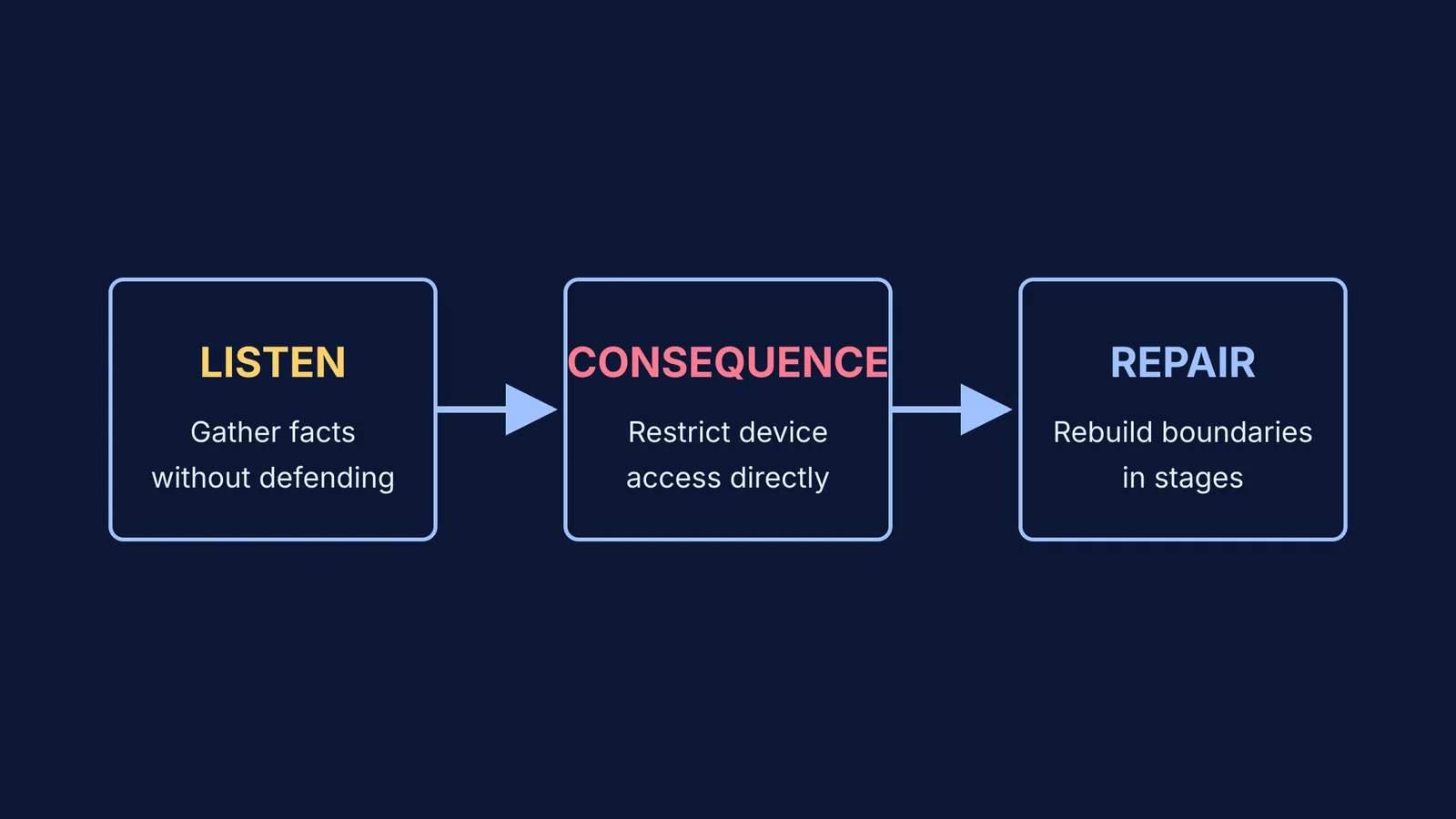
When the school reaches out, you need a structured approach. Use the LCR Framework: Listen, Consequence, Repair.
Listen to the school without defending: When the principal or teacher calls, your first job is to gather facts. Do not immediately defend your child or blame the other students involved. Ask the school to provide specifics, such as screenshots, chat logs, or witness accounts. Take notes. Thank the staff for bringing the issue to your attention and promise to follow up after you have spoken with your child.
Listen to your child without shouting: Sit down with your child in a quiet place. Instead of leading with an accusation or a yell, ask an open question: "The school called me today about some messages sent in the class group. Tell me what happened." Let them speak. They might try to downplay their role, blame a friend, or claim it was just a harmless joke. Remind them that intent does not erase impact, and that digital words carry real-world weight.
What are the appropriate consequences?
Discipline works best when it is directly related to the offence. If the misbehaviour happened on a smartphone, the consequence must involve restricting that smartphone.
Immediate loss of privilege: Remove the device used for the misbehaviour for a specific, stated period (for example, one week). Stick to this timeline.
Supervised access: If they need the internet for homework, they must use a family laptop in a shared space like the living room. During these supervised study times, if they need help grasping difficult subjects, Fermi's AI tutor can work out what they already know and build a plan for the session, keeping them focused on learning without the distractions of social media.
Making amends: Require your child to take responsibility. This usually means writing a sincere apology to the person they hurt. You can deliver this apology through the school to ensure it follows the school's mediation protocols and doesn't initiate unwanted direct contact.
How can you rebuild trust?
You cannot police your teenager's digital life forever. The ultimate goal is to teach them to regulate themselves and make better choices when you are not looking.
Start by establishing a clear digital contract before returning their device. Outline exactly what time the phone must be put away at night and what apps are temporarily off-limits. Check their devices randomly for the first few weeks to ensure compliance. If they argue, remind them that privacy is a privilege that comes with responsible behaviour.
Finally, maintain their usual academic routines. A structured day leaves less idle time for digital trouble. If you find they are struggling to stick to a good schedule, reviewing how to analyse a mock test and organising a dedicated study hour can redirect their energy toward productive habits. Earning back trust takes time, but treating the incident as a learning opportunity rather than a permanent mark on their record will help your child grow.


