

On this page
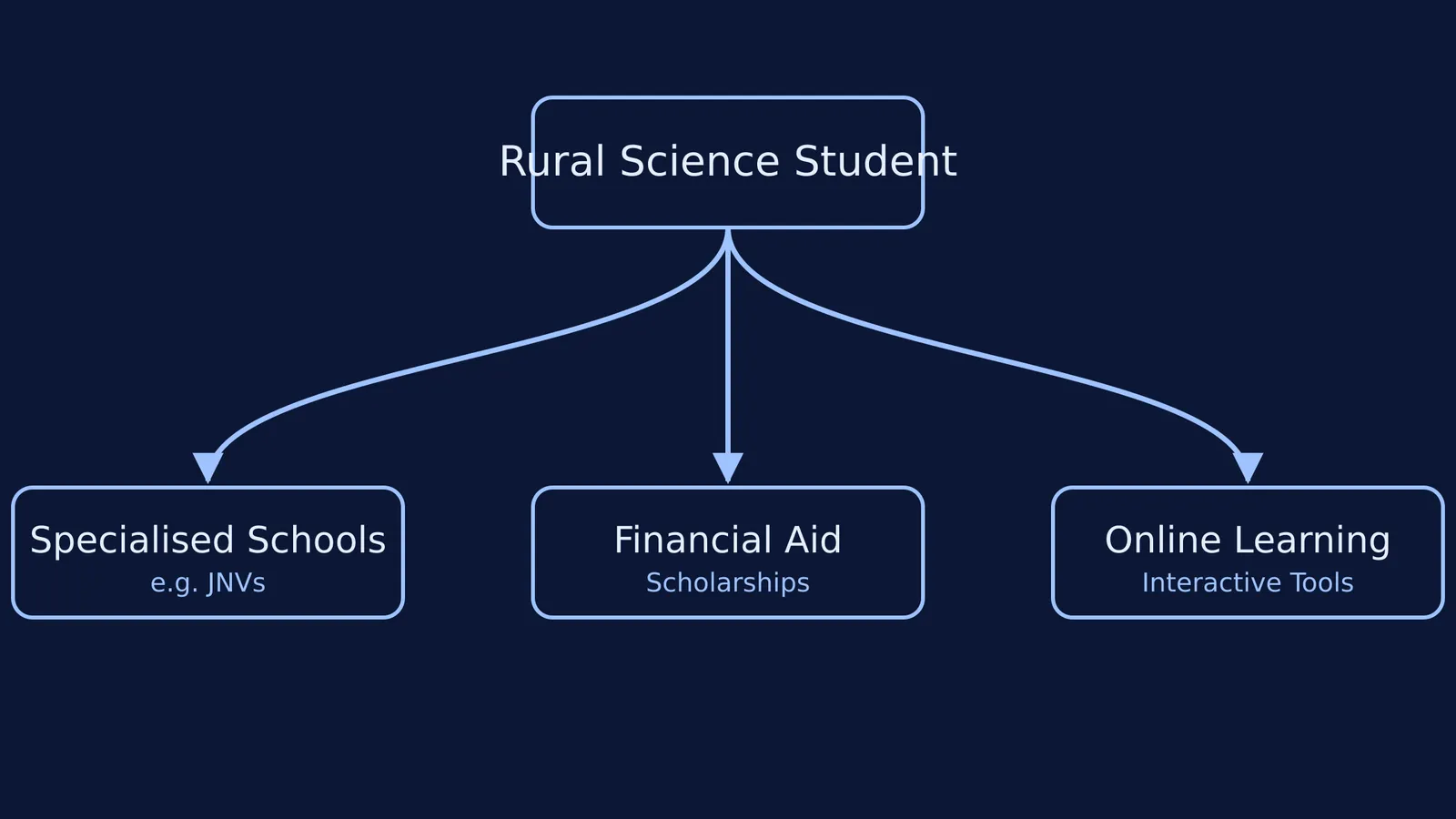
A child showing an aptitude for science in a rural area often leaves parents wondering how to support them. The gap in access to laboratories, advanced teachers, and coaching centres can feel wide. But support exists through residential schools, focused financial aid, and new online learning tools.
What schools offer a science stream for rural students?
For many rural families, the local high school might not offer a science stream, or it might lack the laboratories needed for practicals. A strong alternative is the Jawahar Navodaya Vidyalaya (JNV) system. According to the Navodaya Vidyalaya Samiti enrolment policy, JNVs reserve at least 75% of their seats for candidates from rural areas. The Jawahar Navodaya Vidyalaya network is specifically designed to identify and nurture talented students from rural backgrounds, providing them with resources that might be entirely unavailable in their home villages.
Admission to Class 11 in a JNV happens through a Lateral Entry Selection Test, designed to fill vacant seats. These residential schools provide free education, board, and lodging. This removes the barrier of a daily commute and places students in an environment dedicated to learning alongside other driven peers.
Which scholarships support village students in Class 11 and 12?
The costs of science education—from reference books to eventual college fees—can add up quickly. Several scholarships target rural and low-income students specifically to ease this burden.
The Vidyadhan Scholarship, run by the Sarojini Damodaran Foundation, provides ₹10,000 per year for students in Class 11 and 12. It is available to students who score highly in Class 10 (typically above 80%) and whose annual family income is below ₹2,00,000. The application process usually begins online, and selected candidates are mentored through their critical final years of schooling. If the student maintains good grades, the support can continue into their degree courses.
For girls pursuing undergraduate degrees in natural sciences (B.Sc., B.Tech, or MBBS), the Sashakt Scholarship offers ₹80,000 per year for three years. This funding is designed to help young women from rural backgrounds study at premier science institutions without financial strain. By covering a significant portion of tuition and living expenses, the program ensures that talented young women do not have to abandon their academic ambitions due to the high costs associated with higher education.
How can a village student prepare for JEE or NEET?
Even with a good school and funding, rural students often lack access to the specialised preparation resources that urban students use to crack competitive exams like the JEE and NEET. Moving to a coaching hub is expensive and can be isolating. You can read more about the trade-offs in our guide on studying away from home for coaching.
Today, a smartphone and a good internet connection can bridge this gap. Instead of passive video lectures, interactive tools allow students to practice actively. If a student is making wrong-method mistakes, the Fermi Problem Library provides a step-by-step solver that explains the reasoning rather than printing an answer. If they are studying alone and not knowing where to start, Fermi's AI tutor can work out what they already know and build a plan for the session. The tutor teaches through the material—writing on a board, drawing the figure, and checking understanding as it goes.
For students deciding whether they need structured classes or can manage with school and online resources, our article on coaching, online classes or self-study for JEE offers a framework for making the choice.
A checklist for parents of rural science students
Supporting a science aspirant does not require you to know physics or chemistry yourself. Use this plan to set them up for success:
Check the local JNV: Find the Jawahar Navodaya Vidyalaya in your district and track the dates for the Class 11 Lateral Entry test.
Register on the National Scholarship Portal: Keep an eye on scholarships.gov.in and gather the necessary income and caste certificates well before Class 10 ends.
Equip them with active tools: Provide a dedicated study hour at home and access to interactive online tools, not just static video lectures.
Focus on concepts, not just exams: Encourage them to read widely and understand the theory deeply before drilling multiple-choice questions.
A rural address does not have to limit a student's scientific ambitions. With the right mix of schooling, financial aid, and modern learning tools, they can compete with anyone.


