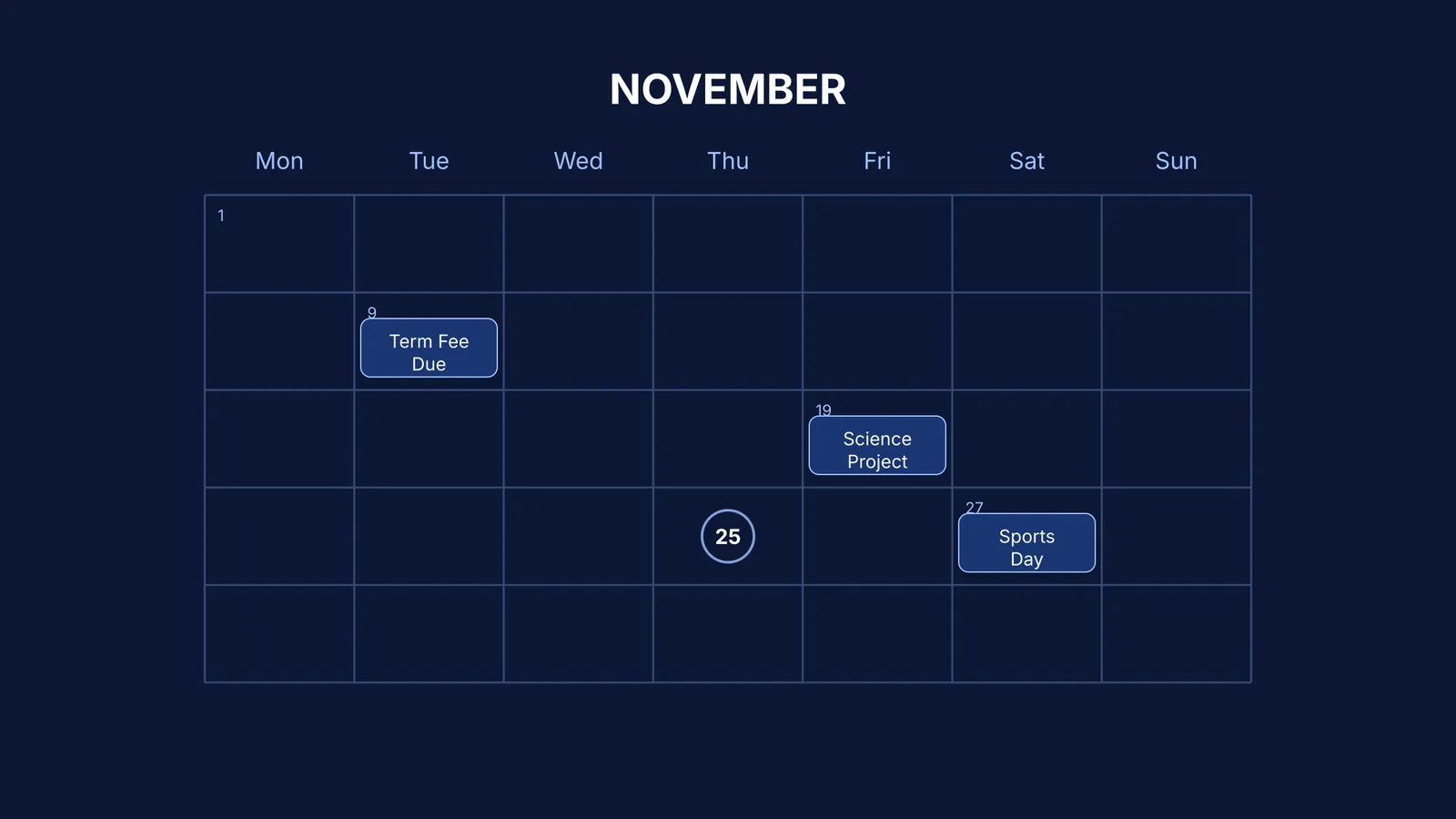
Between school apps, email newsletters and WhatsApp groups, modern families are drowning in updates. A 2024 survey of parents by EveryDay Labs, led by Harvard behavioural scientist Dr Todd Rogers, found that families receive an average of 8 school communications per week (EveryDay Labs). This constant flow of messages scatters deadlines across too many platforms. Because of this fragmentation, 1 in 3 families leave school communications unread, often missing crucial information.
When communication gets overwhelming, important details like fee deadlines, exam dates and sports day schedules slip through the cracks. But you do not need to read every newsletter the moment it arrives, nor do you need to memorise the school's entire term plan. You just need a robust system to catch the dates that matter and make them visible to the whole family.
Why is school communication so overwhelming?
The sheer volume of digital messages has created a new kind of mental load for parents, shifting the burden of tracking school life onto the family. The same EveryDay Labs survey (EveryDay Labs) found that 57% of families feel overwhelmed by the amount of communication they receive. When a sports day notice is on a class WhatsApp group, a fee reminder is pushed through the school's proprietary ERP app, and a project deadline is sent via a teacher's email, piecing together the week becomes a stressful puzzle.
Parents often feel pressured to respond instantly, fearing they might miss a time-sensitive permission slip or a sudden change in schedule. This constant monitoring leads to digital fatigue.
Just as Fermi's AI tutor builds a plan for the session so your teenager knows exactly where to start, setting up a shared family calendar tells you exactly what to expect from the school week. Moving all scattered deadlines into one central view lowers the stress of sudden surprises and creates a calm, predictable routine.
How to keep track of school circulars?
The Sunday Sweep: Dedicate 15 to 20 minutes every Sunday evening to open all school apps, emails and WhatsApp groups in one sitting. By dealing with them all at once, you stop school updates from interrupting your work or family time during the week.
The Shared Calendar: Immediately enter every actionable date into a digital calendar, such as Google Calendar or Apple Calendar. Ensure this calendar is shared between both parents and, if they are old enough, your teenager, so everyone can access the schedule on their phones.
A shared calendar is only useful if it contains the right triggers and sufficient detail. When you transfer dates from school circulars, do not just copy the event name itself. Build in the runway your family needs to prepare properly without last-minute panic.
Fee dates and installments: Log the final due date for the term's fees, but set an automatic reminder for one week earlier to avoid late payment penalties and give yourself time to transfer funds if necessary.
Project deadlines: If a major science or history assignment is due on a Friday, block out the preceding weekend for your teenager to buy materials, research and start the work. A deadline is not just a single day; it is the end of a process.
School events and exams: Add sports days, parent-teacher meetings, unit tests and public holidays as soon as the yearly school calendar is published. Update these core events as new circulars arrive with specific timings or venue details.
Uniform and material requirements: If a circular mentions that students need a specific sports kit on a particular Wednesday, add a note to the Tuesday evening slot to pack the bag.
By treating the family calendar as the single source of truth, you can safely ignore the daily noise, clear your mental load and focus entirely on supporting your teenager's learning and wellbeing.
Read next: