

On this page
When you sit down to read a story in Hindi, Bengali, Tamil or Marathi with your child, you are doing more than passing on your heritage. You are laying the groundwork for how they will learn every other subject in school. Research shows that early literacy in a child's mother tongue makes it easier to acquire a second language and builds the cognitive skills needed for complex problem-solving later on.
Why is reading in the mother tongue important?
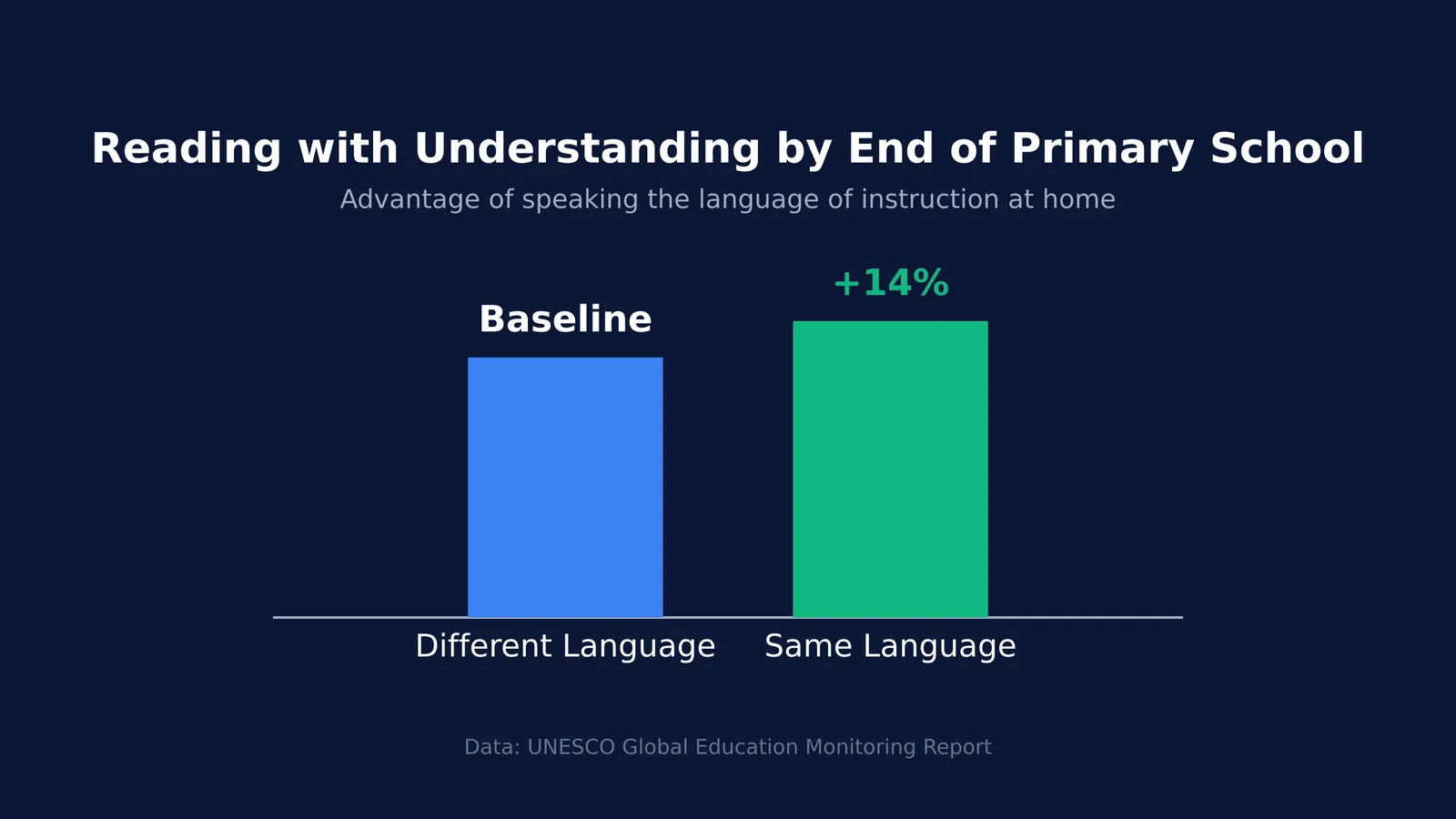
According to UNESCO, children in upper-middle and high-income countries who speak the language of instruction at home are 14% more likely to read with understanding by the end of primary school. This early advantage is not just about vocabulary. Learning to read in the language you think and speak in allows the brain to focus on the mechanics of reading itself—connecting sounds to letters and understanding narrative flow—without the extra burden of translating a foreign language at the same time.
Once a child grasps how to read and extract meaning from a text in their mother tongue, those skills transfer. A child who can follow a complex plot in a Marathi storybook is better equipped to unpack maths word problems later on.
Where can I find children's books in Indian languages?
Finding high-quality, age-appropriate books in regional languages has become much easier. You do not need to rely solely on translations of English classics; there is a wealth of original stories written for Indian children.
StoryWeaver: Created by Pratham Books, this open-source digital platform offers over 64,000 storybooks in more than 370 languages. You can filter by reading level, from simple picture books for toddlers to longer chapter books for older children.
National Book Trust (NBT): Through its Nehru Bal Pustakalaya series, the NBT publishes affordable, illustrated children's books in 14 to 18 major Indian languages, as well as many tribal dialects.
Independent Publishers: Publishers like Tulika Books and Tara Books produce beautifully illustrated bilingual and regional-language books that reflect Indian contexts and cultures.
How can I build a reading habit at home?
Having the books is only the first step; the goal is to make reading a shared, enjoyable habit.
Create a print-rich environment: Leave books, magazines and comics in your mother tongue where your child can easily reach them.
Read aloud together: For younger children, read aloud and point to the words. Use expressive voices for different characters. This makes the story come alive and helps them associate written text with spoken language.
Read for pleasure: The OECD found that reading enjoyment is a stronger predictor of a child's reading performance than their family's socio-economic status. Focus on fun stories rather than forced learning.
Ask questions: Pause during the story to ask what they think will happen next, or why a character acted a certain way. This active engagement is how they learn to read for meaning, a skill they will need when home language and learning intersect with schoolwork.
What should I do when my child stumbles on a word?
When your child encounters a difficult word or loses the thread of the story, resist the urge to immediately translate it into English.
If they are completely stuck, explain the meaning in your mother tongue using simpler words they already know. This builds their vocabulary rather than teaching them to rely on translation as a crutch.
How does early reading help with complex subjects?
The confidence and comprehension skills built by reading stories at home do not fade away. When your child eventually tackles complex physics, chemistry or biology, they will rely on the ability to read a text, extract the key information, and build a mental model of the problem.
If they ever struggle with concept gaps in those later years, the Fermi Concept Library contains every concept in physics, chemistry, biology, mathematics and computing, each with its own lesson and its place in the map. But the foundation for understanding those lessons begins long before, with the stories you read together today.


