

On this page
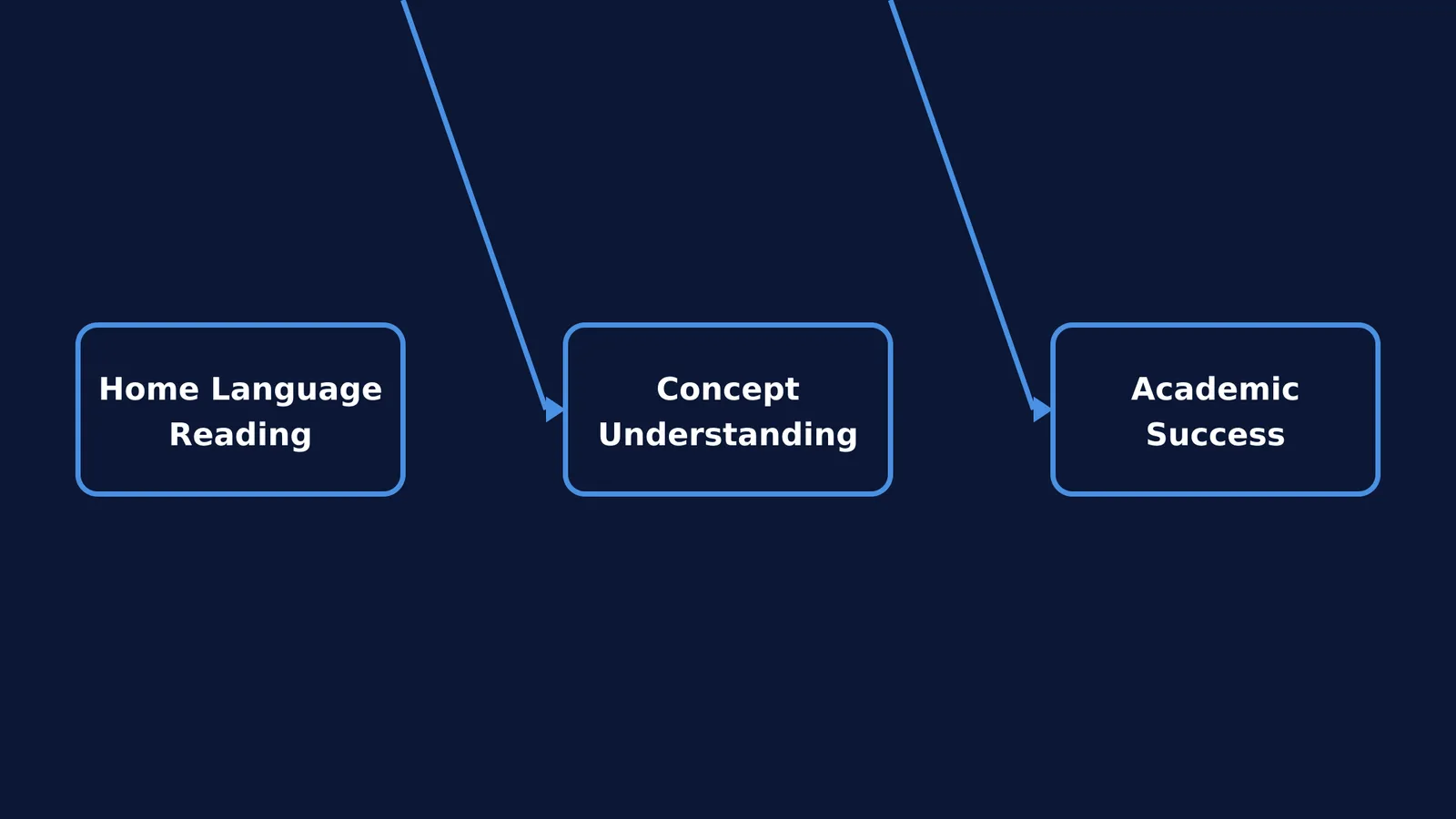
Many parents worry that speaking and reading to their children in a regional language will put them at a disadvantage in English-medium schools. However, learning science shows otherwise. Building a rich vocabulary and deep comprehension in a child's home language is a reliable way to prepare them for academic success.
Whether your family speaks Hindi, Tamil, Marathi, or another regional language, reading aloud together is a useful tool for cognitive development. The skills a child learns while sitting on your lap and listening to a story translate directly to how they will eventually study and solve problems on their own.
Why is reading aloud in the mother tongue beneficial?
Reading aloud exposes children to structured, descriptive language that goes beyond everyday conversation. When a child learns to follow a plot or infer meaning in their mother tongue, they are building transferable skills.
A 2020 systematic review of 51 articles by Batini et al. found that reading aloud in early childhood significantly improves language acquisition, emergent literacy, and overall cognitive function. Because the child is not struggling to decode unfamiliar English words, they can focus entirely on the meaning of the story.
When children already understand the mechanics of reading and storytelling in a language they know well, they can more easily apply those skills when they begin studying science in English. A solid foundation in the first language acts as a bridge, not a barrier, to mastering a second one.
Does mixing languages at bedtime confuse children?
Parents often feel guilty for mixing English with their home language—a practice known as translanguaging—during storytime. Some fear it will hinder their child's English fluency. But research suggests you should not feel pressured to stick to one language.
Translanguaging helps children relate the story's content to their own lived experiences. If you read a sentence in an English picture book and then pause to explain a complex idea in Hindi, you are actively scaffolding your child's comprehension. This flexibility allows them to grasp difficult concepts faster and builds a deeper, more emotional connection to the reading habit. Over time, this strong bilingual foundation supports what NEP 2020 and research say about home language and learning.
Comparing words across languages also builds metalinguistic awareness. When a child notices that a word in English has a direct equivalent in their regional language, they begin to understand how language systems work.
How can you start a bilingual reading habit?
Building a bilingual reading routine does not require an extensive library or expensive resources. Here is a practical plan to get started with your child tonight:
Choose highly visual books: Look for books where the pictures clearly illustrate the action. This allows you to tell the story in your regional language, even if the text is printed in English. You do not need to translate word-for-word; just describe what is happening.
Ask open-ended questions: Pause during the story to ask, "What do you think will happen next?" or "How does the character feel?" Do this in the language your child is most comfortable speaking. This encourages active learning rather than passive listening.
Use the 'preview-review' method: If you are reading an English book, introduce the story and characters in your home language first. Read the book in English, and then discuss the ending together in your home language to ensure they understood the main points.
Explore bilingual editions: Many Indian publishers now offer bilingual children's books (for example, Hindi-English or Tamil-English) that make it easier to read the exact text in both languages side by side.
Let them see you read: Children model their parents' behaviour. If they see you reading a newspaper or a book in your regional language, they will understand that reading is a valuable, everyday activity.
As children grow older and tackle more complex subjects in middle and high school, the same principle of starting from what they know applies. If they struggle with a new topic, they need help that connects to their current understanding. Fermi's AI tutor works out what a student already knows, builds a plan for the session, and teaches through it—writing on a board, drawing the figure, running the simulation, and checking understanding as it goes.
Reading aloud is ultimately about connection. By sharing stories in the language that feels most natural to your family, you give your child a secure emotional space to play with language, ask questions, and build the habits they will use for the rest of their education.


