

On this page
Class 12 can swallow a household. School, coaching, practicals and mock tests fill the week, and somewhere in there is your child. Many parents feel they have lost their teenager to the timetable for a year. The research suggests you don't need to win back hours. What helps is a few small, reliable moments when you are fully there.
Does the amount of time you spend with a teenager matter?
Less than you might fear, and in a different way than you might think. A 2015 study in the Journal of Marriage and Family used time diaries for 778 US adolescents aged 12 to 18 (Milkie, Nomaguchi and Denny, 2015). The total amount of mothers' time did not predict teenagers' behaviour, emotions or academic results. More engaged time, meaning actively doing something together rather than just being in the same house, was linked to fewer delinquent behaviours. Engaged time with both parents together was linked to better outcomes.
An older and larger US study adds a related finding. In interviews with 12,118 students in grades 7 to 12, parent-family connectedness was associated with protection against every health risk behaviour measured except pregnancy history, including emotional distress (Resnick and colleagues, JAMA, 1997).
Both studies are American and show associations, not proof of cause. Still, the message for a Class 12 family is practical: how regular and how engaged your time together is counts for more than the number of hours.
What small rituals fit a Class 12 timetable?
Pick rituals that are short, fixed and light on talk about marks. Three work in most Indian homes:
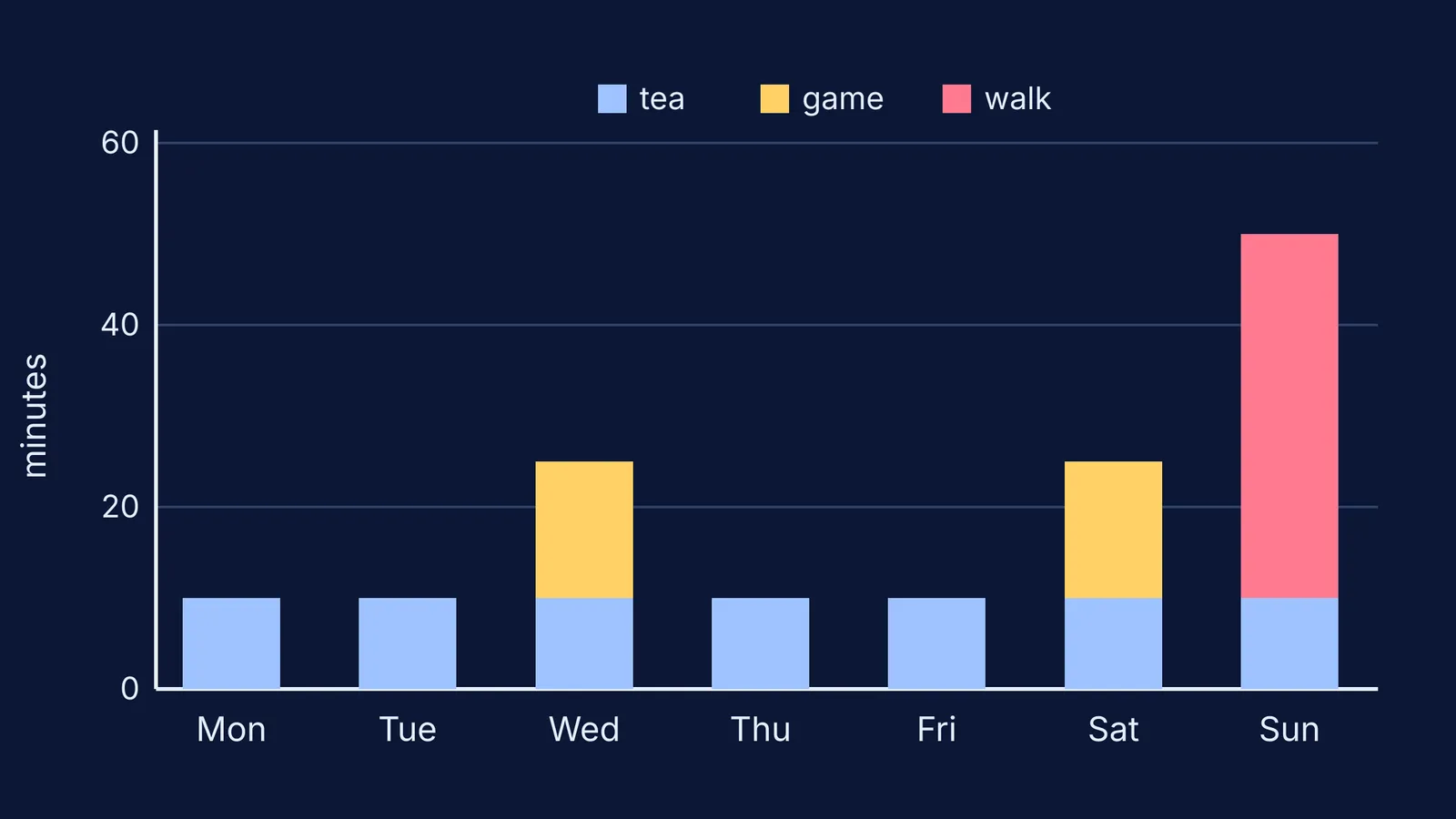
Shared tea (10 minutes, daily). Same time every day, for example straight after the evening study block. Chai, haldi doodh, whatever your house drinks. Phones face down.
A short game (15 minutes, twice a week). Carrom, a round of cards, a crossword, one quick chess game. A game gives a teenager something to do with their hands, so talking feels optional, which often makes it easier.
A walk (about 40 minutes, once a week). Side by side often feels easier than face to face for teenagers. A brisk walk also counts towards the World Health Organization's advice of an average of 60 minutes a day of moderate to vigorous activity for children and adolescents (WHO).
Let your child choose the game and the walking route. Choosing makes the ritual theirs, not one more thing you have scheduled for them.
A sample week: the 10-15-40 plan
Here is how the three rituals sit in a real week:
Monday to Sunday: 10 minutes of tea after the evening study block.
Wednesday and Saturday: a 15-minute game after tea, before dinner.
Sunday morning: a 40-minute walk, before or after the weekly mock test.
That adds up to 140 minutes a week, about 20 minutes a day. Compare that with one long Sunday outing that gets cancelled every time a test is moved. The small version survives the year.
If the board and entrance schedule is what squeezes your week, our guide on balancing Class 12 boards and entrance exams helps you plan around it. If your evenings allow it, a phone-free family dinner habit can become a fourth ritual.
What should you say during quality time?
The first few minutes set the tone. Some swaps that keep it light:
Instead of "How many hours did you study?", try "What was the most annoying question today?"
Instead of "What did you get in the mock?", try "Which part felt easier than last week?"
Instead of advice, try "Do you want help with that, or do you just want to vent?"
Ask them to explain one thing they learnt this week. Some teenagers enjoy teaching a parent.
If one chapter keeps coming up as the thing that is stuck, move it out of family time and into study time. Fermi's AI tutor can work out what your child already knows and build a plan for the session, so the chai stays about the two of you.
If your teenager has gone quiet altogether, start smaller with these low-pressure ways to reconnect with a teenager who doesn't talk.
When is it more than exam stress?
Rituals are for connection, not treatment. The World Health Organization estimates that one in seven (14.3%) of 10 to 19-year-olds experience mental health conditions, and says protective and supportive environments in the family and at school are important (WHO).
If your child seems low or withdrawn for a long stretch, stops enjoying things they used to love, or talks about feeling hopeless, speak to the school counsellor or a doctor. Tele MANAS, the government's tele-mental health service, offers 24x7 counselling on the toll-free number 14416 (PIB).
Start this week: pick a tea time, put it on the family calendar and keep it for seven days.


