On this page
Many parents in India left school early, or studied in a different medium, and now watch their child bring home Class 9 algebra or Class 11 chemistry. Your child needs your time, your attention and your questions, and you already have all three.
Can I help my child if I did not study much?
Yes. Research on what parents do suggests subject knowledge matters less than you fear.
A 2009 meta-analysis by Nancy Hill and Diana Tyson combined 50 studies of parents of middle-school children (Developmental Psychology, abstract on PubMed). Overall, parental involvement was positively linked with achievement, with one exception: parents helping with homework. The strongest link was with "academic socialisation": showing your child that education matters and talking about where it can lead.
These studies show links, not proof of cause, and you can still sit with your child. But solving the sum for them was not the part linked to better results.
What can I do at home without knowing the subject?
Start with structure. A 2008 research synthesis on parents and homework found that, among the kinds of homework involvement studied, setting rules (when and where homework happens) was more strongly linked to achievement-related outcomes than the others (Patall, Cooper and Robinson, Review of Educational Research). The same review found that, in studies of elementary school children, training parents to support homework led to higher completion and fewer homework problems.
A routine you can run without opening a textbook:
Fix one study time and one place, the same every day. A corner with a lamp is enough.
Phones go in another room for that time, including yours if you can manage it.
At the start, ask: "What do you have to finish today?" Write the list on paper.
At the end, ask to see each item ticked off. You are checking that it was done, not whether it is right.
Once a week, check the school diary or app for tests and remarks.
How do I get my child to teach me what they learned?
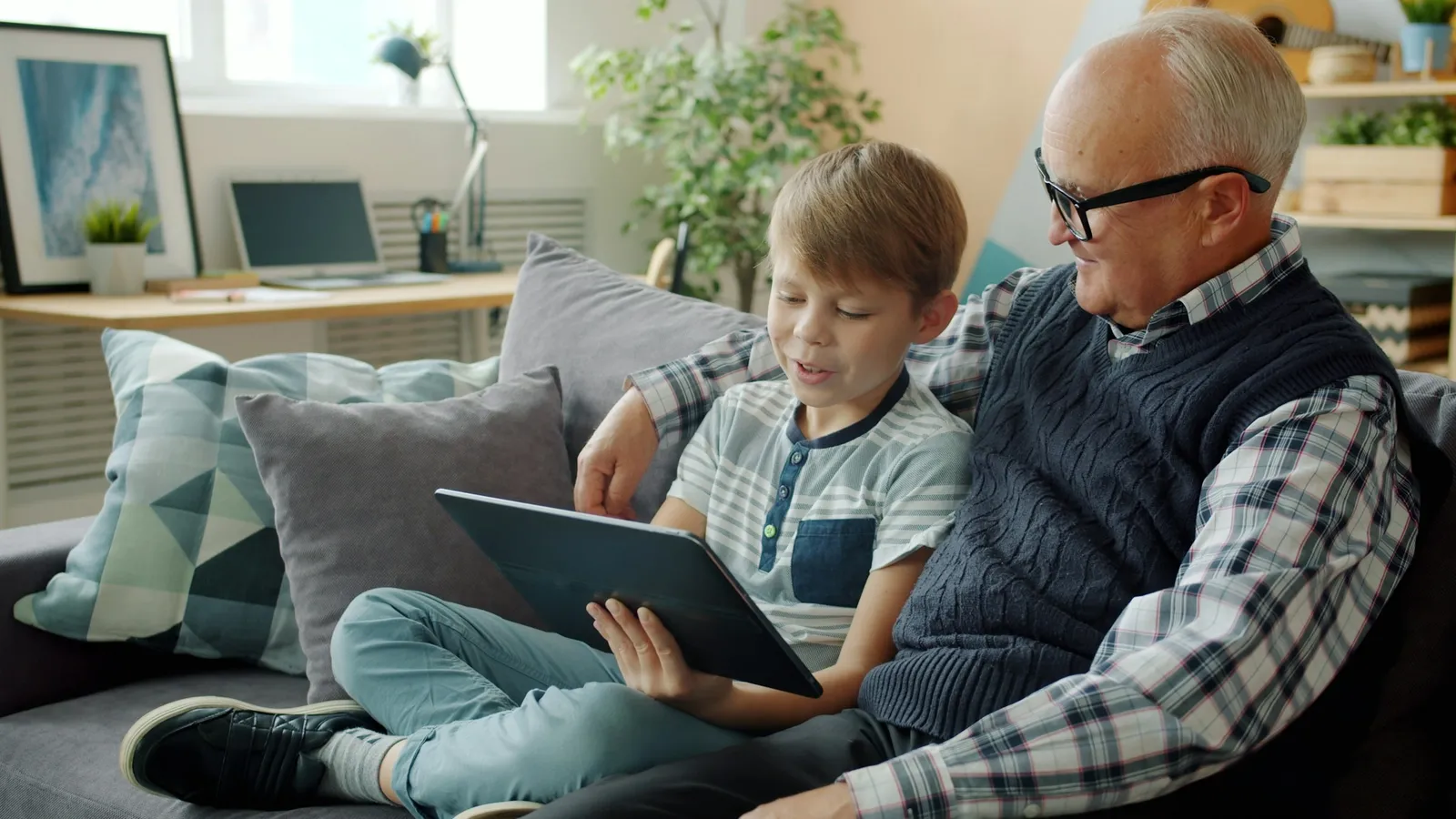
Not knowing the subject makes you a good audience.
In a review of the research, the educational psychologist Logan Fiorella explains that teaching someone else helps the person teaching. It works best when students prepare expecting to teach, explain aloud, and explain from memory rather than from notes (Fiorella, "Learning by Teaching", APA Division 2 e-book). In experiments by Fiorella and Richard Mayer, college students who actually taught a lesson on video did best on a later, delayed comprehension test (Contemporary Educational Psychology, 2013). The same review cites a 2019 meta-analysis by Kobayashi that found a medium average effect across 28 studies when students both prepared to teach and then taught.
A ten-minute script for the evening:
"Close the book. Teach me one thing you learned today."
"Draw it for me on this paper."
"Why does that happen? Give me an example from our house or our street."
"If I got this question in a test, what would I write first?"
You do not need to judge whether the answer is right. Watch for the stumble: a long pause or flipping back to the book. That is the topic to revisit tomorrow or ask the teacher about.
Who should I contact at school when my child is stuck?
The class teacher is your first contact. You do not need to understand the syllabus to ask good questions about your own child.
Go to parent-teacher meetings even if you only listen. Ask: "Which chapter is my child weakest in, and what should they practise?"
Ask for the subject teacher's preferred way to send questions: diary note, app or a short meeting.
If language is a barrier, take a relative or older sibling, or ask whether a teacher can speak in your language.
If your child keeps falling behind, our guide on asking the school for extra help in writing has a template, and building a good relationship with your child's teacher covers the conversations around it.
Which free resources can my child use at home?
DIKSHA, the government's digital learning platform from the Ministry of Education and NCERT (diksha.gov.in). Many NCERT textbooks carry QR codes that open linked lessons and videos in the DIKSHA app.
An older cousin or neighbour who did well in a subject, for a fixed weekly half hour.
When your child is stuck on a problem and nobody at home can explain it, the Fermi Problem Library has worked problems with a step-by-step solver that explains the reasoning rather than printing an answer. Your child can then teach that reasoning back to you.
If your child seems anxious, withdrawn or unable to cope with study pressure, speak to the school counsellor or call Tele MANAS on 14416, India's national mental health helpline, which is free and open 24x7 (Government of Ladakh notice).
For a step-by-step plan for the months ahead, read how to help an average student improve. Start tonight with one question: "Teach me one thing you learned today."