On this page
If your house has started to sound like a coaching centre, with mock scores at breakfast, chapter counts at dinner and rank talk on the phone with relatives, you are not alone. Most parents talk about JEE because they care and want to help. But a JEE aspirant already spends the whole day thinking about the exam. Home can be the one place where they get a break from it.
Why does constant JEE talk at home add pressure?
Exams already weigh heavily on Indian teenagers. In the NCERT Manodarpan survey, 3,79,842 students from Classes 6 to 12 answered questions between January and March 2022. Of them, 81% named studies, exams and results as a cause of anxiety. The same report found that students at the secondary stage (Classes 9 to 12) reported feeling more anxious about studies, exams and results than students at the middle stage.
The survey also found that students handled their feelings mainly by talking to friends, followed by sharing with their parents. That makes you a real source of support, but only if your teen sees you as someone to talk to, not as another examiner.
Research on parents' role in schoolwork points the same way. In a review titled "More is not always better", researchers Eva Pomerantz, Elizabeth Moorman and Scott Litwack argue that how parents get involved matters, not just how much. In their reading of the evidence, the way parents get involved largely decides whether it helps.
Asking "How was the test?" every evening means your teen never gets a moment off from being an aspirant.
Am I talking about JEE too much? A quick self-check
Tick any that sound like your home:
You ask about mock marks before you ask about their day.
JEE comes up at most meals.
You pass on other children's ranks or scores.
You discuss their marks with relatives while they can hear.
Your teen gives one-word answers or leaves the room when the topic starts.
If you ticked two or more, cutting back is a good place to start, before any new advice. If your teen has already asked you to stop asking about scores, this guide on agreeing check-ins when a JEE aspirant wants silence on marks walks through that conversation.
How do you set exam-free family time?
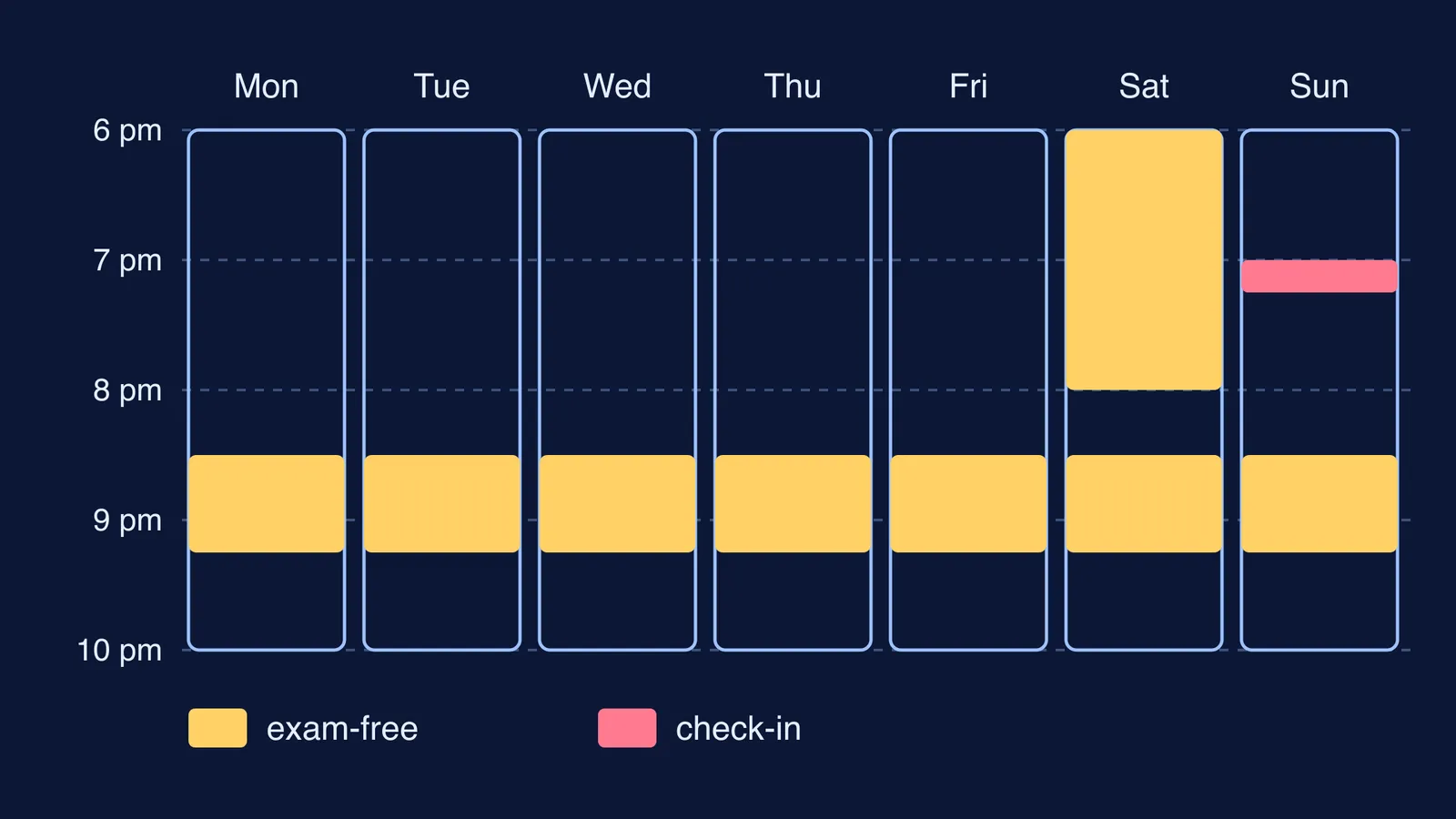
Use three simple rules, and agree on them with your teen rather than announcing them.
Meals are exam-free every day. Talk about anything else: food, cricket, a film, family plans.
One longer exam-free block each week. About two hours on a weekend: a walk, a visit, cooking together.
One 15-minute check-in each week, at a time your teen chooses. Ask three questions: what went well, what felt hard, and what help they want from you.
Outside those times, let your teen bring JEE up. When they do, listen first.
The check-in matters as much as the exam-free time. If you feel shut out, it is natural to ask more often. A fixed slot means you know you will hear how things are going, so it gets easier to hold back the rest of the week.
What should you say instead?
Some swaps to try:
Instead of "What did you get in the mock?", try "How was your day?"
Instead of "Sharma ji's son got a great rank", say nothing at all.
To start the plan: "We have been talking about JEE too much at home. Can we keep dinner for other things and have one proper catch-up a week? You pick the time."
When your teen raises a bad test: "Do you want ideas, or do you just want me to listen?"
For more on that last moment, read what to say when your teenager complains about studies.
Sometimes the urge to ask comes from a narrower worry: is my child stuck and not saying so? If your teen doesn't know where to start on a chapter, Fermi's AI tutor can work out what they already know and build a plan for the session. That way the study questions get handled at the desk instead of at the dinner table.
What if the worry is really yours?
Often the talk comes from a parent's own nerves about results. That is normal. It helps to find somewhere else to put it: a partner, a friend, a walk. This guide on managing your own anxiety about your child's exams has practical steps.
If your teen is struggling, Tele MANAS can help. The IIT Kanpur counselling service lists it as a free, 24x7 national mental-health helpline launched by the Ministry of Health and Family Welfare.
Start this week: pick one meal and keep it exam-free.