On this page
Bringing a new baby home is a joyful milestone, but for a school-age child, it is also a major disruption. They are old enough to notice that the household now revolves around the newborn's schedule, yet they still need your attention, reassurance and guidance.
It is entirely normal for an older child to act out, test boundaries, or temporarily lose the independence they had just mastered.
Why is your school age child jealous of new baby sibling?
Jealousy stems from a sudden shift in attention. A school-age child is developmentally capable of measuring how much time you spend with them versus the baby. When they see the newborn receiving constant care and gifts, they may feel neglected or worry that they are no longer your priority.
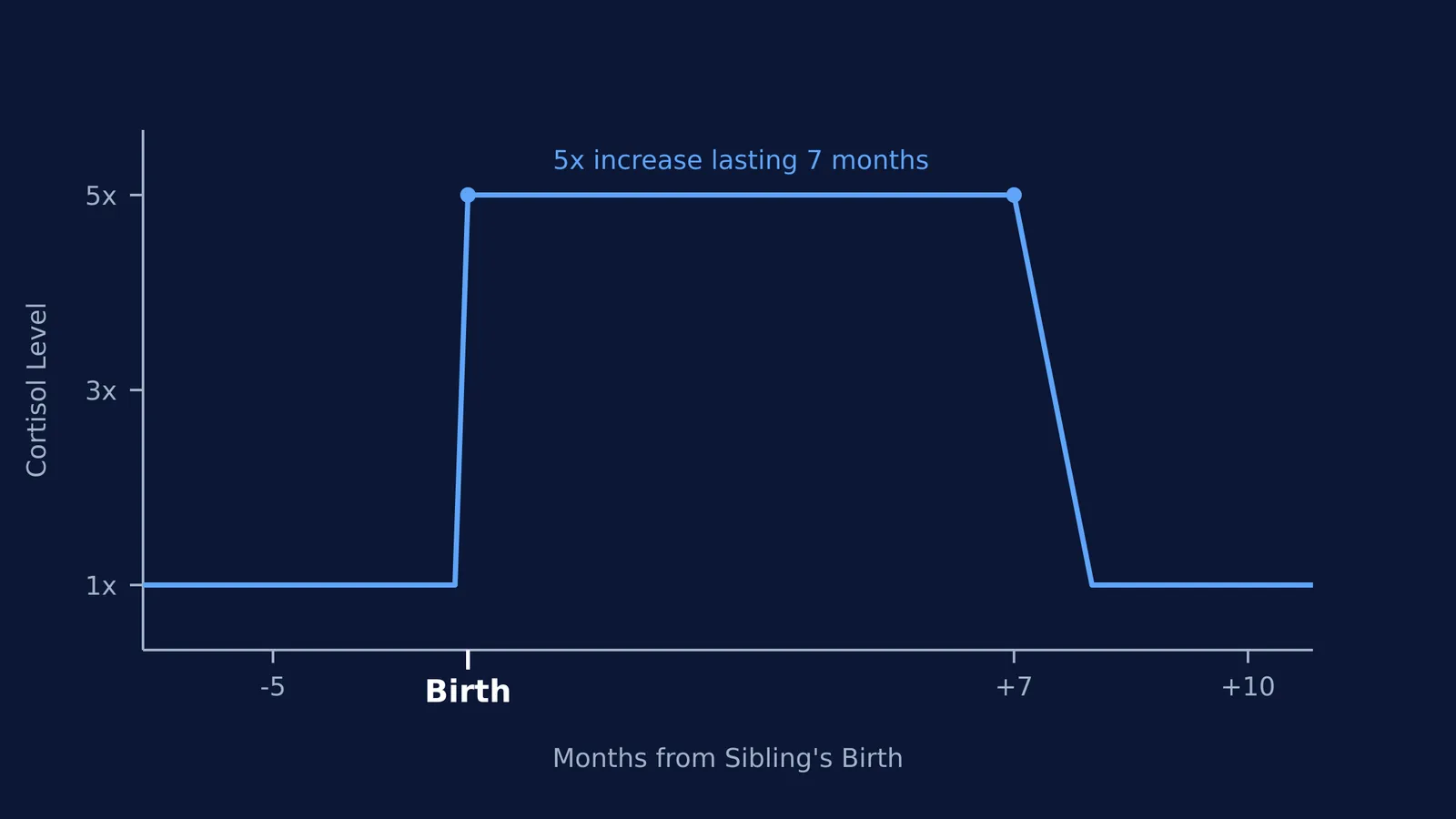
This stress is a deeply rooted biological response to family transitions. A 2022 study in *eLife* (10.7554/eLife.77227) found that when wild bonobos—one of our closest primate relatives—experience the birth of a sibling, the older offspring's cortisol (stress hormone) levels increase five-fold and stay elevated for seven months. Human children experience a similar "dethronement" stress when a new baby arrives.
How does the transition affect an older sibling?
Children rarely express their jealousy by simply stating, "I feel left out." Instead, their stress shows up in their behaviour. Often, a school-age child might display anger, become unusually clingy, or start having tantrums over seemingly minor issues. This is their way of communicating emotional distress that they do not yet have the vocabulary to explain.
According to a 2018 study of mothers with a new infant, published in the *Ankara Medical Journal* (10.17098/amj.461653), 77.7% of firstborn children showed regressive behaviours—such as using baby talk or asking to be fed—after a sibling's birth. The same study noted that nearly 48% of older siblings experienced sleep changes, and 31% showed a decrease in appetite.
These behaviours are a child's way of checking if they can still get the same level of care as the newborn. Most children adjust within a few months, provided their core routines remain stable. As they grow older, you may need to learn why comparing siblings backfires to keep their bond strong.
How can you keep their routine steady?
When a baby arrives, an older child's schedule often falls apart. Keeping their day predictable is the strongest way to signal that their life is still safe and important.
Protect daily one-on-one time: Set aside 15 to 20 minutes every day just for the older child. Let them choose the activity, and leave your phone and the baby in another room.
Maintain their learning habits: A school-age child's study routine can easily slip when parents are busy. Fermi's AI tutor can help keep their learning steady by working out what they know and building a plan for the session, so they aren't left waiting on a tired parent to help them with their homework. (If they are older, having a practical plan for board exams with younger siblings at home is crucial.)
Keep bedtime consistent: A familiar bedtime routine offers comfort at the end of a chaotic day. Avoid changing their bedroom or transitioning them to a new school right after the baby is born.
What can you say to an older sibling?
Validating their feelings is more effective than correcting them. When you acknowledge that the transition is hard, you remove the need for them to act out their frustration.
If they say: "You only care about the baby!" Try saying: "It is hard waiting for me when the baby needs so much time. I miss our quiet time, too. Let's plan what we will do together after the baby goes to sleep."
If they use baby talk or ask to be carried: Try saying: "Do you want to be my little baby right now? Come here for a big cuddle." Once they get the reassurance they need, you can follow up with, "I also love how big and strong you are when you ride your bike."
If they refuse to help with the baby: Try saying: "That is okay, you do not have to help. You are my big kid, and your only job is to be you."
By keeping their routine steady and making space for their mixed feelings, you help your older child navigate the arrival of a sibling with confidence rather than resentment.