

On this page
The Ministry of External Affairs estimates that there are 17.76 million Non-Resident Indians (NRIs) globally (Ministry of External Affairs, 2026). For many of these families in the US, UK, or the Gulf, education means a return ticket. They send their children back to India to live with grandparents or extended family, drawn by the rigour of the Indian curriculum and the path to premier institutes. This choice allows students to remain rooted in their culture while preparing for highly competitive entrance examinations alongside their peers.
But "parenting by proxy" is hard. When you are asleep in Dubai or New York while your child is sitting down to study in Bengaluru, the distance feels wider than a time zone. The emotional toll of being away from daily milestones can leave parents feeling disconnected, while children might struggle with the absence of immediate parental comfort. The considerations are often much like those faced when moving cities for coaching or staying home, but magnified by borders and lengthy travel times.
Here is how NRI parents can build a routine that supports their child's academic and emotional well-being from thousands of miles away.
How can NRI parents stay involved in daily studies?
The most common mistake parents make from abroad is turning every phone call into an interrogation about grades, which can increase a child's anxiety and reduce the emotional bond.
Instead, aim to make the child feel you are part of their daily routine rather than just a supervisor. A supportive approach encourages open communication and builds resilience.
Focus on the process, not the marks: Ask what they found difficult today, what new idea they learned, or what made them laugh, not what they scored on a test. This shifts the focus from performance anxiety to intellectual curiosity.
Share a digital environment: Use shared calendars or apps where you can both see their study plan in real-time. Knowing that you are aware of their schedule helps the child feel supported rather than monitored. You can even leave encouraging notes on days when they have particularly difficult mock tests or long study hours.
When you cannot sit next to them at the desk, Fermi's AI tutor can help bridge the gap. A student brings a topic, a course, or a problem set to the platform. Fermi works out what they already know, builds a plan for the session, and teaches through it—checking understanding as it goes. Progress and notes stay in the student's library, so you can both see their clear next steps even when you are in different time zones.
How do you coordinate with guardians and relatives in India?
Living with extended family can create a conflict of authority. The child hears your rules on a screen but lives under the daily rules of their grandparents or aunt. This dynamic requires careful navigation to ensure the child does not receive mixed messages and the guardians do not feel undermined.
Set unified boundaries: Agree with the resident guardian on study hours, screen time, and curfews. Have these conversations privately first, and never contradict the guardian in front of the child. Consistency between what you say and what the guardian enforces is critical for the child's discipline.
Take the administrative load: Guardians are providing care, meals, and a home, so you should handle the logistics. Pay school and tuition fees directly, manage the online school portal, keep track of important deadlines, and be the one to communicate with teachers via email or video calls.
Acknowledge the guardian's effort: Supporting your relatives directly supports your child. If the guardian is stressed about discipline, household scheduling, or the child's academic pressure, that tension will directly affect the student's ability to focus. Regular expressions of gratitude and offering to help solve logistical problems can ease their burden.
What is a good video check-in schedule?
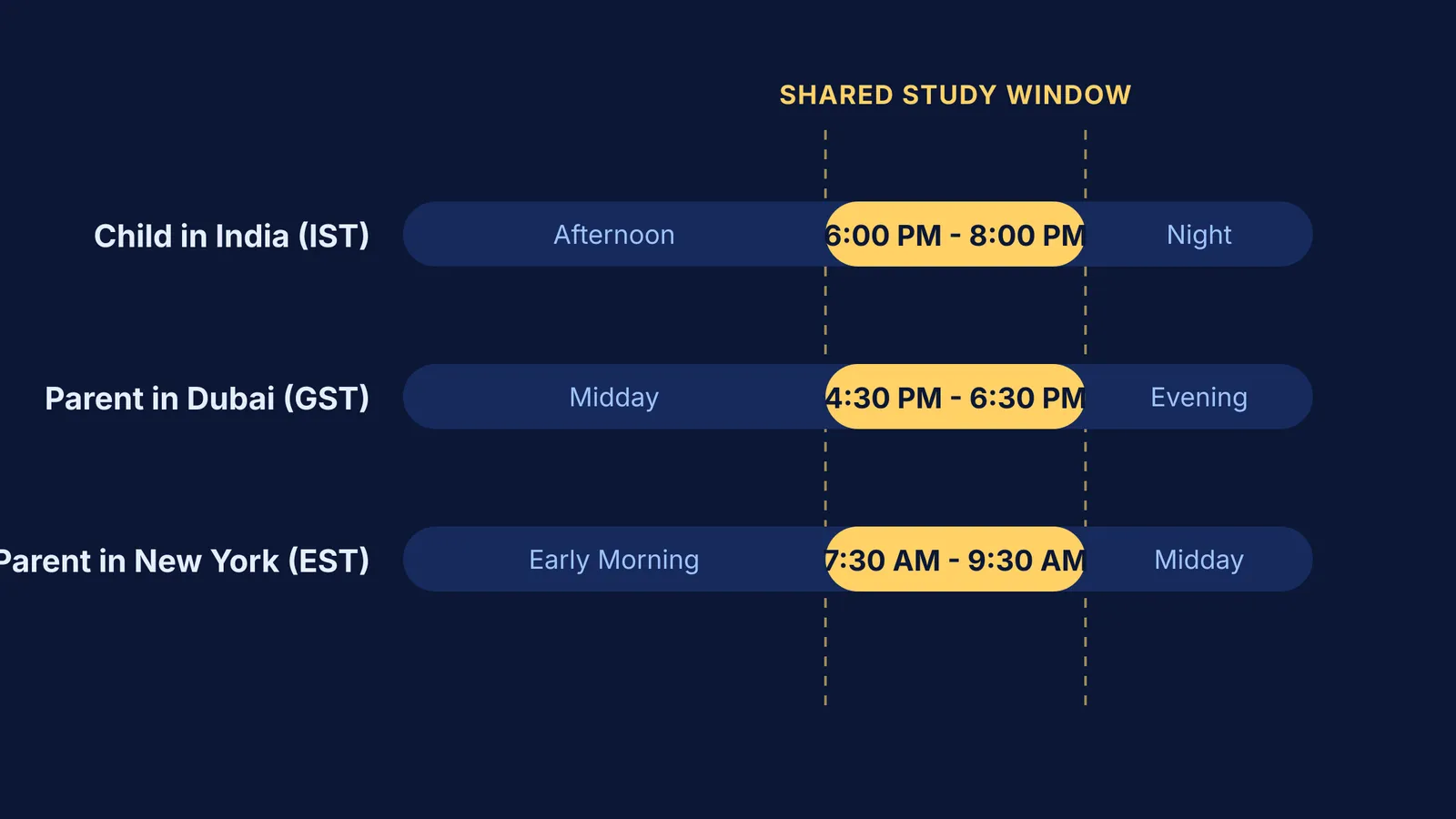
Time zones make spontaneous calls difficult, and unannounced check-ins can easily disrupt a carefully planned study session. A routine gives the child stability and ensures you are not interrupting their classes or sleep, whether they are living with relatives or studying in a hostel or PG. Establishing predictable times for communication helps both you and your child look forward to the interaction.
The Morning "Hello" (2 minutes): A quick voice note or text before their school day starts. It shows you are thinking of them, with absolutely no academic pressure attached. A simple wish for a good day sets a positive tone.
The Homework Window (15 minutes): If time zones permit, keep a video call open while they start their evening homework. You do not need to talk; just being "present" on the screen while they work mimics sitting in the same room. It creates a quiet solidarity. If they get stuck on a concept, they can use the Fermi Concept Library to find the exact lesson and its place in the syllabus map, independently solving the issue while you remain a supportive presence in the background.
The Weekend Review (45 minutes): This is the time for a deeper, more relaxed conversation. Discuss the week's challenges, talk to the guardian about how things are going, and help the child plan the week ahead. It is also the perfect moment to share stories from your own week, reinforcing the family bond.
Parenting from abroad requires intention and adaptability. By separating emotional support from academic tracking, respecting the role of local guardians, and using the right tools to stay connected, you can ensure your child feels guided, loved, and supported, no matter the distance.


