

On this page
It usually happens during casual conversations at the gate or over tea. A neighbour drops by, asks about your child's upcoming exams, and then casually says, "You should really make him study like our son; he wakes up at 4 AM every day and never takes breaks."
While they might mean well, these comparisons can severely damage a student's self-esteem. When children hear that they are constantly falling short of another student's routine, it fundamentally changes how they approach their books. Instead of learning to understand, they start studying out of fear. Even worse, parents sometimes inadvertently internalize these comments, bringing the neighbour's pressure directly into the home.
Why do neighbours keep telling my child to study like their son?
In many communities, academic success is treated as a shared, public metric rather than a personal journey. Neighbours often use "upward social comparison" to validate their own parenting methods. By pointing out what their high-achieving child does well, they are looking for reassurance that they are doing a good job themselves.
However, this environment creates immense stress for the students listening. A 2024 study surveyed Indian adolescents preparing for competitive entrance examinations and found that 87% reported experiencing high perceived parental pressure (Source). When this pressure comes from outside the immediate family, it adds an extra layer of public scrutiny to an already difficult task, making the student feel that their worth is constantly being measured against everyone else's.
What does comparison do to a child's confidence?
Being told to copy someone else's study habits rarely motivates a teenager. Instead, it changes their academic goals, often for the worse.
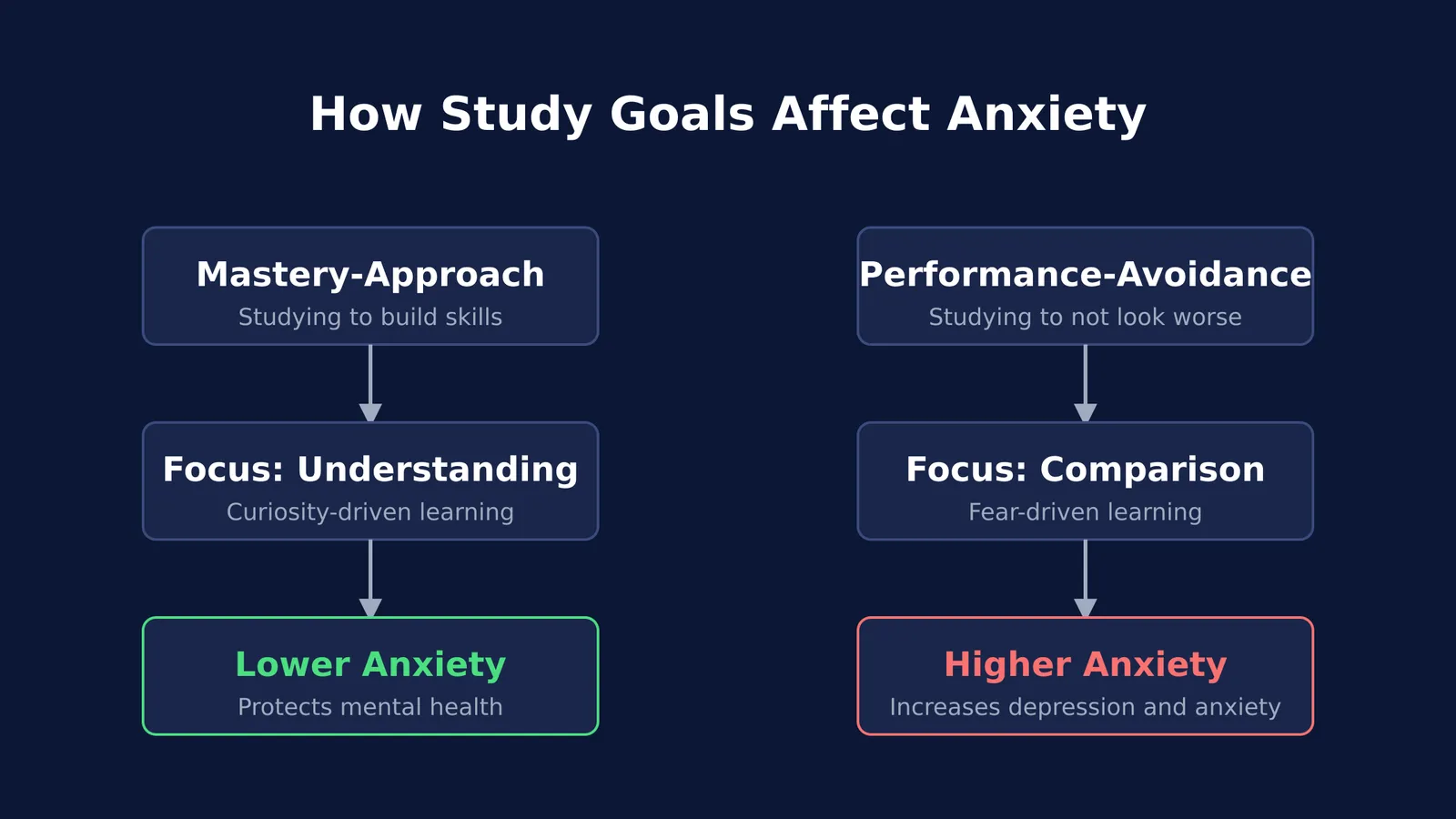
A 2024 study of medical postgraduates in *Frontiers in Psychology* found that "mastery-approach" goals—studying to truly understand a subject and build skills—protect against depression and anxiety. In contrast, the same study found that "performance-avoidance" goals—studying just to avoid looking worse than peers, like the neighbour's son—are directly linked to higher depression and anxiety (Source).
When a child is told their own method is wrong simply because it does not match someone else's, they lose trust in their ability to learn. They might start hiding their struggles or avoiding difficult subjects altogether because the stakes feel too high.
How to handle neighbours comparing my child to others?
The best way to protect your child is to be their shield in these conversations. You do not need to argue with the neighbour, but you do need to politely show your child that you do not accept the premise of the comparison.
Here is a simple framework for handling the conversation when it happens:
Acknowledge politely: "That is great that waking up early works so well for your son."
State your boundary: "We are focusing on what works best for our child's own routine right now."
Change the subject: "By the way, how is the rest of your week looking?"
By keeping it brief and redirecting the conversation, you stop the unsolicited advice in its tracks. More importantly, you send a clear message to your child that their worth is not measured against the boy next door.
If you want to read more about setting healthy boundaries around academics at home, our guide on high expectations vs pressure separates what genuinely helps from what hurts.
How to help your child focus on their own progress?
Once you have shut down the external comparisons, you can help your child build confidence in their own abilities. If they are struggling with a subject, the goal is to find out exactly where they are stuck, rather than pushing them to just sit at a desk longer to match a neighbour's schedule.
Instead of focusing on the number of hours they study, focus on the quality of their understanding. If they are making mistakes in physics or mathematics, they need clear explanations, not a guilt trip about their routine. The Fermi Problem Library has worked problems with a step-by-step solver that explains the reasoning rather than printing an answer. This helps students understand the "why" behind a concept at their own pace, entirely free from external judgment.
You can also model healthy habits by having open discussions about learning and mistakes. Our article on talking to your teenager about marks offers practical scripts for these specific conversations.
Ultimately, the most powerful thing you can do is remind your child that their education is about their own growth. When they know you value their progress and mastery over their rank in the neighbourhood, the outside noise stops mattering.


