

On this page
To crack the National Eligibility cum Entrance Test (NEET), you need intense, unbroken focus. With an acceptance rate of approximately 2.73% for government medical seats), candidates face intense competition. Maintaining a rigorous study schedule requires more than just willpower; it demands a home environment that actively supports deep learning.
When you sit down with your books or a tool like Fermi's AI tutor to work through difficult physics or biology concepts, background noise is not just an annoyance—it impairs cognitive function.
Why does a quiet home matter for studying?
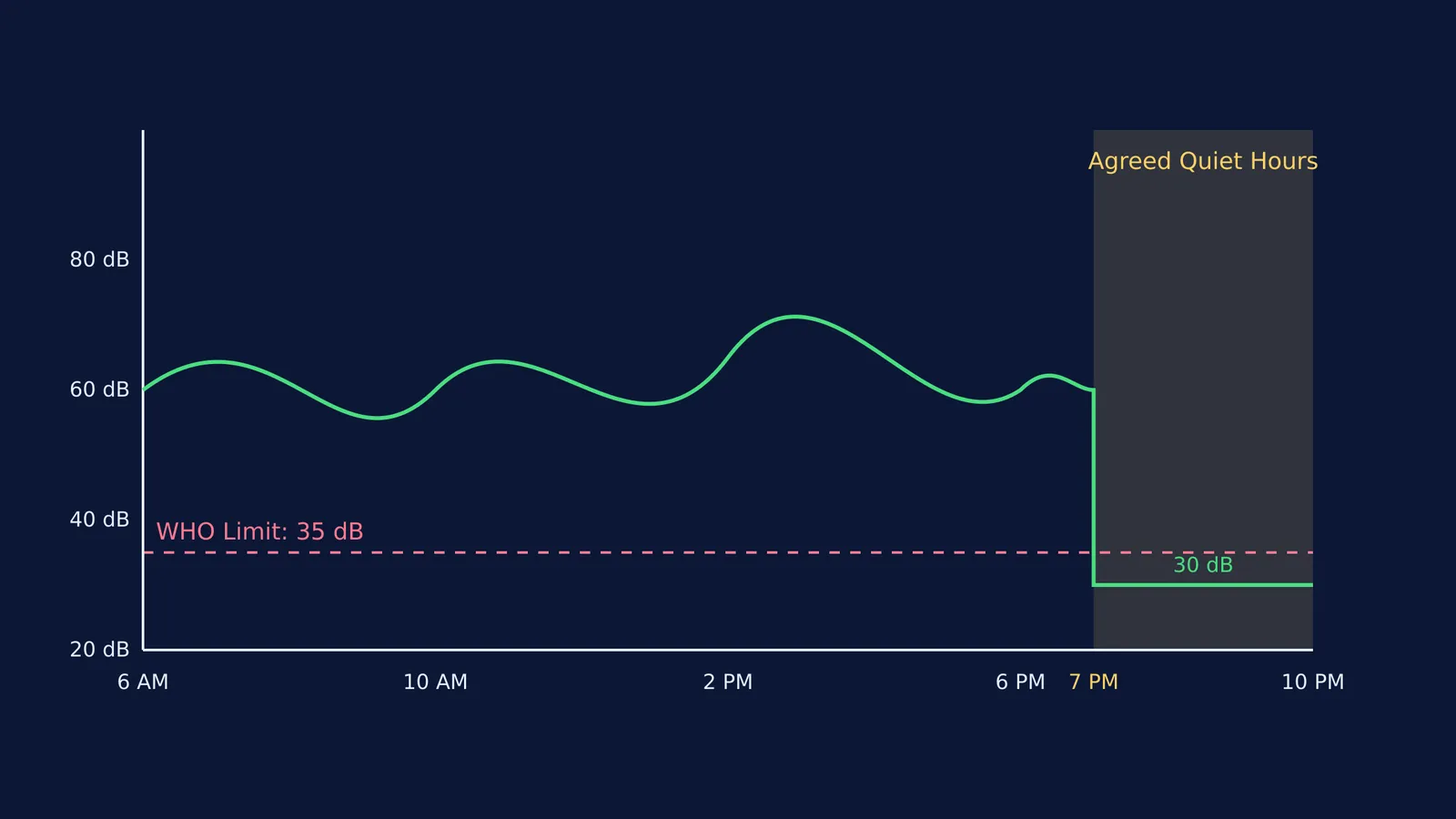
The World Health Organization guidelines state that the background noise level in a learning environment should not exceed 35 dB to ensure clear speech communication and effective learning. For context, everyday household noise like a television in the next room can easily push ambient noise beyond this limit. Tasks requiring high mental concentration become irritating when noise levels exceed 55 dB.
Regular exposure to distracting noise does not just break concentration; it can cause physical stress. Children and teens in noisy environments may exhibit higher resting heart rates, averaging 2 beats per minute higher than those in quieter homes. This means a noisy home forces you to spend extra energy just to stay focused.
Beyond immediate irritation, cognitive fatigue accumulates over the day. When your brain is forced to filter out the sound of a television or a sibling playing, it uses up the limited working memory needed to parse a biology diagram or balance a chemical equation. The constant low-level vigilance required in a noisy home leaves you feeling drained long before you reach the end of your scheduled study session.
How to agree on quiet hours with the whole family?
The most effective way to reduce noise is to create "quiet hours" that your entire household agrees to respect. Since you are studying for long hours daily, your family cannot be silent all day, but they can protect your most critical study blocks.
Map out the schedule: Sit down together and map out your day. Identify the periods when you need the most focus, such as early mornings and late evenings.
Define the quiet hours: Agree on specific times, for example, 7:00 PM to 10:00 PM, when the television is turned off, phone calls are taken outside, and conversations are kept low.
Share the burden: Explain to younger siblings why this is important. Make it a family project to support your goal.
Use visual cues: A simple "Quiet Please" sign on your study room door during these hours can serve as a gentle reminder to everyone.
How to manage guests and visitors?
In a busy Indian home, managing guests can be the hardest part of maintaining a quiet environment. It requires clear communication without causing offence.
Set expectations early: Parents should let close relatives and frequent visitors know about your quiet hours in advance. Most will understand and adjust their visiting times.
Create a buffer zone: If guests do arrive during study hours, parents can host them in a room as far from your study area as possible.
The polite decline: It is acceptable for your parents to politely explain that you cannot join the gathering because you are in the middle of a crucial study block.
Parents can act as gatekeepers during these crucial hours. Instead of making you feel guilty for not coming out to greet an uncle or aunt, parents can proudly explain your dedication. A simple statement like, 'They are currently taking a mock test and cannot be disturbed until eight o'clock,' sets a firm boundary while highlighting your hard work. Most visitors will respect a family that takes education seriously.
When you are trying to understand a complex idea in the Fermi Concept Library, a sudden interruption from a well-meaning guest can break a chain of thought that took twenty minutes to build.
Where should you study?
A dedicated physical space signals to your brain that it is time to work. It also signals to your family that you are not to be disturbed.
Choose the quietest room: This might be a bedroom or a less-used corner of the house. The key is that it is away from the kitchen and living room.
Keep it consistent: You should study in the same spot every day. For advice on organising this space, see our guide on How to Set Up a Study Desk in a Hostel Room, which applies equally well at home.
Provide the right tools: Ensure your desk is well-lit and comfortable. A good chair and proper lighting reduce physical fatigue.
If space is limited and sharing a room is unavoidable, consider sound-dampening strategies. Heavy curtains, thick rugs, and bookshelves filled with books can absorb a surprising amount of ambient noise. If absolute quiet is impossible, a pair of noise-cancelling headphones or earmuffs can be a worthwhile investment to block out the remaining background chatter.
Maintaining this routine over two years is challenging. For strategies on keeping the momentum going, read about How to stay motivated through two years of JEE preparation, which shares principles useful for NEET aspirants as well.
By agreeing on quiet hours, managing interruptions, and providing a fixed study spot, your whole family contributes to your success.


