

On this page
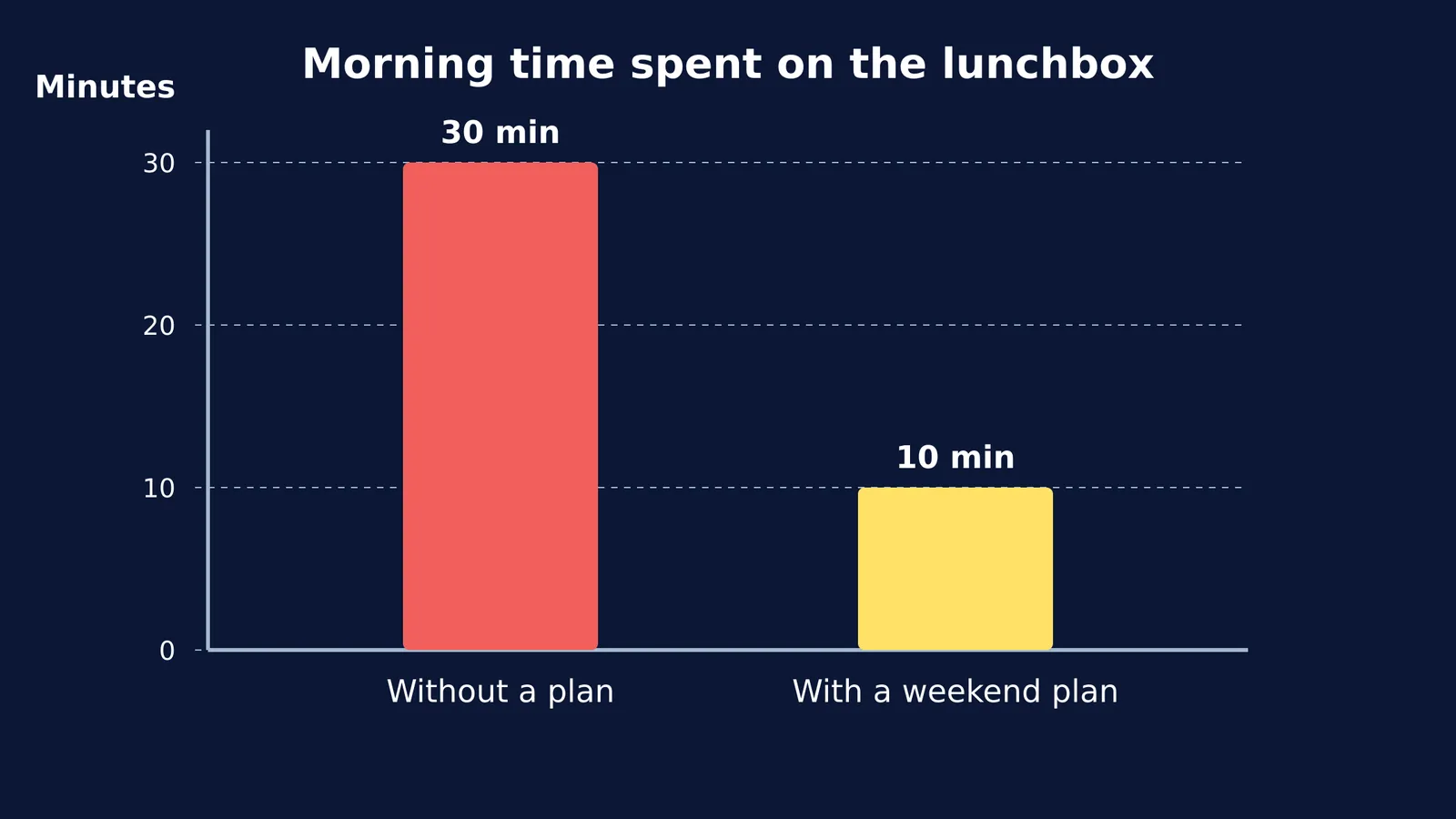
Mornings are a rush, and packing the lunchbox often becomes a last-minute chore. When you pack food in a hurry without asking your child, it often comes back home uneaten at the end of the day.
Why do school lunchboxes cause so much morning stress?
A 2024 study by Australian researchers found that 78% of surveyed parents considered nutritional information when packing, but faced a daily challenge balancing nutritious choices with what their children actually prefer (Boyd et al., 2024). Parents know what is healthy, but the pressure of getting everyone out the door means they often fall back on quick options or pack foods the child ignores. When you are rushing to find a clean container, figure out what is in the fridge, and get your child dressed, a thoughtful lunch is often the first thing to be sacrificed.
The updated Dietary Guidelines for Indians, released by the National Institute of Nutrition (ICMR-NIN) in 2024, emphasize the importance of balanced daily nutrition (Singh et al., 2025). Putting those guidelines into practice, however, requires a routine that works for your family. The key is to move the decisions out of the morning rush and into a weekend plan.
How to build a simple school lunchbox routine?
You can remove the daily guesswork by sitting down on Sunday and creating a simple weekly menu. When you know exactly what is going into the lunchbox each morning, you can prepare ingredients ahead of time.
Make a master list: Sit down with your child and ask them what they actually enjoy eating cold at school. Write down their accepted foods in a notebook.
Group by category: Ensure each day has a carbohydrate (like roti, rice, or wholewheat bread), a protein (such as dal, paneer, egg, or chana), and a fruit or vegetable.
Draft a weekly menu: Let your child choose combinations from the master list for Monday through Friday. Pin this menu to the fridge so there is no debate in the morning.
Batch prepare: Use the weekend to chop vegetables, knead dough, or prepare fillings. You can boil chana, make a batch of paneer bhurji, or wash and cut fruits in advance so that weekday mornings are just about assembling the meal.
What are some quick, healthy Indian lunchbox ideas?
If you are stuck for ideas, try building variations of the classic Indian staples that are easy to eat and travel well in a school bag:
Stuffed parathas or wraps: Mix grated paneer, boiled potato, or finely chopped spinach into the dough. This ensures the child gets their vegetables and protein in a neat, easy-to-hold package.
Pulao or fried rice: Use leftover rice and toss it with peas, carrots, and scrambled eggs or tofu. A small side of cucumber sticks adds crunch.
Idli or dosa: These ferment-based foods support digestion and remain soft even when eaten a few hours later. Serve them with a dry chutney powder (podi) rather than a wet chutney that might spill.
Snack box style: Sometimes children prefer grazing. Pack a boiled egg, some roasted makhana (fox nuts), a handful of grapes, and a small cheese cube.
How does involving children help the food get eaten?
When children have a say in what goes into their lunchbox, they feel a sense of ownership over the meal. A 2014 study in the journal *Appetite* demonstrated that involving children in meal preparation directly increases their food intake (van der Horst et al., 2014). If they chose the menu and helped wash the fruit or pack the box, they are much more likely to open it at school and eat what is inside.
Involvement also builds independence. A younger child can be responsible for placing a piece of fruit in the box, while an older student can assemble the entire meal the night before.
How can planning improve study habits as well?
When children learn how to plan their lunches, it acts as a foundation for other routines. You can build on this by teaching your child to plan their time for the afternoon, or by setting up a family quiet hour where they can concentrate without interruptions.
Without a clear plan, children often lose motivation because they do not know where to begin their homework. Fermi's AI tutor can work out what your child already knows and build a plan for the session, so they sit down to a clear next step instead of a blank page. If they are stuck on a difficult topic, the Fermi Problem Library offers worked problems with a step-by-step solver that explains the reasoning rather than just printing an answer. Just as a planned lunchbox removes the morning stress, a structured study plan makes learning predictable and effective.


