
On this page
Jigsaws, sudoku, tangrams, chess problems and logic grids cost little and keep a child absorbed, and Indian education policy backs them: the Mathematics Department of SCERT Haryana notes that NEP 2020 “promotes the regular use of puzzles and games that make mathematical thinking more enjoyable and engaging.” But will a daily sudoku make your child think better in maths, science and life? Mostly no, and that is fine.
Do logic puzzles and sudoku make children smarter?
Psychologists call it far transfer when practice at one task improves a very different one, such as chess practice raising maths marks. Much “brain game” marketing rests on that idea, and it rarely holds up.
A 2016 review in Psychological Science in the Public Interest examined the published studies cited on the websites of leading brain-training companies. It found extensive evidence that training improves the trained tasks, less evidence that it improves closely related tasks, and little evidence that it improves distantly related tasks or everyday thinking.
Chess, often promoted as a “thinking game”, tells a similar story. A 2016 meta-analysis by Giovanni Sala and Fernand Gobet pooled 24 studies, with 2,788 young people in chess groups, and found a moderate overall effect, stronger for maths than reading and larger for longer programmes. But in a 2017 analysis covering chess, music and working-memory training, the same authors reported that effects got smaller as the studies got better designed, for example when the comparison group did some other active task. They concluded that “far transfer of learning rarely occurs.”
We did not find strong trials of sudoku for schoolchildren. The safe reading is that sudoku makes children better at sudoku: scanning, keeping several rules in mind at once and checking their work. Real skills, but they do not automatically show up in a geometry proof.
What can puzzles actually build?
Several useful things, which fits what reviews say about educational games.
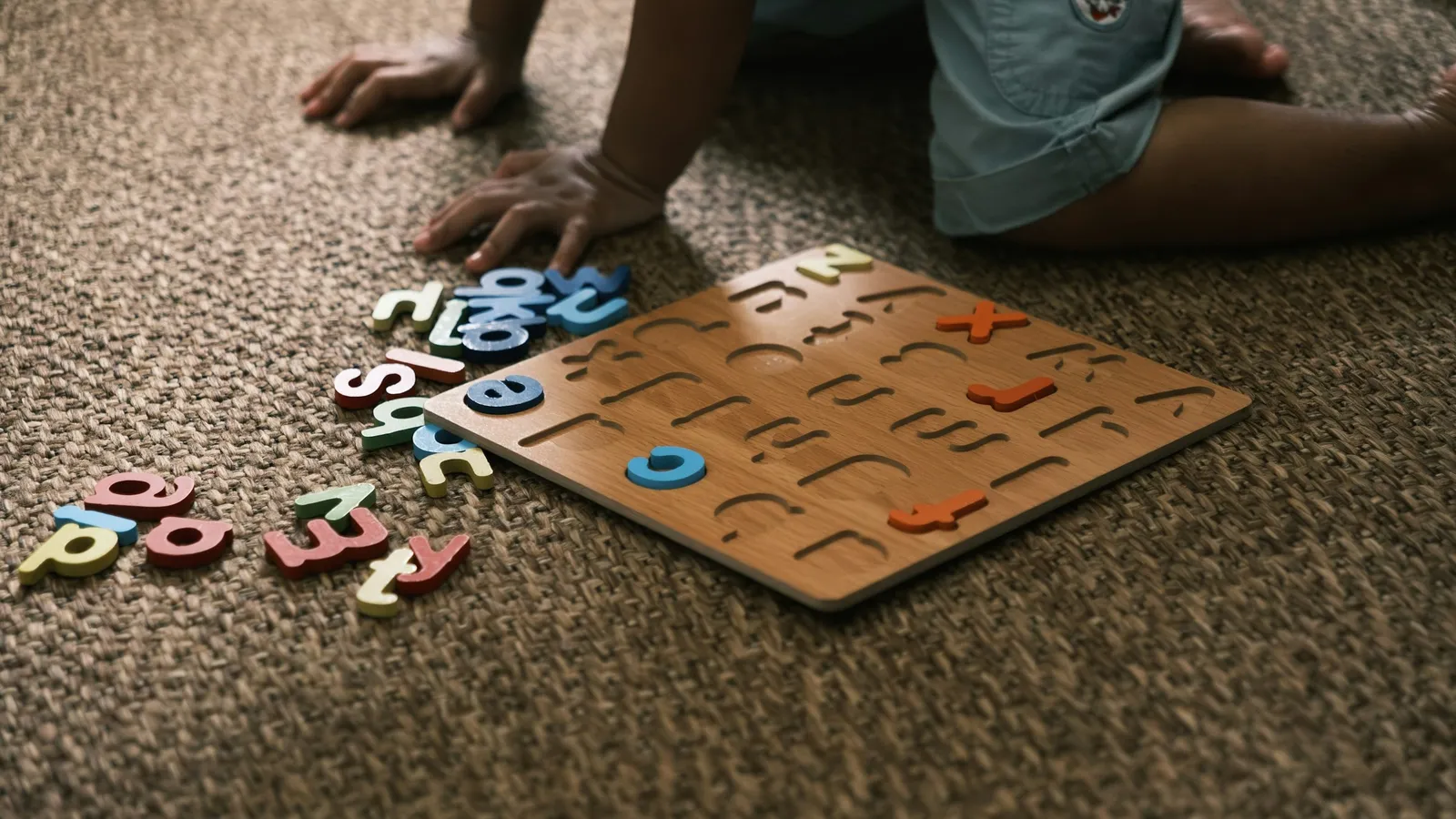
Spatial skill in young children. A University of Chicago study of 53 child-parent pairs filmed children at home from 26 to 46 months. Those who played with puzzles were better at mentally rotating and moving shapes at 54 months, even after allowing for parents' income, education and overall talk (Levine and colleagues, Developmental Psychology, 2012). The study shows a link, not proof that the puzzles caused it.
Persistence. A puzzle is a safe place to be stuck for five minutes and then get it.
Checking. Sudoku and logic grids punish guessing and reward the question “does this fit everything I know?”
Talking about reasoning. A puzzle done together gives you a natural reason to ask “how did you know?”
What puzzles cannot do is replace practice in the subject itself. If the goal is better maths, the most direct route is maths problems at the right level, which is a separate conversation from what helps when your child says they are bad at maths.
How do you pick the right difficulty?
Aim for puzzles your child solves most of the time, with some effort. A 2019 modelling study in Nature Communications found that for a broad class of learning algorithms, learning was fastest when practice was about 85% correct. That result is for machine and model learners, not children, so treat it as a rule of thumb, not a law.
In practice, look at the last three puzzles:
All three solved quickly without a pause: go up one level.
Two or three solved, with at least one stuck moment: stay at this level.
One or none solved, or tears: go down a level and say so cheerfully.
Worked example: an 8-year-old on 4x4 sudoku finishes three grids in about two minutes each with no mistakes. Move up to 6x6. If the first 6x6 takes twenty minutes and ends in a guess, stay at 6x6 but fill in one extra digit as a hint before dropping back.
How do you build a weekly puzzle habit that stays fun?
A suggested plan that fits a school week:
Monday, 15 minutes: one sudoku or logic grid, solo.
Wednesday, 20 minutes: a family puzzle such as a jigsaw or tangram, everyone at the table. It slots neatly into a family quiet hour.
Saturday, 20 minutes: your child's choice, such as chess problems or a puzzle they invent for you.
Once a month: run the three-puzzle check and adjust the level.
When your child gets stuck, try this script before giving any answer:
“What do you know for sure?”
“Which square or piece has the fewest options?”
“Do you want a hint, or two more minutes?”
Praise the method, not the speed. “You checked the column before writing the number in” teaches more than “you're so clever.”
When a puzzle-loving child is older and wants proper maths or physics problems, the Fermi Problem Library has worked problems with a step-by-step solver that explains the reasoning rather than printing an answer, so the “how did you know?” question has somewhere to go.
Keep puzzles for the fun, the focus and the feeling of getting unstuck. Just don't buy them as an IQ upgrade.