

On this page
Whether it is called a Parent-Teacher Association (PTA) or a School Management Committee (SMC), this body is the primary bridge between the home and the school. While many parents hesitate to join because they fear it will be a major time sink or just an endless argument about fees, getting involved gives you a voice in decisions that directly affect your teenager's day-to-day life.
What does a PTA or SMC actually do?
In India, parental involvement is often legally structured. If your child attends a government or government-aided school, Section 21 of the Right of Children to Free and Compulsory Education (RTE) Act, 2009 mandates the formation of a School Management Committee. By law, 75% of the SMC members must be parents. The SMC is not just an advisory group; it has a statutory role in overseeing the school's finances, monitoring teacher attendance, and preparing the School Development Plan. Parents on the SMC are explicitly empowered to audit the receipt and expenditure of government grants, ensuring funds are spent on student welfare and infrastructure.
In private unaided schools, the structure is usually a Parent-Teacher Association. These are governed by state laws or affiliation bye-laws, like those from the CBSE. A PTA typically consists of a general body of all parents and teachers, with an elected executive committee managing the day-to-day work. For many parents, the PTA might feel like an opaque institution that only emerges to collect fees for the annual day. However, a well-run PTA does much more. While PTAs might not have the statutory financial power of a government SMC, they are a vital platform for staying involved in high school without hovering. They set up grievance redressal mechanisms, ensure school transport safety, and sometimes even influence textbook choices and broad policies.
Does joining a PTA improve student outcomes?
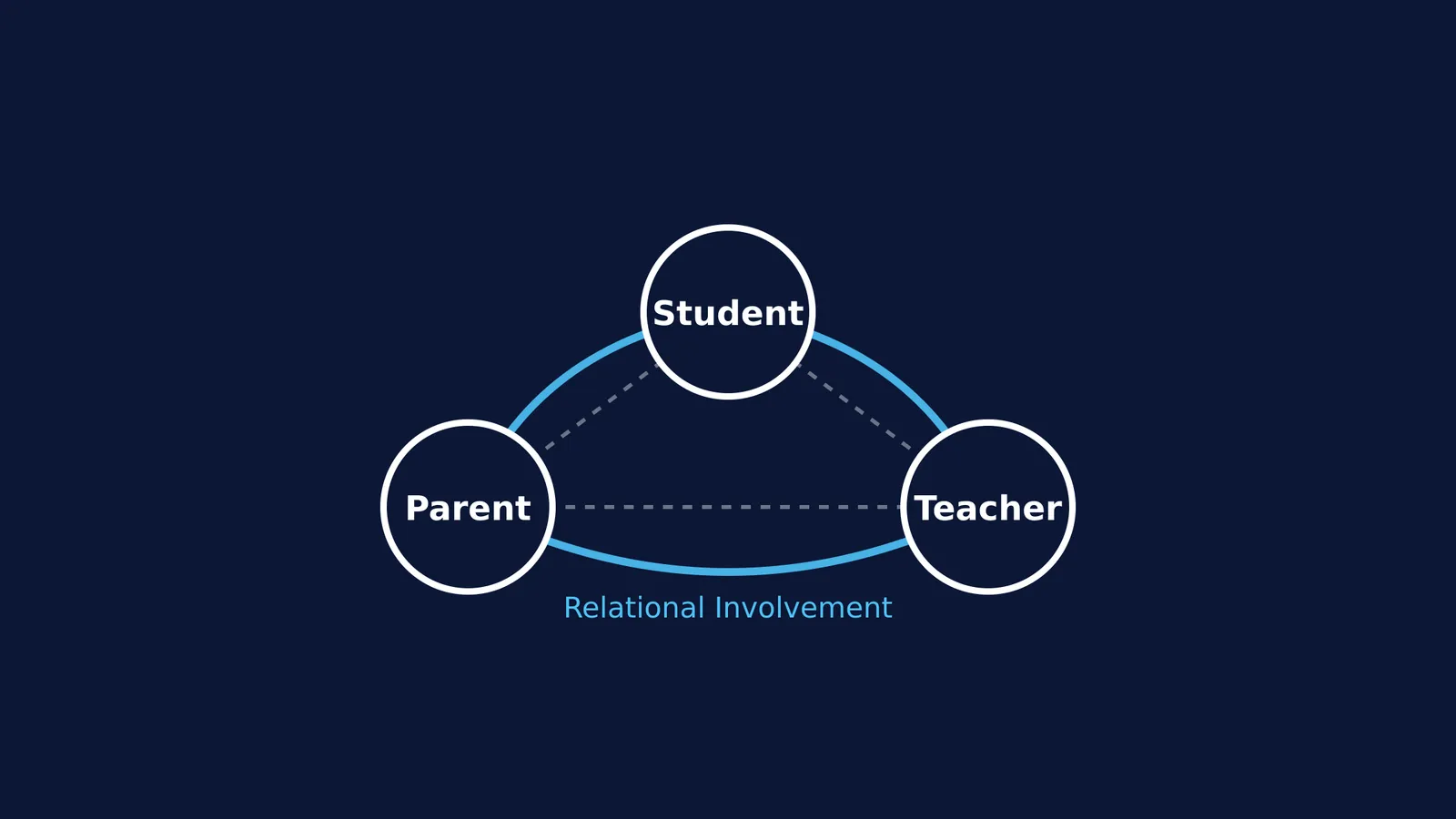
The link between parental involvement and academic achievement is robust. Studies consistently show that when parents and teachers communicate regularly, students have higher attendance rates, better grades, and fewer behavioral issues in the classroom. However, the *type* of involvement matters. A 2024 meta-analysis by William Jeynes looked at decades of data and found that "relational" involvement has a far greater impact on academic and social outcomes than just attending a meeting. Relational involvement means building a warm, communicative relationship with the school and aligning your expectations with those of the teachers.
But why does this happen? The benefits do not just come from the PTA buying new library books or organizing a science fair. They come from the shared understanding between the two most important sets of adults in a teenager's life. When a parent understands the school's pedagogical approach, they can reinforce those same study habits at home. Conversely, when teachers understand the student's home environment, they can tailor their instruction. Joining the PTA provides the structure to build those relationships. When teenagers see their parents visibly invested in their school environment, it increases their own motivation and aspirations.
How do you raise an issue constructively at a PTA meeting?
PTA meetings can sometimes turn into unproductive complaint sessions. If you have a specific concern—such as the amount of testing or a sudden drop in class morale—you need a structured approach to get a real result. This framework helps you ask parent-teacher meeting questions that lead to real follow-up:
Start with a shared goal: Frame your concern around the students' well-being. Instead of saying "The homework is too much," try "We all want the students to understand these concepts, but they are struggling to finish the assignments without losing sleep."
Ask for the school's perspective: Before demanding a change, ask, "Can you help me understand the goal of this volume of work?" If you are unsure how much homework helps, this is the time to ask about the pedagogical reasoning behind it.
Propose a collaborative solution: "Could we try a two-week pilot where homework is capped at one hour, and see if test scores drop?"
If PTA discussions reveal that your child has specific conceptual gaps that the school cannot address in a crowded classroom, you can support them at home. When a student brings a topic or problem set to Fermi's AI tutor, it works out what they already know, builds a plan for the session, and teaches through it—writing on a board, drawing the figure, and checking understanding as it goes.
Should you join?
Yes, if you can spare the time, attending general body meetings puts you in the room where decisions are made and builds the relationships you will rely on; read more about staying involved in high school without hovering next.


