

On this page
Hostel life offers independence, but it also brings a major challenge: other people. For a JEE aspirant, the transition from a quiet room at home to a bustling hostel can derail months of preparation. It is an environment where every decision, from when to wake up to when to sleep, is suddenly yours to make.
Why is it hard to study in a hostel?
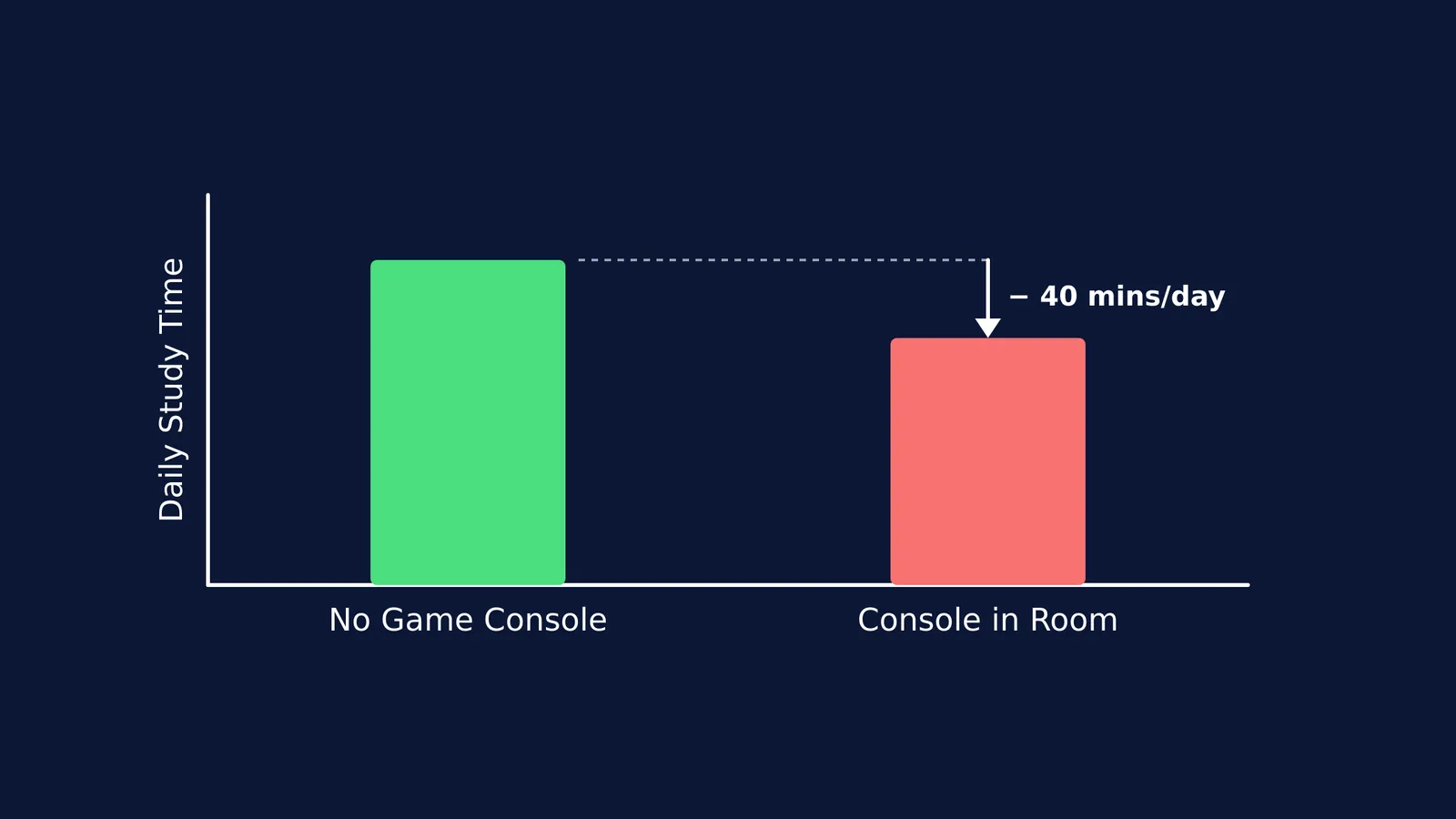
It is easy to blame a lack of willpower, but the environment itself changes how students behave. The "distraction effect" of shared living spaces is well documented in academic research. A study by economists Todd and Ralph Stinebrickner found that college students whose randomly assigned roommate brought a video game console studied 40 minutes less per day (Source). This lost time caused their first-semester GPA to drop by 0.241 points on a 4.0 scale. The temptation of a distraction just a few feet away is often stronger than a student's initial resolve to study.
In a hostel, a short break to see what others are doing often stretches into hours. The fear of missing out makes it hard to close the door when friends are talking down the hall or ordering late-night snacks. When your environment is constantly interrupting you, maintaining the deep concentration required for JEE physics or calculus becomes nearly impossible.
How can a JEE aspirant set study boundaries?
If you are a JEE aspirant distracted by hostel friends, you need rules that protect your time without making you an outcast. It is crucial to set these expectations early before bad habits become ingrained in your roommate dynamic.
Set a shared quiet hour: Agree with your roommates on a daily block of time (for example, the evening before bed) where the room is strictly silent. No music, no phone calls, and no visitors from other rooms.
The "headphones on" rule: Establish a visual cue for your peers. When your headphones are on, it means you are doing deep work and should not be interrupted unless it is an absolute emergency.
Script your refusal: Prepare a polite but firm way to say no. "I need to finish this mock test, but I will join you at the mess for dinner" works much better than a vague "I'm busy," which can invite further pleading.
Location shifting: The library escape
You cannot always control the noise level in a shared hostel room. Successful aspirants practice a technique called "location shifting." They deliberately separate the place where they sleep and socialize from the place where they study.
Moving to the campus library or an empty classroom removes the temptation to join a casual conversation. It also changes your mental state: sitting at a library desk signals to your brain that it is time to work. Try to schedule your most difficult problem-solving blocks for the library, leaving only light revision or formula review for your room. If you find yourself struggling with digital distractions even in the library, consider whether a phone on your desk hurts focus and try leaving it in your bag.
Finding focused study partners
A hostel is not just a source of distraction; it can also be a powerful academic tool if you find the right peer group. While casual socializing breaks focus, studying alongside peers who share your goals can significantly improve it. Running a study group that actually helps you learn can keep you accountable during long preparation months.
Look for the students who leave for the library early or stick strictly to their revision schedules. A focused peer group provides accountability that you might otherwise lack. If you agree to meet a friend early in the morning to solve physics problems, you are much less likely to oversleep.
When you are back at your desk, you need your study sessions to be as efficient as possible. If hostel noise makes it hard to know exactly where to start, Fermi's AI tutor can work out what you already know and build a plan for the session, so you sit down to a clear next step. When you get stuck on a tricky mechanics question, the Fermi Problem Library has worked problems with a step-by-step solver that explains the reasoning rather than printing an answer.
By managing distractions, communicating clearly with roommates, and using the right tools, a hostel goes from being a noisy distraction to a supportive community that pushes you forward toward your JEE goals. For a complete guide to making your space work for you, read more about studying in a hostel or PG.


