

On this page
When a parent or sibling falls seriously ill, the whole family’s focus shifts to survival and care. Amidst hospital visits, financial strain and a chaotic home life, a child's education often takes a heavy hit.
What is the unseen toll of a health shock?
We tend to think of illness as a medical problem, but for a child, it is also an educational one. A sudden health crisis diverts parental time, money and emotional energy away from academic support. Children often take on new caregiving roles or additional household chores, leaving them exhausted by the time they sit down to study.
The impact is stark. According to research using data from the National Longitudinal Study of Adolescent to Adult Health, adolescents whose parents describe their health as "fair" or "poor" are significantly more likely to drop out of high school compared to those with healthy parents (PubMed). This association persists even when accounting for family income, parental education and the student's own health, demonstrating that the stress of a parent's illness has an independent and profound effect on a child's academic trajectory.
Even if they stay in school, the daily stress takes a toll. Siblings of chronically ill children frequently report school-related difficulties, including a lack of focus in class, uncompleted homework assignments and increased absenteeism.
How to request CBSE attendance condonation?
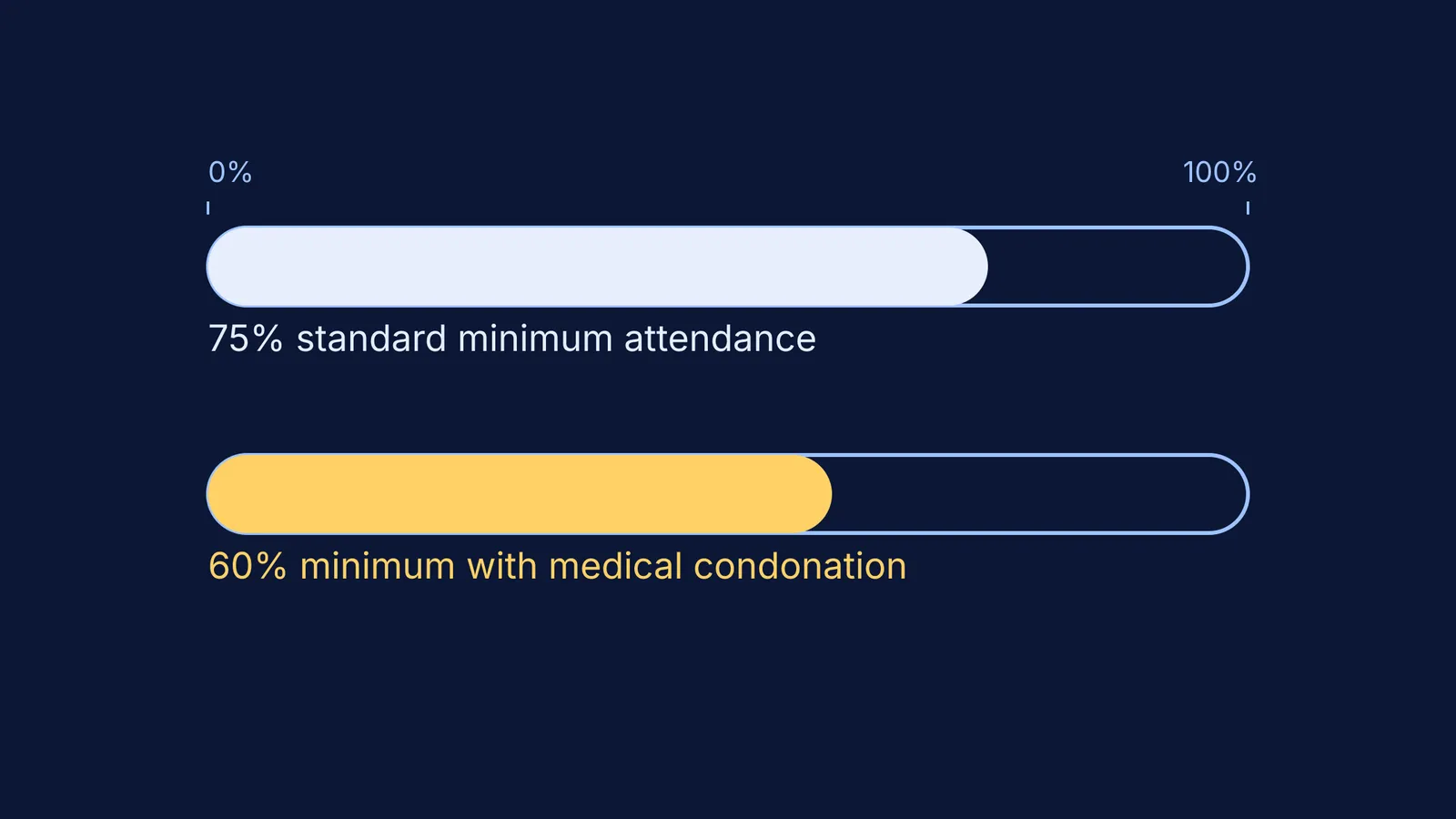
If you are in India, one of the first practical hurdles is attendance. The Central Board of Secondary Education (CBSE) requires a minimum of 75% attendance for a student to be eligible for the Class 10 and 12 board exams (CBSE).
However, there is flexibility if you act early. CBSE rules allow the board to condone (relax) a shortage of attendance by up to 15%, bringing the requirement down to 60%, for reasons including a serious family emergency or the loss of a parent. In exceptional medical cases involving long-term hospitalisation, it may be relaxed even further.
To get this condonation, you must:
Inform the school immediately: Do not wait until January. Write a formal application for every day missed.
Collect medical records: Keep copies of the family member's hospital discharge summaries and doctor's notes to prove the severity of the emergency.
Submit before the deadline: The school must recommend and submit the case to the CBSE Regional Office by early January (typically January 7th of the exam year). Cases submitted after this deadline are summarily rejected.
How do you build a predictable routine?
When home life feels chaotic, predictability provides a much-needed sense of safety. Try to keep "bookend" routines—the things that happen right after waking up, such as having breakfast together, and right before bed—as consistent as possible. These small anchors help stabilise a child's day even when everything else is in flux.
Keep the child in school and their usual extracurriculars whenever you can. These activities offer a "normal" space away from the illness, maintain their connections with friends, and provide a healthy distraction from the stress at home. A shared visual calendar on the fridge can also help them understand who is picking them up, where the ill family member is on a given day, and what their week looks like, which reduces anxiety about the unknown.
How can Fermi support their study time?
When parents are at the hospital or exhausted after a long day of caregiving, sitting down to help a teenager with a difficult physics or maths problem is often impossible.
This is where Fermi's AI tutor steps in as a steady presence. The tutor works out what the student already knows and builds a plan for the session, so they can sit down to a clear next step instead of a blank page. Because it holds a line of reasoning and explains the steps rather than just giving the answer, it gives the child the one-on-one attention they need to keep moving forward.
Whether they are tackling past papers in the Fermi Problem Library or trying to catch up on a missed Class 10 science lesson like dispersion of white light by a glass prism or naming carbon compounds, the tutor works alongside them.
How should you talk to the school?
The best way to protect your child's academic standing is to make the school your ally before grades slip or attendance drops. Call the class teacher or school counsellor as soon as possible and say:
*"I wanted to let you know that my spouse has been diagnosed with a serious illness, and our home life is quite disrupted right now. My child is trying their best, but they might be more tired or distracted than usual. Can we set up a time to talk about how we can support them over the next few months, perhaps with some flexibility on homework deadlines?"*
By opening the door early, you give teachers the context they need to respond with empathy and accommodations rather than discipline.


