

On this page
When square footage is tight, setting aside an entire room for study is rarely possible. But your child does not need a large home office to read well. A focused, deliberately designed corner of a living room or bedroom is enough to signal to their brain that it is time to learn.
Why make a reading corner for kids in a small apartment?
A physical boundary between relaxation zones and study zones builds strong habits. When a child uses a specific spot exclusively for reading, they enter a learning mode more quickly because the space acts as a physical cue.
The physical design of a learning space explains 16% of the variation in a pupil's academic progress, according to a 2015 study by the University of Salford. Even in a small apartment, controlling the light, comfort, and layout of a single corner can make a difference.
If they do get stuck while reading or solving a problem in this space, Fermi's AI tutor can work out what they already know and build a plan for the session, so they sit down to a clear next step.
Where should you put it?
Look for a quiet, low-traffic corner, ideally near a window. Sharing the dining table often means competing with dinner preparation or other conversations.
A dedicated spot also fosters independence. Giving a child a space they can call their own, even if it is just a corner, teaches them to organise their materials and manage their time. For advice on building a routine around this space, read our guide to setting up a shared family quiet hour.
What lighting is best for reading?
The quality of light directly affects a child's reading speed and eye comfort. For intensive reading and writing tasks, lighting guidelines recommend 500 lux of illuminance.
Natural daylight is always the first choice. Students in classrooms with the most daylighting progressed 26% faster in reading over one year, as found in a 1999 study by the Heschong Mahone Group.
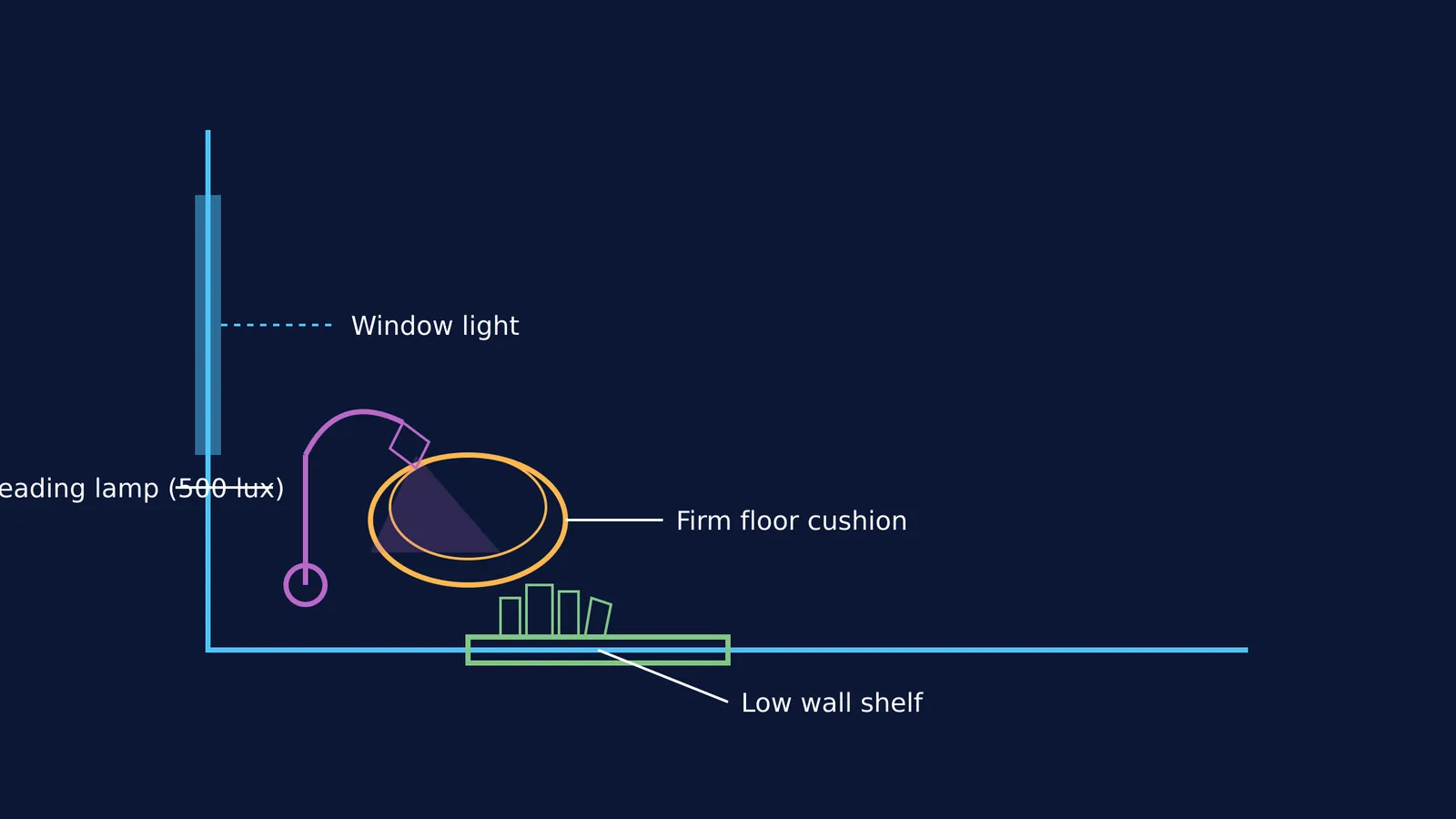
When daylight fades, layer the lighting. Do not rely solely on an overhead ceiling light. Add a dedicated desk or floor lamp that shines directly on the book without causing glare. A bulb with neutral white light is ideal for daytime focus, while warm white is better for evening reading to avoid disrupting sleep.
Floor cushion or desk?
A full-sized desk is not strictly necessary for reading. Flexible seating on the floor allows children to move intuitively and prevents the muscle fatigue associated with staying in one rigid position.
To maintain healthy ergonomics, choose a firm floor cushion or a floor chair with back support. The key is ensuring the book is held or propped up at eye level to prevent them from hunching forward. When it is time to move to desk work or intensive problem-solving, they can transition to a table. For visualising complex ideas from their reading, they can use the Fermi Simulation Lab.
How do you set up a small reading spot?
You do not need to buy new furniture to build a strong reading environment. Use this plan to set up a functional corner today:
Find the boundary: Pick a corner that is not used for sleep or play.
Mount a wall shelf: Clear the floor by installing a simple, low wall shelf for their current books.
Check the light: Use a light meter app on your phone to measure the spot; aim for 500 lux using a mix of window light and a focused lamp.
Add flexible seating: Place a firm bean bag, a wobble cushion, or a floor chair that provides back support.
Set the rule: Keep screens and toys out of the reading boundary.
For more ideas on encouraging them to use the space, see our overview of reading for pleasure and what PISA data shows.


