

On this page
The shift from traditional report cards to the Holistic Progress Card (HPC) is underway in schools across India. Driven by the National Education Policy (NEP) 2020 and designed by PARAKH under NCERT, the HPC changes how student progress is measured and reported.
Instead of a single column of marks at the end of the year, the HPC is a 360-degree assessment tool. It captures a child's cognitive, socio-emotional and physical growth through continuous feedback from teachers, parents, peers and the students themselves.
Here is how the new system differs from the old report card and how you can read it.
What is the Holistic Progress Card in school?
The Holistic Progress Card is a multidimensional report that evaluates students on competencies rather than rote memorization. It focuses on the application of knowledge, critical thinking and life skills.
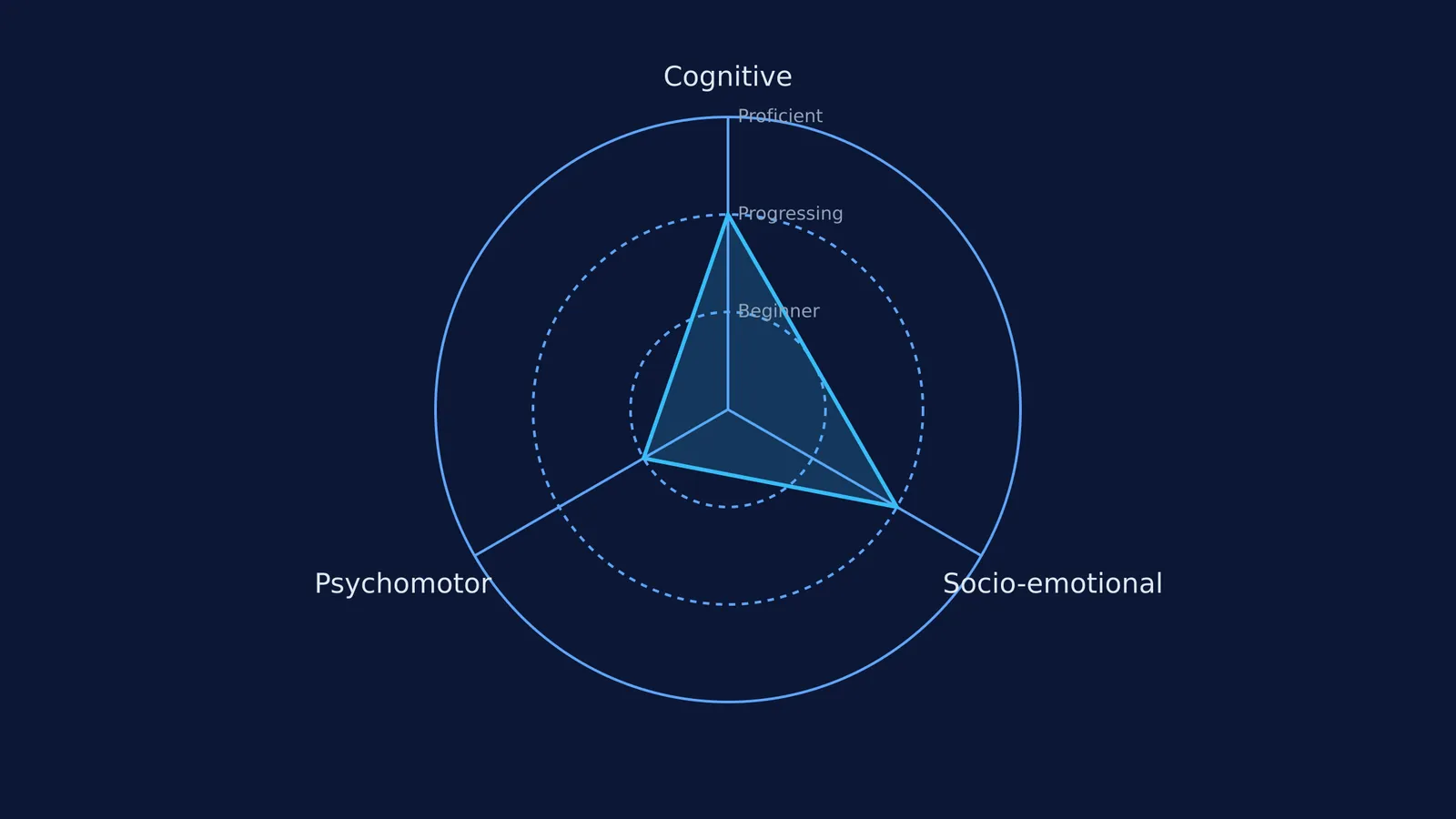
The assessment covers three primary domains:
Cognitive: Academic understanding, problem-solving, analytical thinking and conceptual clarity.
Affective (Socio-emotional): Empathy, teamwork, leadership, emotional regulation and ethical reasoning.
Psychomotor: Physical development, sports, creative arts, health and well-being.
By tracking all these areas simultaneously, the HPC aims to help teachers and parents identify a child's unique strengths and areas for improvement early on. This makes assessment a continuous tool for learning rather than just a final summary of learning at the end of a long school year.
How does the HPC differ from a traditional report card?
The traditional report card relies heavily on summative assessment: high-stakes, end-of-term exams that produce a simple percentage or grade. This system often creates immense pressure and only tests a narrow band of a student's abilities, primarily their capacity to retain and recall facts.
The HPC relies on formative assessment, meaning teachers observe and record progress continuously through project-based learning, role plays, portfolios and group activities. Because learning happens every day, the evaluation happens every day.
The feedback is also highly descriptive. Instead of seeing that a child scored 65 marks in Science, a parent will see a narrative explaining *how* the child approaches scientific problems, works with others in the lab and communicates their findings. This qualitative approach gives families a much clearer picture of what is actually happening in the classroom.
How do the self and peer assessment sections work?
One of the biggest changes in the NCERT framework is the inclusion of the student's own voice in their evaluation. The HPC includes sections for:
Learner Reflection: Students evaluate their own progress, identify what they found difficult and set goals for the next term.
Peer Assessment: Classmates provide feedback on a student's ability to collaborate, share responsibilities and listen to others during group projects.
This process builds self-awareness and helps students take ownership of their learning journey. It teaches them to view feedback not as criticism, but as constructive guidance for growth.
What do Beginner, Progressing and Proficient mean?
The HPC replaces traditional grades (A, B, C) with descriptive levels of attainment for each competency.
Beginner: The student needs significant support and guidance from the teacher to complete tasks or understand concepts.
Progressing: The student can complete tasks with occasional prompting or partial support.
Proficient: The student understands the concept fully and can apply it independently in new situations.
For students in the secondary stage, the HPC specifically tracks abilities like Awareness, Sensitivity and Creativity across these three progressive levels.
When a student struggles to start a self-directed project or gets stuck on a challenging new concept, Fermi's AI tutor works out what they already know and builds a plan for the session, so they sit down to a clear next step.
How can parents use the HPC at home?
The HPC includes a section for parent feedback, turning assessment into a two-way conversation between the home and the school. Parents are encouraged to observe and note changes in their child's habits, interests and emotional regulation at home, and share these insights with teachers.
The goal of the HPC is to build a detailed, living document of a child's school journey, allowing families to support them exactly where they need it. When you attend the next PTM, you can use these Parent-teacher meeting questions that lead to real follow-up to discuss the new card. And if your child struggles with a "Beginner" rating, it is a great time to be Talking about failure at home: how parents model learning.


