

On this page
The pressure to enrich a child's life with extracurriculars has turned after-school hours into a second shift of structured learning. From tennis coaching to robotics camps, parents often view these activities as essential investments in their child's future. Yet, these investments are increasingly expensive. According to the Aspen Institute's Project Play, the average U.S. family spent $1,016 on a single child's primary sport in 2024, a 46% increase since 2019. When parents multiply that cost across siblings and multiple classes, the financial strain is severe.
But the cost of overscheduling is not just financial. Time spent in back-to-back classes is time taken away from free play and rest, raising the question of whether more enrichment truly leads to better outcomes.
Do more hobby classes lead to better results?
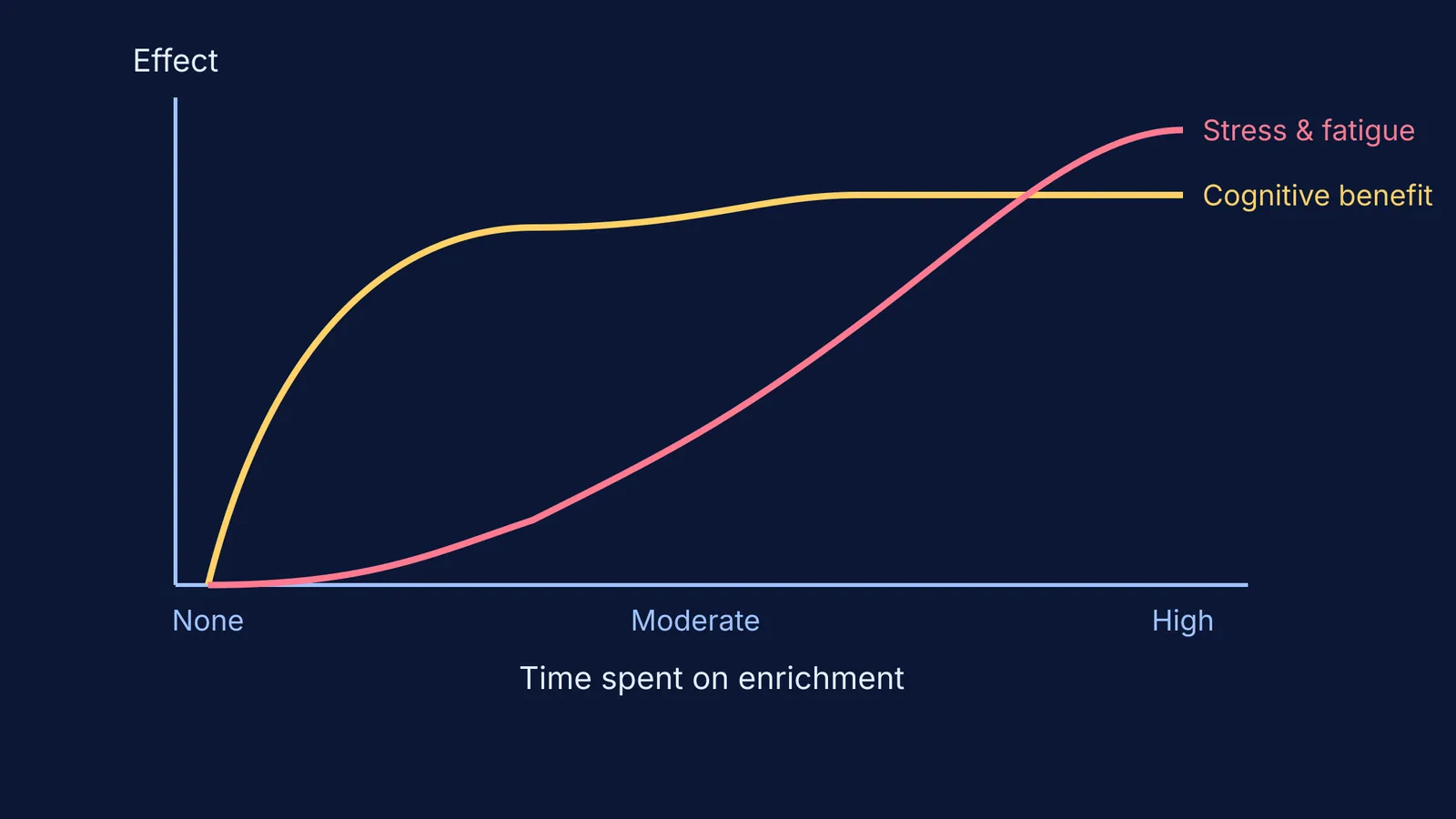
A February 2024 study published in the *Economics of Education Review* tested the assumption that more structured activities always benefit children. Tracking thousands of students, researchers found a sharp limit to the benefits of enrichment.
While moderate enrichment improves both academic test scores and social skills, the benefits quickly flatten out. Adding extra hours of structured activity offers nearly zero extra cognitive benefit. More importantly, heavily scheduled children—particularly those in high school—reported higher levels of stress, irritability, and fatigue. The study concluded that for most children, the last hour of enrichment has a net zero effect on cognitive development, acting as an active drain on their mental well-being instead.
Why does unstructured time matter?
When parents cut back on expensive hobby classes, the resulting gap in the schedule is not empty time—it is a developmental necessity. A 2018 clinical report by the American Academy of Pediatrics strongly recommended that pediatricians prescribe play to children.
The report highlights that unstructured, child-driven time builds executive function, helping young people learn to plan, regulate their emotions, and cooperate with peers. Furthermore, free time acts as a vital buffer against toxic stress, allowing children to decompress from the pressures of school. Removing unstructured play to make room for another paid class removes this natural coping mechanism, often contributing to exam stress in teenagers.
How can you choose activities without overspending?
Families can step off the overscheduling treadmill by making choices based on real interest rather than the fear of missing out. A practical way to manage both time and money is to adopt a termly activity review.
Pick one or two priorities: Aim for the sweet spot identified by research. A good balance is one physical activity and one creative or academic pursuit, leaving at least two afternoons completely free each week.
Review every term: At the end of a season or term, ask your child if they want to continue. Let them drop classes they no longer enjoy, rather than treating every hobby as a permanent commitment.
Use free alternatives: Substitute expensive travel teams or private academies with local community programmes, school clubs, or self-led hobbies at home.
Academic enrichment often creeps into the hobby budget. If a student's schedule is packed with extra classes just to keep up with schoolwork, Fermi's AI tutor can help recover that lost time. Instead of driving to another scheduled class, a student can bring their assignment to Fermi. The tutor works out what they already know and builds a plan for the session, teaching them step by step when they are actually ready to learn.
When you understand how much homework helps versus how much is just busywork, you can apply the same logic to extracurriculars. By focusing on meaningful activities and protecting free time, you give children the space they need to thrive—without breaking the bank.


