On this page
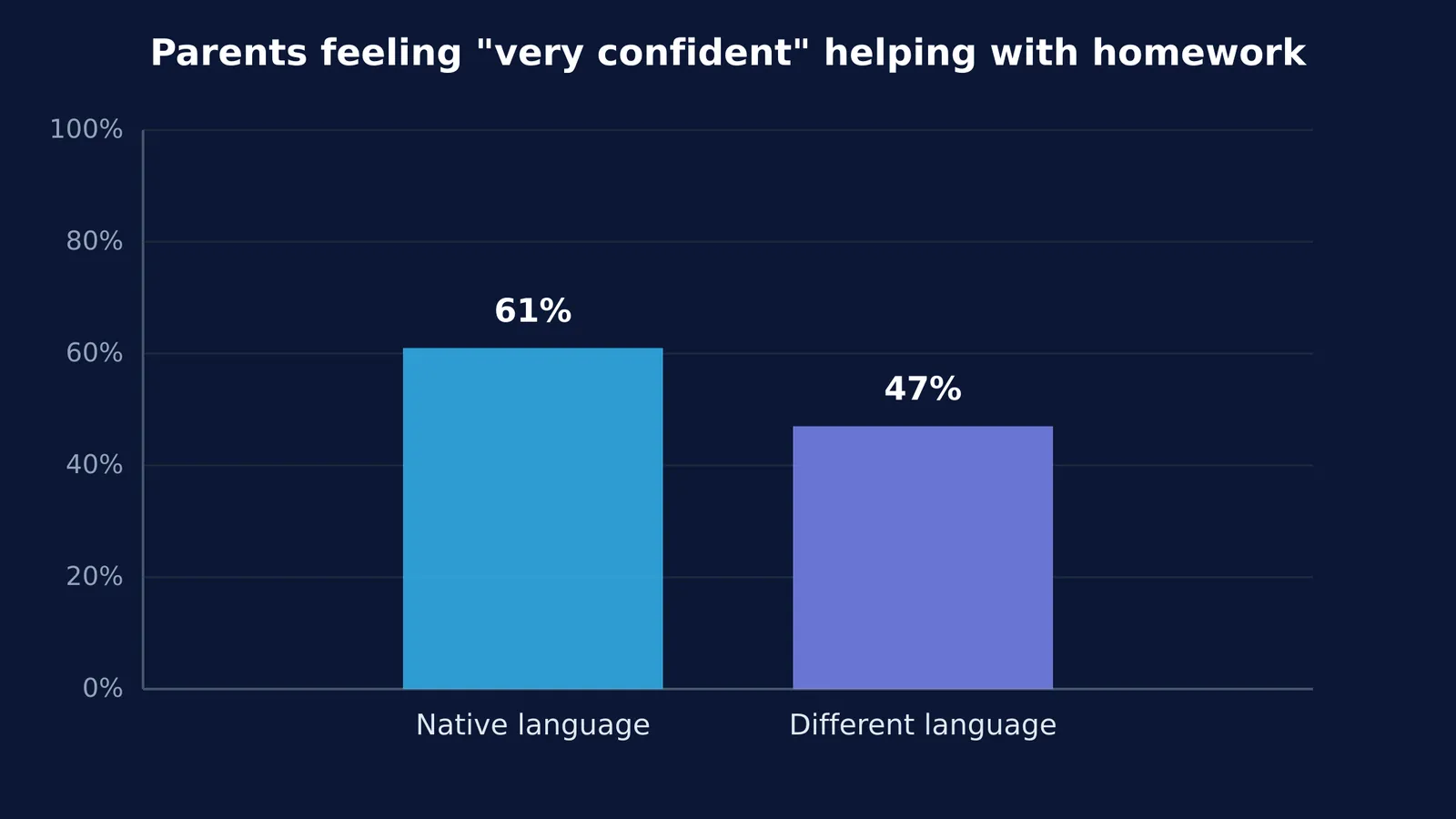
Helping a child with schoolwork is a standard part of parenting, but it becomes a unique challenge when the daily assignment is in a language you do not speak. An Irish Central Statistics Office study on parental involvement found that 61% of parents whose first language is English or Irish feel very confident helping with homework. Only 47% of parents whose first language is different feel the same way.
In India, where families frequently migrate between states for work, parents often find themselves facing a Hindi curriculum they cannot read or pronounce. The academic Hindi used in textbooks can be formal and complex, differing significantly from everyday conversational language. You do not need to become fluent in Hindi to support your child. By acting as a learning coach rather than a subject expert, you can use available tools, structured routines, and community networks to keep them on track and build their confidence.
How can I help my child with Hindi homework when I don't speak Hindi?
The most effective approach is to shift the dynamic from direct teaching to shared discovery. When you do not know the answer, you can model the process of how to find it. This teaches your child valuable independent study skills.
Ask them to teach you: Have your child explain what they learned in class that day. Explaining a concept out loud reinforces their memory and quickly exposes any gaps in their understanding. It also positions them as the expert, which can be highly motivating.
Focus on the routine: Your primary role is to provide structure. Ensure they have a quiet, well-lit place to work, a regular daily schedule, and all the materials they need before they sit down.
Use visual cues: For younger children, label common household objects with sticky notes containing both the English name and the Hindi transliteration (for example, *Mez* for Table or *Kalam* for Pen). This immerses both of you in the vocabulary naturally.
Validate their effort: Learning a new language is tiring. Acknowledge when a passage is difficult and praise their persistence rather than just their correct answers.
If your child's struggles extend beyond language translation into conceptual gaps in science or mathematics, you can bring in subject-specific tools. Fermi's AI tutor works out what a student already knows and builds a plan for the session, teaching through the concepts step by step rather than just printing an answer.
Where can I find official Hindi audio resources?
Pronunciation is often the biggest hurdle for non-Hindi speaking parents. Hearing the text read aloud with the correct intonation helps children internalise the rhythm and vocabulary of the language.
NCERT Audiobooks: The Central Institute of Educational Technology (CIET) provides official audio versions of NCERT textbooks. You can stream or download MP3 chapters for Hindi textbooks like *Rimjhim* (Primary), *Vasant* (Middle), and *Kshitij* (Secondary). Playing these tracks while your child follows along in the physical book bridges the gap between spoken and written Hindi.
ePathshala App: The government's ePathshala mobile app hosts digital textbooks and includes a built-in text-to-speech feature. This allows your child to read along while the app reads the Hindi text aloud, which is especially useful for daily reading practice.
Audio Dictionaries: Digital translation tools have advanced significantly and are invaluable for quick lookups. Using the Google app's Lens feature, you can scan a printed Hindi worksheet with your phone camera and translate the instructions into English instantly. For specific vocabulary, typing words into Google Translate or an online dictionary like Shabdkosh and playing the audio gives your child an immediate, accurate pronunciation guide.
Who can help my child with Hindi homework?
You do not have to manage the language barrier alone. Schools and communities offer valuable resources if you know how to ask for them and how to structure the support.
Request a weekly word list: Speak to your child's Hindi teacher early in the term. Explain your situation and ask them to provide a list of the week's key vocabulary, grammar rules, or spelling words in advance. You can run this list through an audio dictionary over the weekend, preparing both you and your child for the week ahead without needing to understand the entire text.
Form a peer study group: Connect with other parents in your child's class, particularly those who are native Hindi speakers. Arrange a weekly study session where the children complete their Hindi homework together. The native-speaking parent can supervise the Hindi assignments and correct pronunciation. In return, you can offer to host and supervise a different subject, such as mathematics or science.
Use language brokers carefully: If you have family members or friends who speak Hindi, short video calls where your child reads a passage to them can be highly effective. Keep these sessions brief and focused on specific reading tasks to avoid overwhelming your child or your helper.
Your goal is not to master Hindi grammar yourself, but to show your child that academic obstacles can be overcome with the right tools and a structured approach. Read more about when to help with homework and when to step back, or explore whether children should use ChatGPT for homework to find the right balance for your family.