

On this page
Half-yearly exams mark the first major test of a school year for students in middle school, typically covering several months of coursework. If your child is used to cramming the week before, they will find that middle-school syllabuses are simply too broad to hold in short-term memory. Transitioning from primary to middle school means more subjects, deeper concepts, and exams that test understanding rather than just recall.
A datesheet-based study plan spreads the work out, prevents panic, and protects the time they need to rest. By structuring their revision well in advance, you can turn a stressful fortnight into a predictable, manageable routine.
Why is spaced practice better than cramming?
When students study a topic once and ignore it until the exam, their memory fades rapidly. A review of learning techniques in *Psychological Science in the Public Interest* evaluated common study methods and found that "spaced practice"—spreading study sessions over time—is rated as a "high utility" technique for long-term retention [[1]](https://doi.org/10.1177/1529100612453266).
Instead of a long marathon on science, a student learns more by spending shorter sessions on the subject across different days. This forces the brain to pull information back out of memory just as it begins to forget, strengthening the memory trace.
Another high-utility technique identified in the same study is "practice testing," or retrieval practice. Rereading a textbook provides an illusion of competence; trying to answer a question with the book closed proves what the student actually knows. It can be as simple as using flashcards, attempting a few textbook problems, or explaining a concept out loud to a parent.
How to plan a study schedule for half-yearly exams?
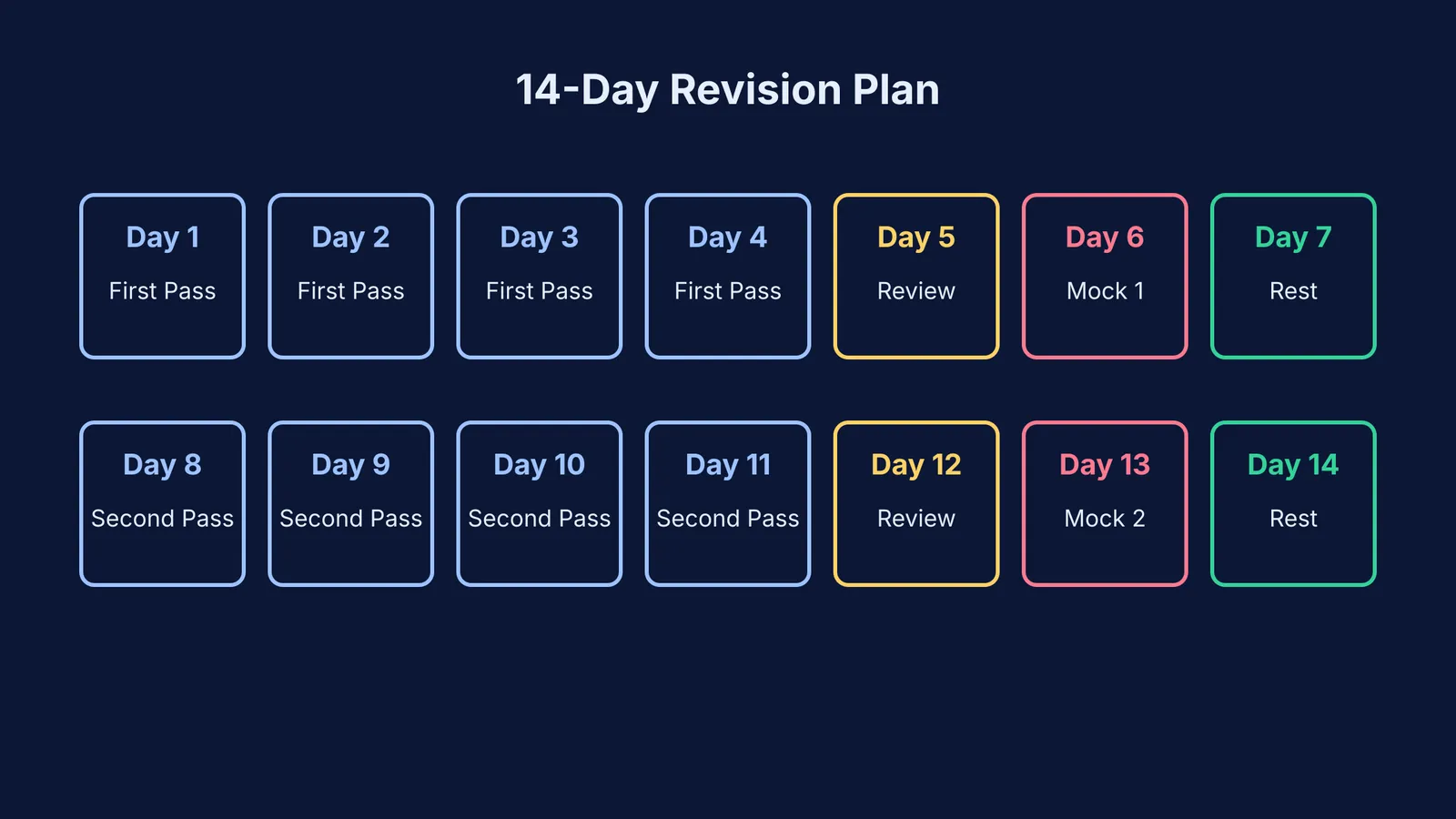
Work backwards from the first day of the exam datesheet. Dedicate the final fortnight to this sequence, adjusting the subjects to match their actual exam order.
Phase one: The First Pass
Choose two subjects each day (for example, Mathematics and English on the first day, Science and Social Science on the second). Read the syllabus chapters, write down key definitions, and note the areas where they get stuck. A strong foundation in these early days makes the subsequent reviews much faster and more effective.
If they do not know where to start revising a topic, Fermi's AI tutor works out what they already know and builds a plan for the session, so they sit down to a clear next step.
Phase two: Weekly Review
No new topics on this day. Ask them to retrieve what they learned during the first phase using a blank sheet of paper, or try a few mixed questions. If they are studying a geometry theorem like the circle through three given points, this is the day to prove it without looking at the book.
Phase three: The First Mock Paper
Print a previous year's paper or a sample paper for the subject that is first on their datesheet. Set a timer for the full exam duration and ensure they sit in a quiet room. This builds exam temperament and reveals which sections take too long. Mock exams also highlight whether a student is losing marks to poor time management or genuine knowledge gaps, allowing you to adjust the remaining study days.
Phase four: The Rest Day
A full day off. No books, no tests. Time away from the desk prevents burnout midway through the plan and gives the brain a chance to process the week's effort. A good rest day might involve sports, family time, or hobbies—anything that takes their mind off the upcoming tests.
Phase five: The Second Pass
Move to the remaining chapters. Mix the subjects again, but prioritise the subjects that appear earliest on the datesheet. Spend a short time at the start of these sessions doing a quick recall of the first week (for instance, listing the parts of the human brain from memory). Retrieval practice here is crucial. By testing themselves on week one's material, they interrupt the forgetting curve and lock the knowledge in.
Phase six: Final Review and Second Mock
Review the hardest topics from the whole term. Sit for a second mock paper, this time focusing on the second subject on the datesheet. Correct the paper together to find any lingering gaps.
Phase seven: Rest and Sleep
The day before the first exam is for light reading only. Do not introduce new concepts. The focus shifts entirely to feeling rested. If they feel anxious, a quick review of summary notes is fine, but rigorous testing should stop. Ensure their bags are packed and uniform is ready to minimise morning stress.
Why is sleep important for exam preparation?
Cramming often steals hours from the night, but a tired brain cannot hold on to facts. During sleep, the brain actively replays the day's experiences, moving information from short-term to long-term storage. Without enough sleep, this consolidation process is cut short.
The Centers for Disease Control and Prevention (CDC) recommends that teenagers aged 13 to 17 get 8 to 10 hours of sleep per 24 hours [[2]](https://www.cdc.gov/sleep/about/index.html). Sacrificing this time for an extra hour of reading actually hurts memory consolidation and the ability to maintain focus the next morning. A well-rested student will recall facts faster and make fewer careless mistakes.
By working the plan into the datesheet and making time for recovery, you give your child a framework they can use all the way through school.


