

On this page
Getting an allotment in an IIT, NIT or medical college in a different state is a proud moment, but it immediately turns into a logistical puzzle. Moving your child to a distant campus involves more than just booking a flight. It requires a practical transition plan so that neither you nor your child feels overwhelmed on day one.
According to the Jed Foundation, 94% of students experience homesickness during their first 10 weeks of college. Managing the initial move smoothly can help reduce this early stress.
Should we travel together for the first campus visit?
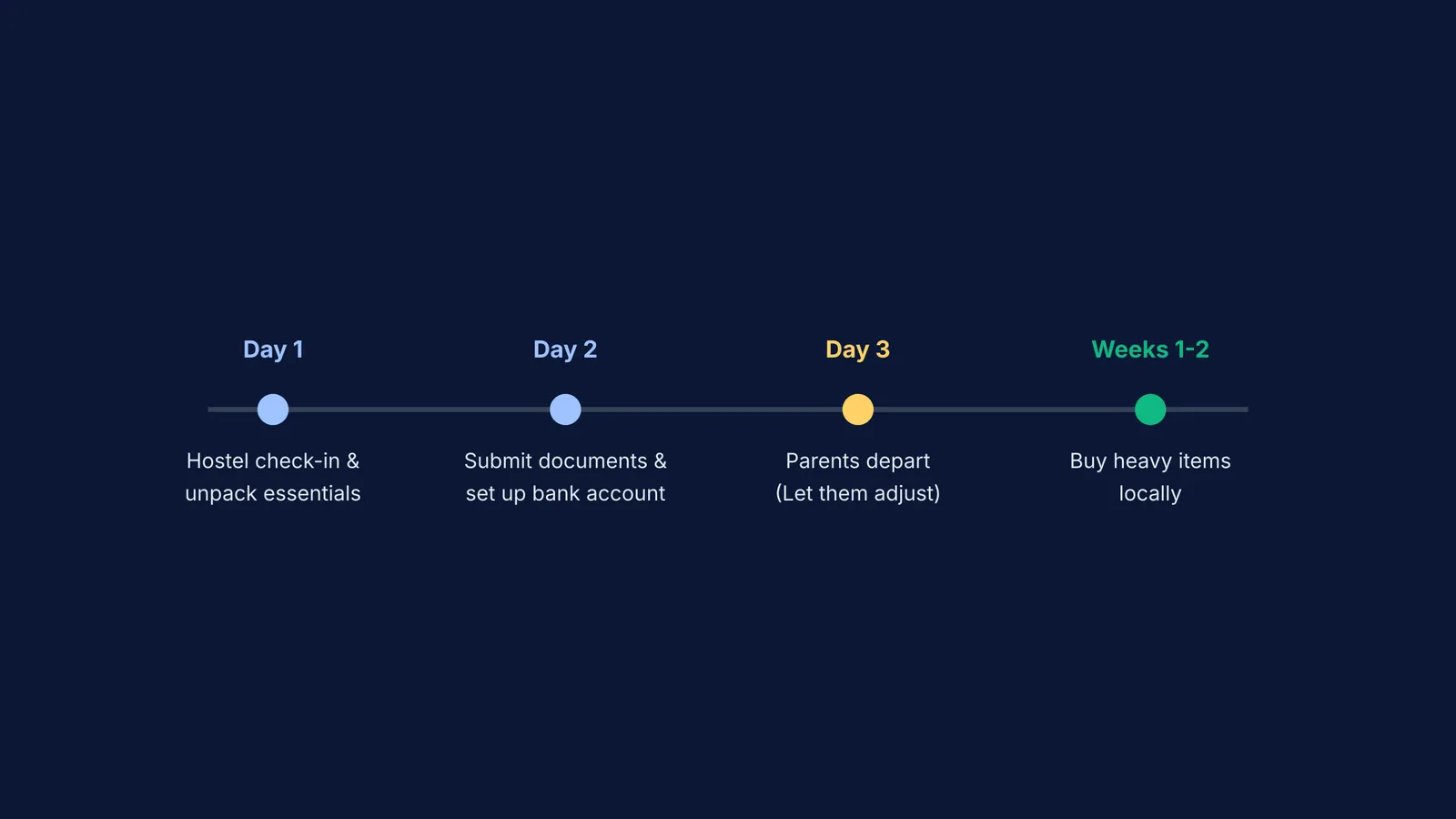
Yes, if at all possible, travel with your child for the initial drop-off. The first few days on a new campus involve finding the hostel, submitting physical documents, and setting up a bank account. Having a parent there removes the administrative burden from the student, letting them focus on meeting their batchmates.
Plan to stay for two to three days. Book a hotel nearby rather than assuming you can stay in a campus guest house, as these are often fully booked during admission weeks. Once they are checked into their hostel room and have their mess card, it is time for you to leave. Lingering for too long can delay their adjustment to campus life.
How can we plan the hostel setup without overpacking?
The most common mistake families make is trying to pack a full year's worth of supplies into two suitcases. Hostel rooms are small, and storage space is limited.
Pack only what they need for the first two weeks:
Two weeks of comfortable clothing and one formal outfit.
Basic toiletries and any daily prescription medication.
A bedsheet, a light blanket, and a towel.
Essential electronics (laptop, phone, chargers, and a universal adapter).
Buy the rest locally. Every major engineering and medical campus has local markets or student-run shops that sell buckets, mattresses, heavy winter wear, and study tables. Buying these heavy items in the campus city saves baggage fees and ensures you get exactly what fits in the room.
For families weighing the pros and cons of distant campuses before accepting a seat, our guide on Moving cities for coaching or staying home: questions to weigh discusses similar logistics.
How do we handle early academic gaps?
The first semester of a rigorous STEM degree moves fast, and students often miss the first few lectures due to late admission rounds or travel logistics. This can be stressful when the class jumps straight into complex topics.
If your child finds the initial coursework overwhelming while settling in, Fermi's AI tutor works out what they already know and builds a plan for the session, so they sit down to a clear next step. The Fermi Concept Library holds every concept in physics, chemistry, biology, mathematics and computing, each with its own lesson and its place in the map, making it easy to catch up on missed early lectures.
You can also read our timeline on Your child's first year of JEE preparation, month by month to understand the pace of a competitive syllabus.
What is the best way to support them from afar?
Once you return home, your role shifts from managing their schedule to listening. Expect phone calls where they sound exhausted, confused, or homesick.
A practical framework for these calls:
Set a regular call time: Agree to talk every evening after dinner or every Sunday morning. Unpredictable check-ins can disrupt their attempts to study or make friends.
Listen without fixing: When they complain about the hostel food or a tough assignment, they usually just want to vent. Do not immediately offer to call the warden or tell them to study harder.
Encourage campus solutions: If they are struggling with a subject, ask them if they have visited the teaching assistant's office hours.
Building a routine at home is just as important. Our guide to Exam season at home: routines that help the whole family can help younger siblings adjust to the new dynamic.


