On this page
When teenagers start managing their own allowances or earning their first paycheques, they often grasp the basics of budgeting and saving quickly. If they spend all their money in the first week of the month, the consequence is immediate: they have nothing left for the remaining three weeks. However, the long-term effects of time on money are much harder to see, making concepts like inflation and compound interest feel abstract.
In the OECD's PISA 2022 financial literacy assessment, only 11% of 15-year-olds across the 14 participating OECD countries reached the top proficiency level, meaning they could analyse complex financial products and solve non-routine financial problems. Many teenagers know that prices go up over time, but the mathematical reality of how inflation quietly erodes the purchasing power of idle cash remains difficult to grasp.
Instead of lecturing about economic policy or central banks, you can use your own family's history to make the mathematics of inflation concrete and personal.
Why is inflation hard for teens to grasp?
Inflation is virtually invisible day to day. A teenager might notice a slight price increase in their favourite snack or a fast-food meal, but the slow, compounding effect of a steady annual inflation rate over a decade or more is difficult to picture.
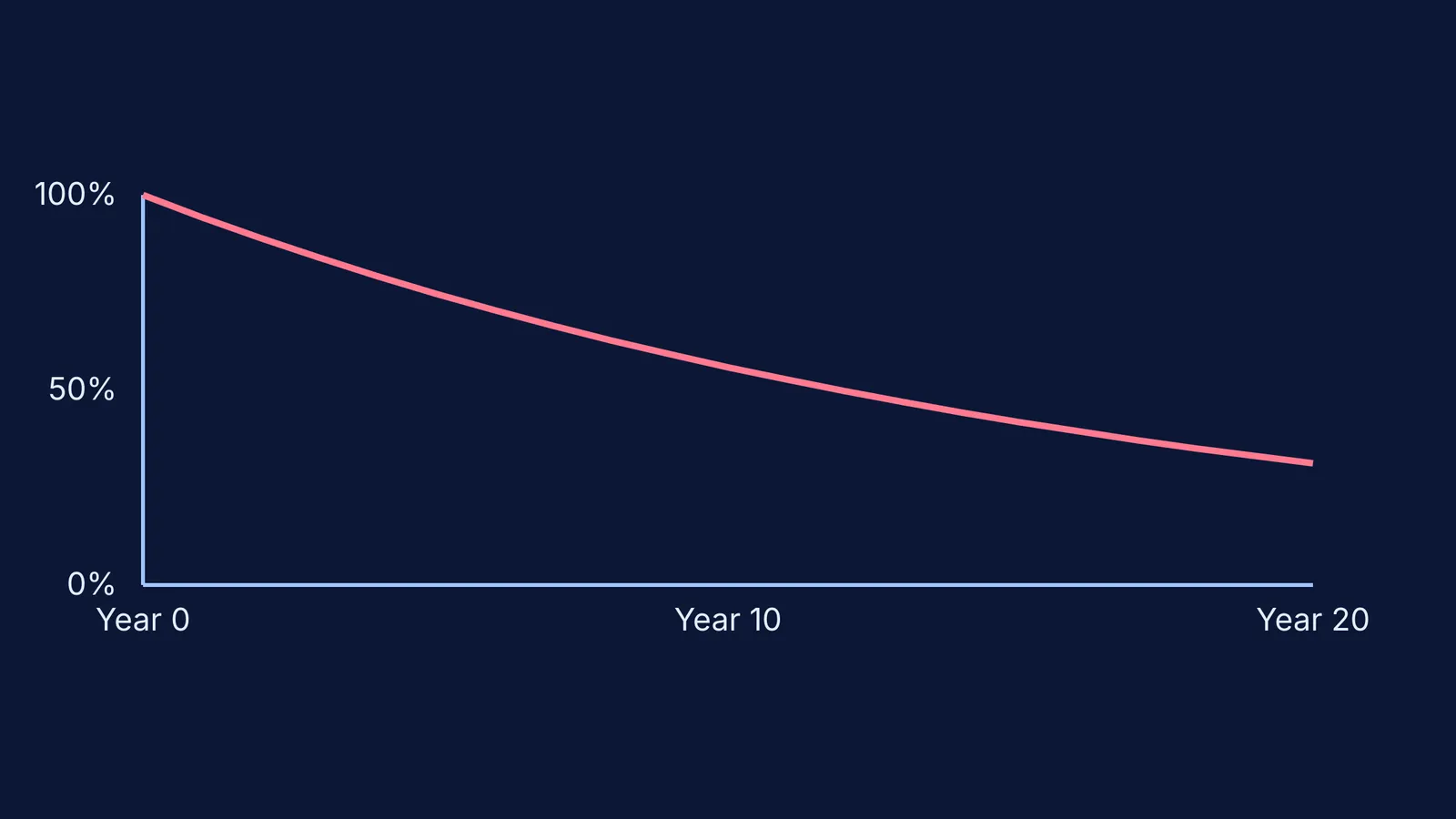
If they keep a ₹500 note tucked away in a drawer, it still looks exactly like a ₹500 note five years later. The number printed on the paper has not changed, so it feels entirely safe. The challenge is shifting their focus away from the nominal number on the note to the real value of what that note can actually buy. A currency note is only worth what you can exchange it for in the real world.
When prices rise, a fixed amount of cash commands fewer goods. Until a young adult experiences this firsthand, it feels like a theoretical problem rather than a practical threat to their savings.
How to explain inflation to a teenager?
The most effective way to explain inflation is to travel back in time. You can build a "Time Travel Price List" using your own memories, old family records, old household bills, or even old menus from a local restaurant you still visit.
Here is how to set up the exercise:
Pick an anchor year that holds significance for them, such as the year they were born, the year you bought your current home, or the year you started your first job.
List three to five everyday items: a cinema ticket, a litre of petrol, a masala dosa at a local restaurant, or a basic haircut.
Write down what you paid for those items in your chosen anchor year.
Ask your teenager to find out what those exact same items cost today.
When they see that a cinema ticket went from ₹80 to ₹250, or a litre of petrol jumped from ₹45 to ₹100, the concept stops being an abstract theory. You can use this as a natural extension of the everyday number conversations you may have started when they were younger. By letting them calculate the percentage increase themselves, you turn a passive lecture into an active investigation.
You can then ask them to calculate the average annual increase. If a price doubled in ten years, they will discover the power of compounding.
What does this mean for their savings?
Once the reality of rising prices is clear, you can introduce the critical difference between simply saving cash and actively investing it.
Ask them a simple question: "If you hid ₹80 in a book back in 2014 to buy a cinema ticket today, what would happen?" They will quickly realise that the ₹80 they saved can no longer buy the ticket. Their money lost its power because it stood still while prices moved forward.
This is the exact moment to explain that savings need to grow at least as fast as prices rise just to break even. This requires understanding compound interest, a concept that governs both how savings grow in a deposit and how loans become expensive. They can use the rule of 72 to estimate how long it takes for prices to double at a given inflation rate. If they are working through the compound interest mathematics behind this and get stuck, Fermi's AI tutor can work out what they already know and build a plan for the session, so they sit down to a clear next step instead of feeling overwhelmed by formulas.
How can parents model healthy financial habits?
Teenagers learn as much from observation as they do from direct instruction. When you discuss household budgeting choices, explain why you are waiting for a sale to make a large purchase, or talk about the interest rate on a bank deposit, you are showing them how to navigate a world where money has a time value.
You can share your own financial mistakes, like a time you left cash in a low-interest account for too long, or how you evaluated the interest rate on a car loan. Just as how parents model learning shapes a child's academic resilience, modeling open, calm conversations about prices, interest rates, and inflation equips teenagers to make confident financial decisions as they enter adulthood. They will leave home not just knowing how to save money, but understanding how to protect its purchasing power for the future.