

On this page
When an older brother or sister packs their bags for university or shifts to a coaching hub, the living room suddenly changes character. For weeks leading up to departure, household conversations revolve around train reservations, hostel deposits, mattress purchases, and packing lists. Families often weigh moving away from home for coaching against preparing locally, yet few anticipate the quiet disruption left behind in the bedroom across the hall. For the younger sibling remaining at home, the departure marks an abrupt emotional and structural shift.
Why do younger siblings feel lonely when an older sibling leaves?
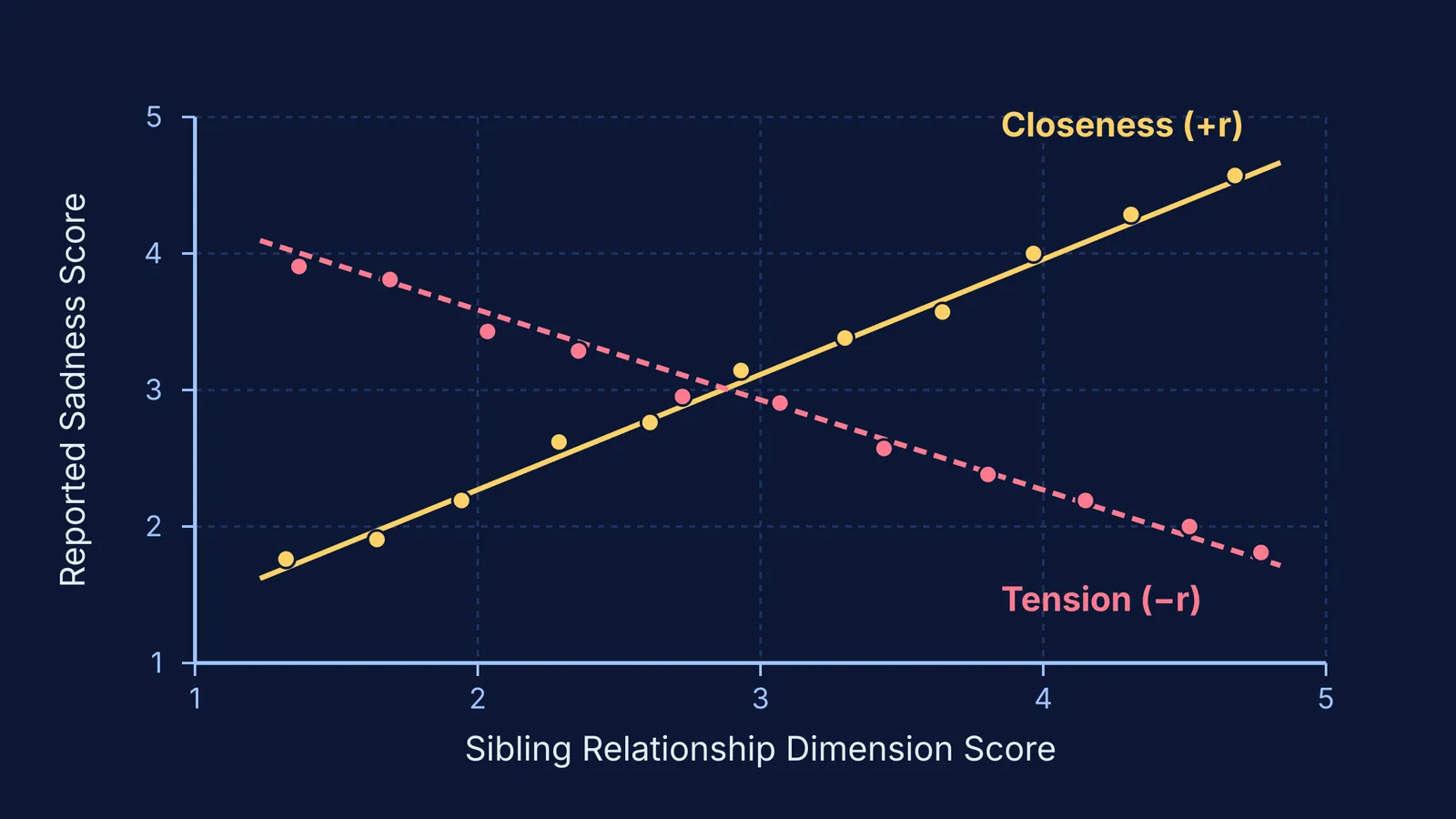
While parents frequently discuss their own "empty nest," the child left behind experiences an equally profound loss that often goes unnoticed. In an empirical study of 284 participants published in the *Journal of Human Behavior in the Social Environment*, researchers Emily Rosen, Lynn Ackerman, and Diane Zosky investigated what they termed the "sibling empty nest syndrome." They found that the remaining sibling experiences significant feelings of sadness and loneliness. Crucially, the intensity of this grief directly tracked the degree of warmth and closeness the siblings shared before the move, whereas prior household friction showed a negative correlation with departure sadness.
This sadness stems from losing an everyday micro-companion. An older sibling is rarely just family; they are a built-in sounding board, a co-conspirator against parental rules, and a constant background presence. While the departing student steps into an exhilarating world of college societies, new friends, and hostel banter, the younger child stays behind in a quieter, emptier house where familiar routines have collapsed.
How does family life change for the younger child at home?
The emotional gap is compounded by a sudden shift in domestic dynamics. When the older sibling moves out, the younger child often becomes a "pseudo-only child" or suddenly finds themselves the senior child at home. Parental attention, once divided between two school schedules and two social lives, now focuses entirely on the remaining student. Dinner table conversations that once hopped across topics now zero in on the younger child's weekly tests, homework completion, and screen time.
This concentrated spotlight can create severe performance pressure. Parents may unconsciously expect the younger child to mirror the older sibling's study habits or subject choices. Our guide on comparing siblings at home outlines why this kind of scrutiny causes anxiety rather than motivation. In an investigation of 171 sibling pairs published in *Social Development*, Shawn D. Whiteman, Susan M. McHale, and Ann C. Crouter examined how adolescents navigate modeling versus sibling de-identification—the developmental need to establish distinct interests and identities. When an elder sibling leaves, younger adolescents need the freedom to build their own identity rather than feeling pressured to step into their sibling's shoes.
The departure also removes an informal academic scaffold. Older siblings often explain difficult physics derivations, clarify chemistry reactions, or decipher unclear teacher instructions. When complex problems arise and an older sibling is no longer across the hallway to review rough work, the Fermi Problem Library provides worked problems with a step-by-step solver that explains the reasoning rather than printing an answer.
How can families support a younger sibling through the transition?
Helping a younger child adapt requires deliberate connection without hovering. Physical distance naturally strains communication unless families create reliable touchpoints. In a study of 250 emerging adults published in *Family Relations*, Anna K. Lindell, Nicole Campione-Barr, and Sarah E. Killoren found that frequent synchronous communication—such as scheduled phone calls and video chats—significantly increased relationship positivity and mutual disclosure, whereas sporadic or passive contact allowed closeness to decline.
Predictable household routines also provide psychological safety. Establishing structured shared habits, such as setting up a family quiet study hour, replaces the void left by the elder child with a calm, dependable rhythm.
As the younger child adjusts to working independently, building their own learning rhythm is essential. Rather than copying an older sibling's study habits, Fermi's AI tutor can work out what a student already knows and build a plan for the session, helping them sit down with clear next steps that reflect their individual pace.
A four-step family adjustment plan
Families can ease this transition through four concrete steps:
Acknowledge the loss directly: Resist telling your child, "Now you have the whole room to yourself." Instead, name the grief: "The house feels much quieter without your sister, and it is completely normal to miss having her around."
Establish a weekly sibling call: Schedule a dedicated 20-minute video call every Sunday evening. Encourage the college sibling to ask about school events and friends at home first, rather than only reporting on campus life.
Protect one-on-one parent time: Create a weekly ritual—such as a Saturday morning walk or a shared breakfast—focused entirely on the younger child's interests, without mentioning exams or comparing them to their sibling.
Foster a distinct domain: Support your child in choosing at least one club, sport, or hobby that their older sibling never pursued, giving them a personal space to build confidence.


