

On this page
Debating teaches teenagers how to structure arguments, think on their feet, and speak clearly under pressure. Standing in front of an audience and a panel of judges, however, can be daunting. As a parent, you can provide the sounding board and the structure they need to refine their speech before competition day.
Here is how to help them build their case, time their delivery, and keep their nerves in check.
How to structure a debate speech at home?
Before they start memorising lines, ensure the structure is sound. A good debate speech does not just list facts; it builds a logical case.
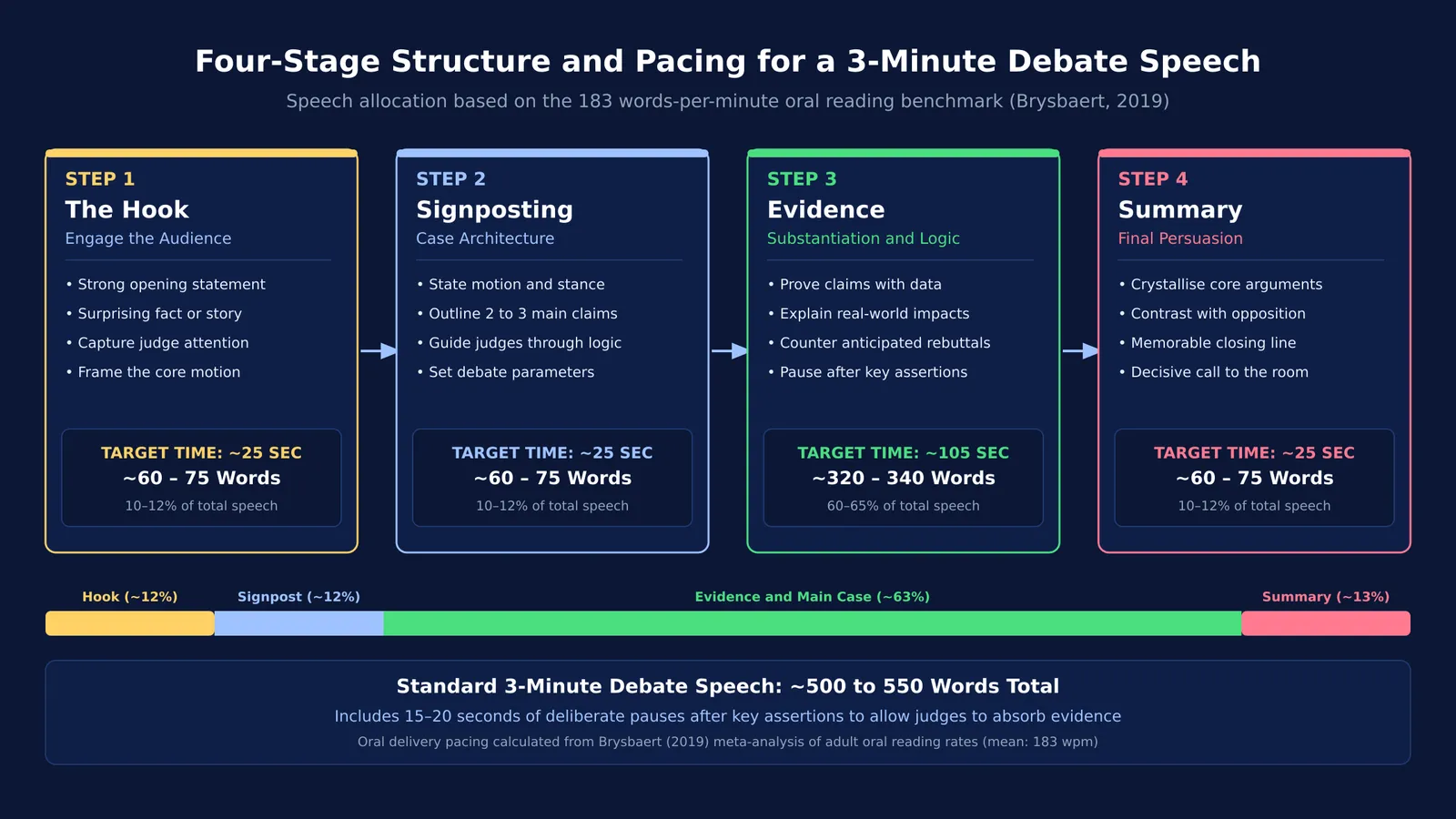
The hook: Start with a strong opening statement, a surprising fact, or a brief story that captures the audience's attention.
The signposting: Have them state clearly what their main arguments will be.
The evidence: Each point should be backed by verified information. If your child is debating a complex science topic—such as the impact of pesticides on ecosystems (like biological magnification in Class 10) or genetic engineering (like recombinant insulin production)—understanding the underlying science is crucial. They can use the Fermi Concept Library to review lessons across physics, chemistry, biology, mathematics and computing, ensuring they understand the foundational principles before presenting them.
The summary: End with a strong concluding thought that ties everything back to the main motion.
Discourage them from writing out the entire speech like an essay. Instead, have them write bullet points on index cards. This forces them to remember the flow of the argument rather than reciting a script word for word, making their delivery sound much more natural.
How long should a debate speech be?
Timing is often the hardest part for beginners. When students are nervous, they tend to speak faster than usual.
A helpful benchmark: the average oral reading rate for adults in English is 183 words per minute, according to a meta-analysis of 77 studies. For a three-minute speech, they should aim for around 500 to 550 words.
Have them read their draft aloud at a comfortable, conversational pace. Use a stopwatch. If they are rushing to fit everything in, help them cut the weakest point rather than speeding up their delivery. Remind them to build pauses into their speech. Pausing after a key point allows the judges to absorb the argument and gives the speaker a moment to breathe.
How can you practice debate rebuttals at home?
In many formats, debates are won and lost during rebuttals. Anticipating the opposition's arguments is a key skill.
Play the devil's advocate: After they present their case, ask them two or three challenging questions.
The "Yes, but..." game: Have them practice acknowledging a valid point from the other side before countering it. This sounds more persuasive than simply saying the opponent is wrong.
Keep it structured: Teach them a simple rebuttal formula: "They said X, but we argue Y, because of Z."
How to act while the other team is speaking?
Debating is not just about talking; it is also about listening. Judges watch the participants even when they do not have the floor.
Take active notes: Have your child practice writing down the main points the other side is making. This is essential for building a strong rebuttal.
Maintain a professional posture: Slouching, rolling their eyes, or whispering to teammates can cost them points. They should practice sitting up straight and looking attentive.
Stay calm under fire: When the opposing team attacks their arguments, they must learn to keep a neutral expression. Practising this at home by delivering gentle critiques can help them build a thick skin.
How to help them handle public speaking nerves?
It is completely normal for a teenager to feel anxious before a competition.
Instead of telling them to "calm down," encourage them to reframe the physical sensations of anxiety (a racing heart, sweaty palms) as excitement and readiness. Practising in front of a mirror or recording themselves on a phone can help them get used to the sound of their own voice and spot distracting habits like shifting their weight or looking down.
Encourage them to take a few slow, steady breaths before they step up to the podium. Remind them that the audience wants them to succeed. A pause to gather their thoughts before speaking feels much longer to the speaker than it does to the room, and it gives them time to settle into their stance. Framing rehearsals around gradual progress rather than perfection reflects how parents can help children learn without adding pressure.


