

On this page
Transitions are stressful. Moving to a new class means new teachers, harder subjects and higher expectations. In a 2002 review of 50 years of research published in the *Journal of Family Psychology*, researchers found that predictable family rituals are directly linked to improved child adjustment and parenting competence.
A ritual is different from a routine. A routine is functional, like packing a bag. A ritual is symbolic and emotional—it signals that a new phase is beginning and that the family is tackling it together. Covering the new stack of textbooks and notebooks is the perfect opportunity to create a start-of-year ritual.
Why should you cover school books with your child?
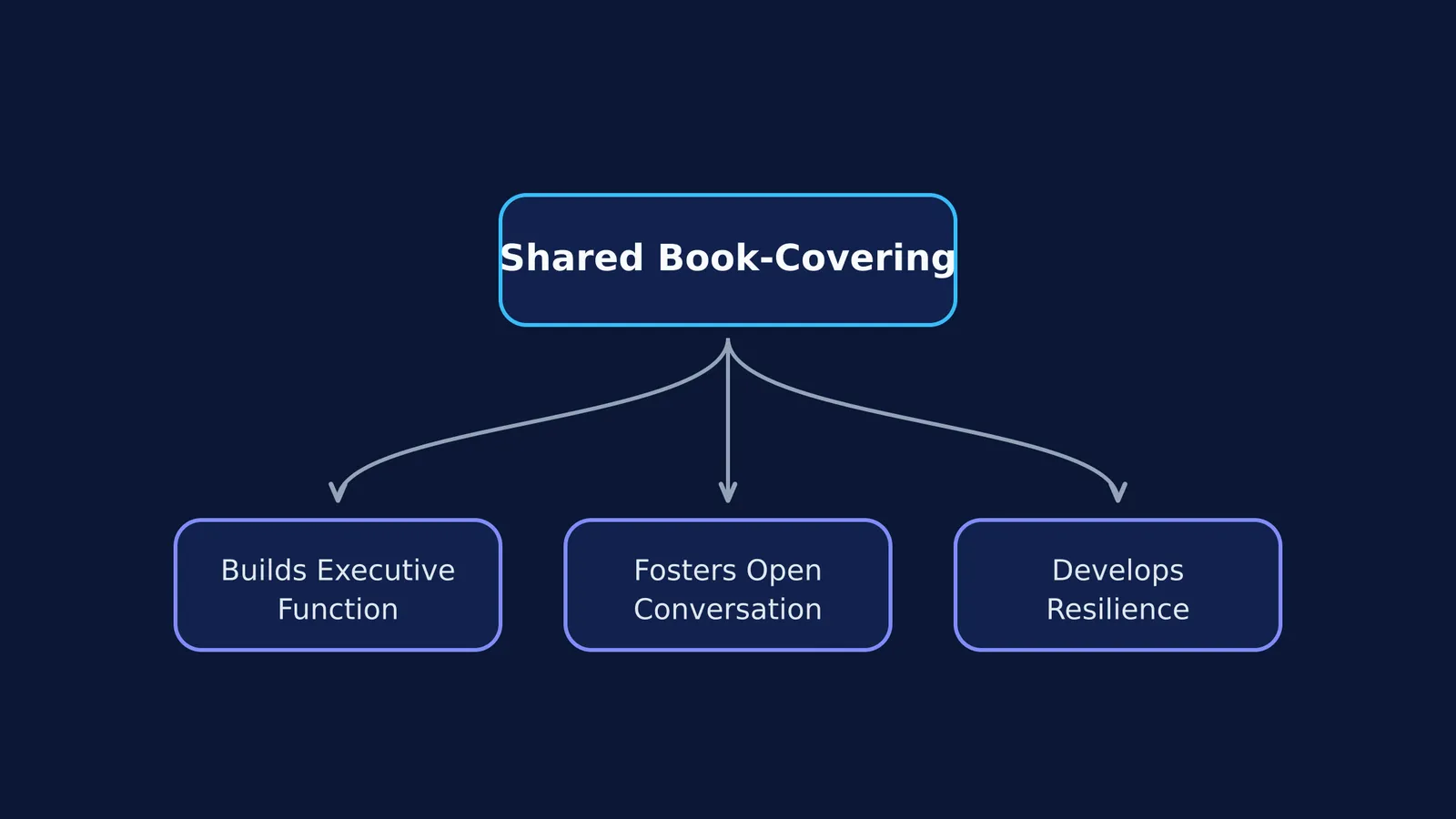
Executive function—the brain's ability to plan, focus and juggle multiple tasks—is built through practice. When you sit down with your child to sort their new supplies, you are teaching them how to organise their environment.
Instead of covering the books yourself while they sleep, make it a joint project:
Sort by subject: Ask your child to group the physics textbook with its practical manual and notebooks.
Colour coding: Let them choose a specific marker colour for all chemistry labels, making it easier to grab the right books during a hurried morning.
The physical work: Cutting the brown paper or plastic covers, folding the edges neatly and sticking the tape requires patience and fine motor skills.
How to handle mistakes without taking over?
When children try to cover books, they will inevitably cut the paper too short, misalign the tape or write a label crookedly. It is tempting to step in and fix it for them so that the books look perfect for the first day of school.
However, letting them experience these small failures is part of the process. If a cover is slightly messy, let it stay. This teaches them that their effort is more important than a flawless result. When you allow them to own their mistakes in a low-stakes environment, they become more resilient when facing harder academic challenges later in the year. If the tape tears, simply hand them another piece and ask them to try again.
What to talk about while covering books?
The time spent folding paper and writing labels is an excellent, low-pressure space for conversation. Because your hands are busy, children are often more willing to talk about their worries or goals for the year. This is especially helpful if you are wondering why your child cannot tell you what was taught today.
Try these questions as you work:
"Which subject are you looking forward to the most this year?"
"Last year, managing time for homework was tough. What should we do differently this time?"
"Is there anything you are worried about in this new class?"
If you have a child not taking studies seriously, this calm environment is a good place to set shared expectations without a lecture. Once the books are covered and labelled, place them on the desk or in the bag together.
What to do when the books get harder?
When the school year starts, those neatly covered books will soon be filled with notes and doubts. If your child struggles to bridge the gap between their textbook and their homework, Fermi's AI tutor can help.
Fermi teaches rather than just giving answers. If your child is stuck on a physics numerical, they can bring it to the Fermi Problem Library. The step-by-step solver works through the reasoning alongside them, noticing where they are stuck and deciding whether to explain, ask or show. It acts as an extension of the good study habits you established on day one.
A checklist for your book-covering ritual
Make an afternoon of it.
Clear the dining table and gather scissors, tape, labels, and brown paper or plastic rolls.
Put on some background music and prepare a favourite snack.
Show your child how to measure and fold the first cover, then let them do the rest.
Have them write their name, class and subject clearly on every label.
End by arranging the pristine books in their study area.
This small investment of time does more than protect the books—it protects their confidence as they step into a new academic year.


