

On this page
"My child used to do so well, but in Class 9, they have just stopped caring."
If you are a parent of a 13- or 14-year-old, this might sound familiar. The transition to Class 9 is often the sharpest academic jump a student makes in school. When a teenager suddenly appears "not serious" about their studies, it is rarely just laziness. Instead, it is usually a sign that they are overwhelmed by the sudden increase in the syllabus and the change in how they are taught.
Why does motivation slump in Class 9?
During middle school, students are still exploring subjects broadly. But in Class 9, especially in the CBSE and ICSE boards, the curriculum fractures into distinct, heavier subjects. General science becomes physics, chemistry and biology; mathematics introduces formal proofs and complex algebra.
This is a critical time for adolescent development. A seminal study by Jacquelynne Eccles and colleagues in 1993, published in the *American Psychologist*, outlined the "stage-environment fit" theory. They found that early adolescents crave more autonomy and connection, but as they transition into middle and high school, the environment often becomes more controlling, with stricter grading and a focus on public performance.
This mismatch causes a slump in motivation. When students feel they have less control over their learning just as the work gets significantly harder, many disengage to protect their self-esteem. It is easier for a teenager to say "I don't care" than to admit they are struggling to understand a concept.
Why do fear tactics backfire?
Knowing that Class 9 is the foundation for the Class 10 board exams, parents often panic. The reflex is to warn the child about the future: "If you don't study now, you will fail Class 10," or "You won't get into a good college."
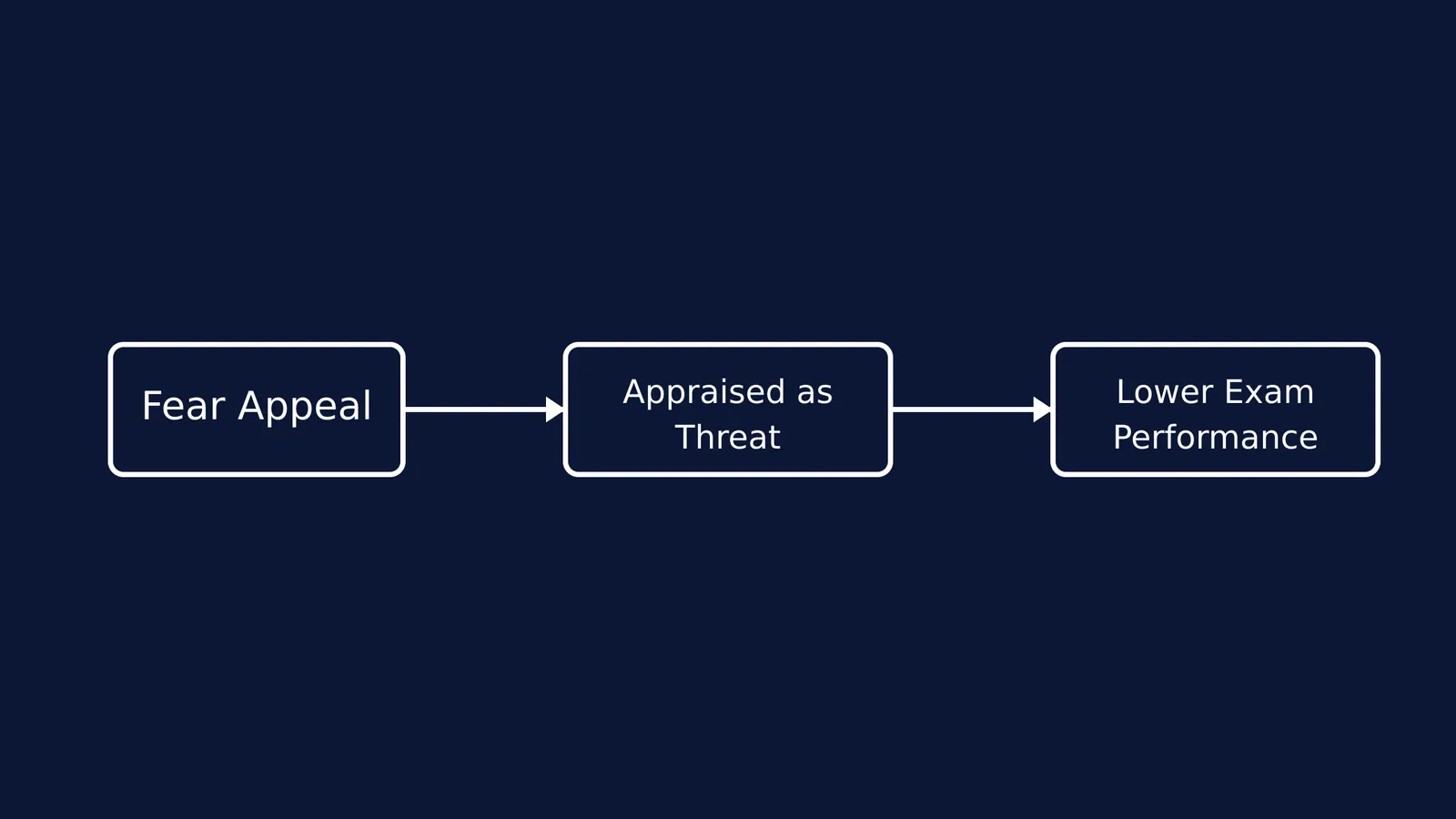
In educational psychology, these are called "fear appeals". While parents use them hoping to spark a sense of urgency, research shows they often achieve the exact opposite. A 2017 study by David Putwain and colleagues in the *British Journal of Educational Psychology* examined how students respond to these messages.
The study found that if a student appraises the fear appeal as a threat—which happens when they already lack confidence—it predicts lower behavioural engagement and worse examination performance. The fear of failure triggers anxiety, leading the student to avoid the subject altogether.
How can parents connect Class 9 to Class 10 without fear?
If scare tactics do not work, how can you help your child build a strong foundation for the board exams? The answer lies in building competence and breaking the work down.
Focus on the next small step: A massive syllabus causes "freeze" behaviour. Help your child break a chapter into 20-minute tasks. Completing a single worksheet builds the momentum needed to tackle the next one.
Shift the focus from marks to mastery: Instead of asking what they scored in a weekly test, ask them to explain a single concept they learned. This removes the anxiety of assessment and focuses on the learning itself.
Use an AI tutor: When a student doesn't know where to start, looking at a blank page can be paralysing. Fermi's AI tutor can work out what your child already knows and build a plan for the session, so they sit down to a clear next step. It holds a line of reasoning across a session and notices where a student is stuck, deciding whether to explain, ask or show.
Connect to their future, positively: Rather than warning them about failing, frame their current work as a tool for freedom. Remind them that understanding these concepts now will give them the freedom to make their own choices, such as Choosing a stream after Class 10: a guide for families.
If you notice these patterns early, you can refer to other resources like When your child loses interest in studies: what to try first and understand High expectations vs pressure: what research separates to guide your approach.
The Class 9 transition is difficult, but it is manageable. By removing the threat of failure and providing structured support, you can help your child regain their academic confidence.


