

On this page
High-quality coaching for competitive exams like JEE, NEET or UPSC often comes with a steep price tag. Depending on the city and the programme, offline coaching fees generally range from ₹75,000 to ₹2.5 lakh per year. Paying this amount upfront is a heavy burden for most families.
To make these courses accessible, institutes and financial companies offer structured payment options. Here is a breakdown of how instalment plans and education loans work, and what you need to check before committing.
How do direct institute instalment plans work?
Most major offline coaching centres allow parents to split the annual fee into multiple instalments over the year.
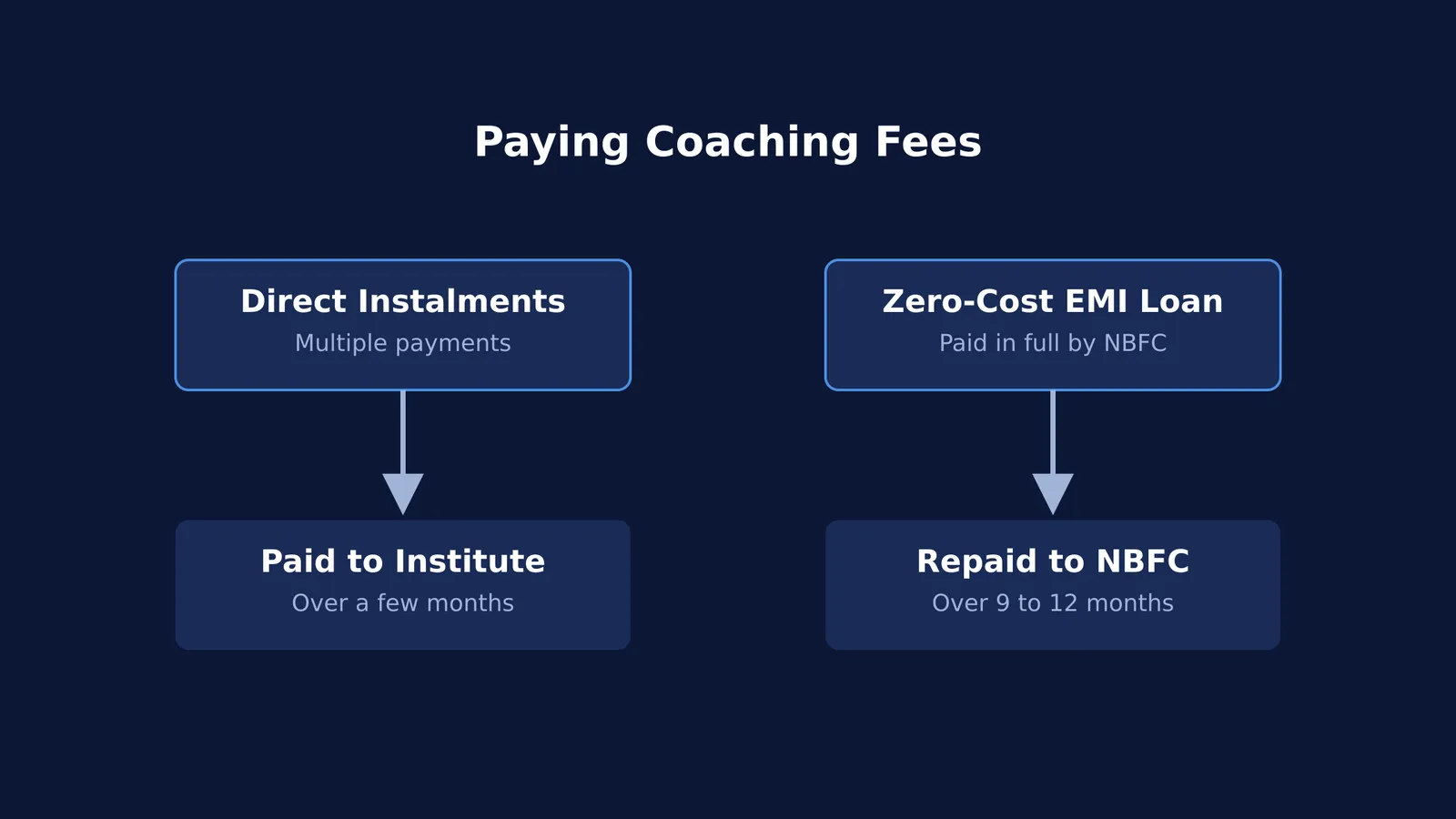
Usually, a significant portion of the fee is required at the time of admission, with the rest spread across post-dated cheques or scheduled bank transfers. If you pay the full amount upfront, institutes often provide a small rebate, but choosing the instalment route helps manage cash flow without involving a bank.
What is a zero-cost EMI coaching loan?
In recent years, Non-Banking Financial Companies (NBFCs) like Propelld, Eduvanz, Avanse and Fibe have partnered with coaching institutes to offer zero-cost EMI loans.
This model works through subvention: the coaching institute pays the interest to the NBFC as a fee for bringing the student in, so you only repay the principal amount.
Direct payment: The NBFC pays the entire course fee to the institute on day one.
Repayment: You repay the lender in equal monthly instalments, typically over 9 to 12 months.
No collateral: These loans are unsecured, meaning you do not have to pledge property or fixed deposits.
Approval is usually quick, requiring basic KYC documents and recent bank statements to prove a stable income. While the interest is zero, you might still have to pay a 1% to 2% processing fee or a mandate activation charge.
What happens if my child drops out midway?
A common worry is being locked into a financial commitment if a student struggles to cope and wants to leave.
In January 2024, the Ministry of Education issued the *Guidelines for Registration and Regulation of Coaching Centres 2024*. These guidelines mandate that if a student leaves a course before the prescribed period ends, the coaching centre must refund the fees for the remaining period on a pro-rata basis promptly.
Which payment route is better?
Choosing between direct institute instalments and a third-party loan depends on your financial flexibility and how certain you are about the course.
Direct instalments are safer if you are worried about refunds. Since you have not signed a credit agreement with a bank, stopping payments if your child leaves is straightforward. However, the timeline is shorter. Institutes usually demand the full amount within the first few months of the course.
Zero-cost loans give you much more breathing room, spreading the cost across a full year. This makes monthly budgeting easier. The downside is the rigid contract. If a dispute arises over the refund policy, you are still legally bound to pay the NBFC until the institute returns the money to them. Missed payments will also damage your credit score.
Checking the fine print: a parent's checklist
Before you write the first cheque or sign an EMI mandate, confirm these four details:
The exact refund process: Does the institute have a written "easy exit" policy on their website, as required by the 2024 guidelines?
Hidden loan fees: Ask the lender for a Key Fact Statement. Look for processing fees, convenience fees or penalties for missing a payment.
Scholarship adjustments: Did your child take an entrance test? Ensure the scholarship discount is applied to the principal amount before the EMI is calculated.
Living costs: If your child is moving to a hub like Kota, remember that hostel and food expenses will add significantly to your budget.
If you are unsure about committing to a high-fee offline centre, you might weigh coaching, online classes or self-study for JEE.
If a student needs help with hard numericals but wants to avoid the pressure of a massive offline batch, Fermi Problem Library has worked problems with a step-by-step solver that explains the reasoning rather than printing an answer. Fermi's AI tutor works out what they already know, builds a plan for the session, and teaches through it. This can help them build a study routine that lasts, while giving you a way to help children learn without adding pressure.


